
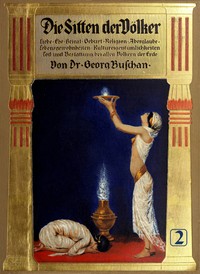
Die Sitten der Völker, Zweiter Band by Georg Buschan
Let's be clear: this isn't a novel. There's no protagonist or plot twist. 'Die Sitten der Völker' is a systematic, encyclopedic survey of human customs. Think of it as a massive, organized catalog. Buschan groups people by region—Africa, Asia, the Americas, Oceania—and then methodically describes their ways of life. He covers everything: marriage rituals and burial practices, superstitions and legal systems, what people ate and how they built their homes.
The Story
There's no traditional story here. Instead, the 'narrative' is the journey of Buschan's own curiosity. He acts as a compiler, pulling from travelogues, missionary reports, and earlier scholarly works to paint a picture of global diversity. You move from chapter to chapter, continent to continent, seeing the incredible variety of human social invention. One page might detail intricate Polynesian navigation techniques, the next describes ceremonial scarification in Africa. It's a dizzying, information-rich parade of how humanity has answered life's big questions in a thousand different ways.
Why You Should Read It
You read this book for two reasons. First, the sheer, jaw-dropping scope is humbling. It reminds you that our modern, Western way of life is just one option in a vast historical menu. Second, and just as important, you read it critically. Buschan writes from a specific time and place (Imperial Germany), and his views are often paternalistic or racially biased by our standards. Reading him isn't about accepting his conclusions; it's about witnessing how knowledge was constructed in that era. The book becomes a mirror, reflecting not just the cultures he describes, but the prejudices and frameworks of his own. It's a challenging, thought-provoking exercise that makes you a more careful reader of any history.
Final Verdict
This book is perfect for history buffs, anthropology nerds, and anyone with a deep curiosity about human cultures. It's not a light read—it's dense and requires patience. But if you approach it as a primary source, a window into both the past it describes and the past that wrote it, you'll find it utterly absorbing. Skip it if you want a straightforward story or a modern, politically-correct analysis. But if you're willing to engage with a complex, problematic, and genuinely fascinating artifact, Georg Buschan's forgotten volume is a unique trip into the mind of a bygone era.
There are no legal restrictions on this material. Access is open to everyone around the world.
Daniel Davis
1 year agoThis book was worth my time since the arguments are well-supported by credible references. I learned so much from this.
Sarah Wright
1 year agoI came across this while browsing and the character development leaves a lasting impact. I learned so much from this.




Melissa White
2 years agoIf you enjoy this genre, it provides a comprehensive overview perfect for everyone. Thanks for sharing this review.