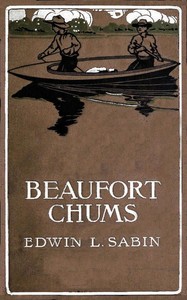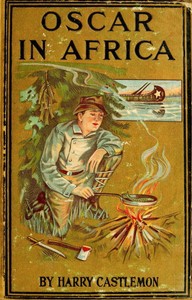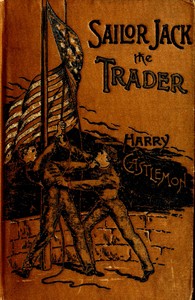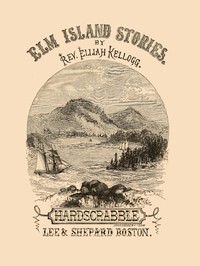
eBooks
96 Books foundThe EMAAF Public Domain Literature Library offers 96 freely available juvenile and historical texts, drawn primarily from Project Gutenberg. This collection emphasizes 19th- and early 20th-century fiction for young readers, including adventure stories, school tales, military history, and domestic novels. Each work has been selected for its enduring interest and editorial value.
Browsing and Discovery
Readers may browse the full catalogue at /ebooks, where each record includes title, author, illustrator, original publication details, keywords, and a short editorial note. The site organises books into four thematic categories for guided exploration. Every work is accompanied by a dedicated guide that examines narrative style, historical context, and recommended reading paths.
Book Record Information
Each entry displays the book's full title, author(s), illustrator(s), and digital source (Project Gutenberg). Subject keywords from the Library of Congress help readers assess relevance. A catalogue note—prepared as supplementary catalogue material—offers an analysis of the work's structure, voice, and themes, based on available text and source material. No claim is made that every book has been read in its entirety; the notes reflect editorial sampling.
Source Attribution
All texts in the EMAAF library originate from Project Gutenberg, a trusted repository of public-domain works. Each book's page includes a link to the original Project Gutenberg record. The library does not host full texts but provides reading guides and editorial commentary. Readers are directed to the source for complete editions.
Categories
The catalogue is divided into four categories: Exploration Survival Adventure Tales; Fantasy Juvenile Worlds; Science Fiction Utopias; and Historical Psychological Social Fiction. These groupings are intended as navigation aids, not definitive literary judgments. Many works cross thematic boundaries; the category suggests a primary angle of approach.
Practical Reading Paths
Path 1: School and Friendship. Begin with Her Benny: A Story of Street Life (1879) for a vivid portrait of Liverpool street children, then move to Arthur Brown, The Young Captain (1870) for nautical frontier adventure, and conclude with The Camp Fire Girls in Glorious France (1919) for a wartime girls' story. This path traces evolving depictions of youth and community.
Path 2: Sea Stories and Exploration. Start with The Little Lame Prince and His Travelling Cloak (1875), a fantasy with magical journeys, then Two Little Pilgrims' Progress (1895) about orphans visiting the World's Columbian Exposition, and The Land of Oz (1904) for absurdist adventure. This route highlights voyages of imagination.
Path 3: Conflict and History. Try The Moon Colony (1937) for interplanetary peril, General Nelson's Scout (1903) for Civil War espionage, and Venus Boy (1955) for mid-century science fiction. These books share themes of bravery and strategy across eras.
Bibliographic dates and catalogue measurements
The catalogue distinguishes the Project Gutenberg digital release from a work’s original or first publication. Project Gutenberg is identified as the digital source for the edition available here; its release year is therefore shown as Gutenberg Release Year, not as the work’s original publication year.
When an explicit first-publication or issue date can be supported directly by the title or issue information, it may be shown separately as First Publication Year. When that date cannot be confirmed, the catalogue displays Not confirmed rather than guessing a year.
Where the source text can be measured reliably, the catalogue may provide word count and estimated reading time. These measurements describe reading scope and are not quality rankings.
The current catalogue contains 4 active subject categories: Exploration Survival Adventure Tales, Fantasy Juvenile Worlds, Science Fiction Utopias, and Historical Psychological Social Fiction. Categories are browsing aids and may overlap where a work reasonably fits more than one subject.
- Featured