About 200 minutes
Little Lord Fauntleroy [abridged]: Für den Schulgebrauch bearbeitet — Text and Context
Fantasy Juvenile Worlds
45,859 recorded words. 0 minutes difference from this book's estimate.
View Gutenberg source #49579
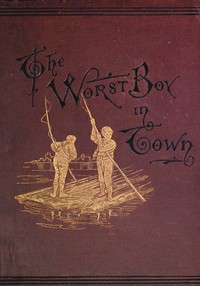
Before opening The Worst Boy in Town — Edition Insights, the edition data offers a quick orientation: 45,829 words, 3 hr 20 min estimated reading time, and 20 detected text sections.
The text analysis averages about 27.7 words per sentence, while the detected sections provide another way to judge how the source is divided.
Project Gutenberg metadata also associates the work with “Conduct of life -- Juvenile fiction,” connecting these edition facts with the source record’s subject description.
Explore this collection
These alternatives are selected using recorded categories and estimated reading time.
About 200 minutes
Fantasy Juvenile Worlds
45,859 recorded words. 0 minutes difference from this book's estimate.
View Gutenberg source #49579About 198 minutes
Fantasy Juvenile Worlds
45,394 recorded words. 2 minutes difference from this book's estimate.
View Gutenberg source #50471About 206 minutes
Fantasy Juvenile Worlds
47,346 recorded words. 6 minutes difference from this book's estimate.
View Gutenberg source #53844Search stored excerpts and compare books → Choose by your preferences →
Choices use stored catalog measurements. Estimates vary with reading speed. A shared category is a catalog label, not a claim that two books have the same argument or literary quality.
Search reads excerpt text stored with this catalog and links to its associated Gutenberg record. The connection is stored in the site database; this tool does not recheck that every excerpt is word-for-word identical to that external record. Excerpt search does not cover every chapter and does not verify historical publication dates.
Catalog snapshot checked: 2026-09-25. Coverage: 96 public books, 96 available source excerpts.
Read the complete public-domain text at its original source.
Read on Project GutenbergThe opening line—'You're the worst boy in town!'—is hurled by Farmer Parkins at Jack Wittingham, and the narrator immediately undercuts the accusation by detailing the boy's innocent mischief: tying a kettle to a dog's tail. Habberton's voice is wry and knowing, slipping in asides about 'juvenile traditions' and the 'accumulative aversion' of dogs. The tone oscillates between comic exaggeration and moral earnestness, a tension that drives the narrative.
The narrator rarely lets a scene pass without editorializing. When Jack's father, the doctor, declares 'I love you better than my life,' the narrator adds: 'The doctor lied terribly, as most busy people do who affirm strong, unselfish sentiments.' This ironic aside punctures the sentimental moment, reminding readers that the adult world is also flawed. Similarly, the minister's advice to 'pray daily for grace' is met with Jack's flat retort: 'I always do, but it don't always work.' The narrator does not resolve this—the boy's skepticism stands. Such moments give the novel a double voice: one that upholds reform, another that winks at its difficulty.
The book's rhythm alternates between fast, physical comedy and slower, introspective scenes. Chapter I opens with a chase—the dog with a kettle clattering down the street—then slows to a long dialogue in the doctor's office where Jack weeps and promises to 'darn all my own stockings.' The constable's scowl over watermelons is a comic callback, but the pacing deliberately contrasts the boy's frantic energy with the adults' measured lectures. Later chapters like 'A Corner in Whiskey' and 'Sharp Axes and Sharper Wits' suggest further accelerations, while 'The Stool of Repentance' implies a return to stillness. This alternation keeps the reader off-balance, mirroring Jack's own unpredictability.
Small motifs recur with precision. The dog-and-kettle prank is not just an opening gag; it establishes a pattern of Jack's inventive, non-malicious trouble. Later, the doctor's notebook on heredity appears twice in the excerpts: once when he jots down a note about 'disordered minds' during Jack's confession, and again when he 'hypocritically' tests Jack's sincerity. This notebook is a running joke—the doctor's scientific pretensions deflated by his own hypocrisy. The word 'heredity' appears in the catalog subjects, and the text itself toys with the idea that Jack's badness might be inherited, but the narrator never settles the question. Instead, the doctor's notes become a comic refrain, a pseudo-scientific frame for a story that ultimately hinges on individual choice.
Readers should attend to the way Habberton uses the doctor and minister as foils: one pragmatic, the other pious, both fallible. The novel's title promises a worst boy, but the excerpts suggest a more complicated portrait—a child whose 'badness' is often just high spirits. The narrator's ironic asides reward careful attention, as they often undercut the very moral lessons the plot seems to endorse.
Reading about Jack Wittingham’s mischief brought back my own small-town scrapes, the way a child’s name can harden into a verdict before they’ve outgrown it. It made me think of another quiet orphan’s story, Charlie Bell, The Waif of Elm Island — Edition Insights, which once gave me that same ache of wanting a child to be seen fresh, not blamed.
Use these questions to collect your thoughts before moving on.