About 218 minutes
The Mystery of the Secret Band — Reading Notes
Fantasy Juvenile Worlds
49,967 recorded words. 4 minutes difference from this book's estimate.
View Gutenberg source #43584
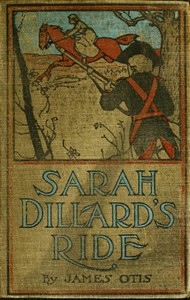
This digital edition of Sarah Dillard's Ride: A Story of the Carolinas in 1780 — Reading Notes is described by source-level measurements including 50,945 words, 3 hr 42 min estimated reading time, and 6 detected text sections.
The text analysis averages about 23.2 words per sentence, while the detected sections provide another way to judge how the source is divided.
Project Gutenberg metadata also associates the work with “Conduct of life -- Juvenile fiction,” connecting these edition facts with the source record’s subject description.
Explore this collection
These alternatives are selected using recorded categories and estimated reading time.
About 218 minutes
Fantasy Juvenile Worlds
49,967 recorded words. 4 minutes difference from this book's estimate.
View Gutenberg source #43584About 227 minutes
Fantasy Juvenile Worlds
52,173 recorded words. 5 minutes difference from this book's estimate.
View Gutenberg source #46188About 227 minutes
Fantasy Juvenile Worlds
52,009 recorded words. 5 minutes difference from this book's estimate.
View Gutenberg source #53071Search stored excerpts and compare books → Choose by your preferences →
Choices use stored catalog measurements. Estimates vary with reading speed. A shared category is a catalog label, not a claim that two books have the same argument or literary quality.
Search reads excerpt text stored with this catalog and links to its associated Gutenberg record. The connection is stored in the site database; this tool does not recheck that every excerpt is word-for-word identical to that external record. Excerpt search does not cover every chapter and does not verify historical publication dates.
Catalog snapshot checked: 2026-09-25. Coverage: 96 public books, 96 available source excerpts.
Read the complete public-domain text at its original source.
Read on Project GutenbergThe novel opens in September 1780 near Gilbert Town, North Carolina, with two lads—Nathan Shelby, sixteen, and Evan McDowells, fifteen—halted in the woods on a hunting trip. The narrator immediately links them to historical figures: Nathan is nephew of Isaac Shelby, Evan son of Colonel Charles McDowells. This grounding in real Revolutionary War personalities sets the tone for a story that blends fictional adventure with documented events.
The first chapter, titled "A Britisher's Threat," quickly introduces the conflict. The lads are not yet soldiers but are "sorely needed at their homes," a detail that frames their eventual involvement as reluctant but necessary. The prose is direct, with dialogue carrying much of the exposition.
Early in the narrative, Captain Dillard paroles the captured lads and charges them with delivering Major Ferguson's threat: "if you do not desist from your armed resistance... he will march his army over the mountains, hang your leaders, and lay waste the country with fire and sword." This speech, repeated verbatim, becomes the engine of the plot. Dillard's response—a hearty laugh and a plan to gather patriots at Watuga by September 25—shifts the story from capture to active mission.
The excerpts show the lads then visiting real commanders: Colonel William Campbell, Colonel Isaac Shelby, Lieutenant-Colonel John Sevier, and others, each promising specific numbers of men. The narrative summarizes their journey without dramatizing each stop, stating that "to repeat in detail all their wanderings would form dry reading." This authorial aside signals that the book prioritizes key moments over exhaustive travelogue.
Otis uses a narrator who occasionally addresses the reader directly, as in the comment about "dry reading." The tone is matter-of-fact, with dialogue carrying much of the emotional weight. Captain Dillard's laugh and his ironic remark—"The gentleman has considerable to say for himself, eh?"—reveal a wry defiance. The lads themselves speak formally, as when Evan says, "You are grown timorous indeed, Evan, if you can imagine that noise to be caused by the Redcoats."
The book opens with a note quoting Lossing's Field-Book of the Revolution, describing the privations of mountain men. This epigraph signals Otis's intent to ground the story in documented hardship. The catalog subjects—courage, loyalty, prisoners, war—are all present in the excerpts, but the narrative avoids dwelling on violence, focusing instead on the logistics of gathering forces.
The title promises "Sarah Dillard's Ride," yet the excerpts focus on Nathan and Evan. Sarah Dillard appears only in chapter V ("Sarah Dillard") and in the illustration caption "The colt darted forward at full speed with Mrs. Dillard." Based on the excerpts, her ride is a single episode, not the central plot. The book is structured around the lads' mission, with Sarah's role likely occurring after they report to Captain Dillard.
The chapter titles trace a clear arc: from "A Britisher's Threat" through "The Tory's Purpose," "A Desperate Venture," "The Struggle," to "Sarah Dillard" and then "Greene's Spring," "At Watuga," "The Prisoner," "King's Mountain," "A Hot Chase," and "Success." This suggests a movement from threat to action to resolution, with the historical Battle of King's Mountain as a climax.
The excerpts end with the lads completing their mission on September 25 and believing themselves "entitled to a place in the ranks." The narrative then notes that "many miles had been traversed, some on horseback, man..." before cutting off. We do not see the battle, Sarah's ride, or the fates of the characters. The catalog subjects include "Youth and death" and "Prisoners," which may point to later developments, but the excerpts offer no evidence of casualties or captures among the main characters.
Readers should note that the novel was published in 1898, a time when juvenile historical fiction often emphasized patriotic duty and adventure. The excerpts show no moral ambiguity: the British are threatening, the patriots resolute. The ride itself, though titular, may be a brief but dramatic set piece rather than the book's core.
For a first reading, pay attention to how the author balances historical names with fictional protagonists. The lads' mission serves as a tour of real commanders, but the story's emotional center may lie in the moments of direct threat and response. The excerpts suggest that Sarah Dillard's ride is a single chapter, so do not expect her to dominate the narrative. The book's value lies in its period detail and its portrayal of the mobilization that led to King's Mountain.
Some tales carry ghosts the way autumn carries a chill. In Sarah Dillard's Ride, the mountain men move through memory as much as march. That same quiet haunting lives in Who Was Paul Grayson? — Reading Notes, where a name becomes a question deeper than any answer. I have shelved them near one another; they seem to keep vigil, two old friends sharing one lamp.
Create a short personal record of your experience with this book.