About 97 minutes
The Children of the Valley — Background and Themes
Fantasy Juvenile Worlds
22,297 recorded words. 7 minutes difference from this book's estimate.
View Gutenberg source #48167
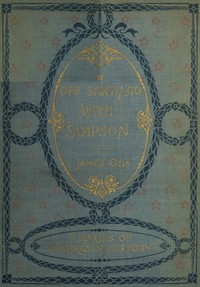
The catalog record for Off Santiago with Sampson — A Reader’s Guide provides practical reading context through 23,858 words, 1 hr 44 min estimated reading time, and 3 detected text sections.
The text analysis averages about 27.0 words per sentence, while the detected sections provide another way to judge how the source is divided.
Project Gutenberg metadata also associates the work with “War stories,” connecting these edition facts with the source record’s subject description.
Explore this collection
These alternatives are selected using recorded categories and estimated reading time.
About 97 minutes
Fantasy Juvenile Worlds
22,297 recorded words. 7 minutes difference from this book's estimate.
View Gutenberg source #48167About 111 minutes
Fantasy Juvenile Worlds
25,415 recorded words. 7 minutes difference from this book's estimate.
View Gutenberg source #49519About 115 minutes
Fantasy Juvenile Worlds
26,411 recorded words. 11 minutes difference from this book's estimate.
View Gutenberg source #52644Search stored excerpts and compare books → Choose by your preferences →
Choices use stored catalog measurements. Estimates vary with reading speed. A shared category is a catalog label, not a claim that two books have the same argument or literary quality.
Search reads excerpt text stored with this catalog and links to its associated Gutenberg record. The connection is stored in the site database; this tool does not recheck that every excerpt is word-for-word identical to that external record. Excerpt search does not cover every chapter and does not verify historical publication dates.
Catalog snapshot checked: 2026-09-25. Coverage: 96 public books, 96 available source excerpts.
Read the complete public-domain text at its original source.
Read on Project GutenbergThe story opens with a small boy named Teddy Dunlap confronting a gate marked "Keep Out" and declaring he will not obey unless he chooses. This rebellious voice, speaking in dialect and half to himself, sets the tone for a narrative that follows a stowaway into the midst of the Spanish-American War. The catalog subjects list "War stories" and "Stowaways," but the excerpts show the book is as much about a boy's independent will as about naval conflict.
The text includes a lengthy newspaper article quoted verbatim, describing Lieutenant Hobson's plan to sink the collier Merrimac across Santiago harbor. This insertion of real reporting into a fictional frame is a notable structural choice, giving the story a documentary layer that the catalog subjects do not suggest.
The opening scene establishes Teddy as a character defined by resistance. He stands before a gate with a forbidding sign and mutters, "I'll not keep out 'less I'm minded to." This is not a generic rebellious boy; his defiance is specifically verbal and self-aware. He speaks half to himself, suggesting a habit of talking through his own decisions. The text does not explain why he is there or what he wants, but his posture is clear: he will not be told where to go.
Later, when he stows away on the Merrimac, he expects to confess to the captain but finds no one to hear him. The chaos of war preparations swallows his intended confession. The catalog lists "Conduct of life" and "Courage" as subjects, but the excerpts show a boy whose actions are driven more by stubbornness than moral instruction. The narrative does not moralize about his choices; it simply follows him as he navigates the confusion.
Chapter IV includes a newspaper article introduced as "quoted from an article written the very day Bill Jones and his protégé sought shelter on the battle-ship." This article describes the strategic situation at Santiago, the plan to sink the Merrimac, and Lieutenant Hobson's volunteer mission. It uses phrases like "bottled up" and "drive in the cork," giving the reader a contemporary journalist's perspective.
The catalog subjects do not mention this documentary technique. The book is not simply a war story; it is a hybrid that folds real reporting into a fictional boy's adventure. The article is not summarized or paraphrased but presented as a block quotation, a choice that slows the narrative and shifts the reader's attention from Teddy to the historical event. This suggests the author intended the book to serve partly as a historical primer, using the fictional frame to introduce young readers to actual events.
When Teddy and Bill Jones leave the Merrimac and board the Texas, they are not questioned. The text says, "The officers had all left the boat, therefore the two were not subjected to any searching examination, and once on board the big vessel, it was supposed, as a matter of course, that they had been regularly detailed to that ship." This casual acceptance is a key plot mechanism: Teddy's presence on the battleship is never justified by official permission. He simply arrives and is assumed to belong.
The crew's focus is entirely on the Merrimac mission. Teddy and Bill learn about it by listening to sailors, not by being told by officers. The narrative emphasizes that they "knew less regarding her proposed ending than any other" and had to "pick up" information. This indirect method of exposition mirrors Teddy's passive, observational role. He is a witness to history, not an agent of it, despite the catalog's subject "Courage" implying active heroism.
Readers should pay attention to how the book uses its newspaper insert: it is not a footnote but a structural element that changes the pace and authority of the story. Teddy's voice, with its dialect and defiance, contrasts with the formal language of the article. The catalog subjects emphasize moral categories like "Conduct of life" and "Courage," but the excerpts show a narrative more interested in how a boy drifts into a war zone than in teaching lessons. The book rewards attention to its quiet details of setting and character rather than its plot alone.
There’s a particular ache in watching Teddy defy the world for a cause he half-understands, and I found myself thinking of it again while rereading Mildred and Elsie — A Closer Reading. Both books carry that old, patient loneliness of childhood choices, the way a stubborn heart quietly shapes a life. I still remember the weight of that coal dust on the page.
Your answers remain private and are stored only in this browser.