About 104 minutes
Off Santiago with Sampson — A Reader’s Guide
Fantasy Juvenile Worlds
23,858 recorded words. 7 minutes difference from this book's estimate.
View Gutenberg source #43420
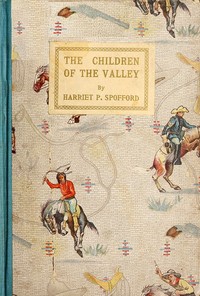
For The Children of the Valley — Background and Themes, the stored edition analysis reports 22,297 words, 1 hr 37 min estimated reading time, and 3 detected text sections.
The text analysis averages about 18.2 words per sentence, while the detected sections provide another way to judge how the source is divided.
Project Gutenberg metadata also associates the work with “Orphans -- Juvenile fiction,” connecting these edition facts with the source record’s subject description.
Explore this collection
These alternatives are selected using recorded categories and estimated reading time.
About 104 minutes
Fantasy Juvenile Worlds
23,858 recorded words. 7 minutes difference from this book's estimate.
View Gutenberg source #43420About 85 minutes
Fantasy Juvenile Worlds
19,505 recorded words. 12 minutes difference from this book's estimate.
View Gutenberg source #43145About 111 minutes
Fantasy Juvenile Worlds
25,415 recorded words. 14 minutes difference from this book's estimate.
View Gutenberg source #49519Search stored excerpts and compare books → Choose by your preferences →
Choices use stored catalog measurements. Estimates vary with reading speed. A shared category is a catalog label, not a claim that two books have the same argument or literary quality.
Search reads excerpt text stored with this catalog and links to its associated Gutenberg record. The connection is stored in the site database; this tool does not recheck that every excerpt is word-for-word identical to that external record. Excerpt search does not cover every chapter and does not verify historical publication dates.
Catalog snapshot checked: 2026-09-25. Coverage: 96 public books, 96 available source excerpts.
Read the complete public-domain text at its original source.
Read on Project GutenbergThe opening chapter of The Children of the Valley begins not with a calm introduction but with a child already missing: “Ally was lost—the little blue-eyed dear!” The household scatters in all directions—Michael the gardener, John the house-man, Pincher the logger, Uncle Billy, Old Uncle, Will, Charlie, Aunt Rose, Aunt Susan, and the twin Essie—each with a different theory about where Ally might be. This immediate dispersal of characters across the valley sets a pattern for the whole book: the narrative moves rapidly between indoor rooms, riverbanks, hillsides, and remote camps, often following a single child’s adventure while other family members search elsewhere. The structure relies on these quick cuts between locations, and the recurring image of being lost—or of looking for someone lost—becomes a central organizing device.
The geography of the valley is established through the characters’ movements rather than through static description. In the first chapter alone, the search for Ally sends people to the strawberry-patch across the river, the bear-cub hollow on Blue Top, and the house itself. Essie imagines the fairies have taken Ally to “their own invisible country,” a notion that ties the physical landscape to a supernatural one. Later, Will’s journey to the logging camp takes him past the half-way house, through a snowstorm, and onto a frozen lake where he loses his bearings. The setting is not a backdrop but a network of paths, slopes, and hiding places that the characters must navigate. The book’s structure mirrors this: each chapter moves to a new location, often with a different child at the center, so that the valley feels like a collection of linked but distinct territories—the house, the intervale, the woods, the camp—each with its own risks and routines.
The search for Ally in the opening chapter is not an isolated incident. The table of contents lists chapters such as “What the Twins Found,” “Mother Bear’s Call,” “After Dark on the Ice,” “The Night-Storm in the Woods,” and “That Day When Ally was Lost.” Several of these titles promise a child in peril or a rescue mission. The pattern is clear: a child wanders off, the adults and older children organize a search, and the narrative follows both the lost child’s experience and the seekers’ efforts. This repetition gives the book a rhythmic structure, each search varying in setting and outcome. The lost child is not always Ally—Will gets stranded on the ice, and other chapters involve different children—but the device of the search binds the episodes together. The excerpts show that the searches are often simultaneous: while Will skates into danger, the adults at the camp are unaware. This layering of parallel action is a deliberate structural choice.
Two images recur with enough frequency to become motifs. The first is ice and snow. Will’s adventure on the frozen lake is described in detail: the ice “lay glittering,” he skates “over the crystal glare,” and when the storm comes, snow covers his tracks. The cold is not merely atmospheric but functional—it creates the danger of losing one’s way. The second recurring image is the bear. The frontispiece shows a bear “on her hind legs carrying her baby in her arms like anybody,” and the chapter “Mother Bear’s Call” suggests that bears are a real presence in the woods. The bear appears both as a threat and as a creature with maternal instincts, mirroring the human children’s own need for protection. These images—ice that hides paths and bears that might harm or nurture—give the valley a tangible, sensory texture and reinforce the theme of vulnerability in a wild landscape.
The narrative moves constantly between the safety of the house and the unpredictability of the outdoors. The opening chapter lists the searchers: Aunt Rose and Aunt Susan hunt through the house, while the men head for the hills. This division of labor reflects a spatial split that persists throughout the book. The house is associated with aunts, order, and worry; the woods and lake with adventure, danger, and freedom. Will’s trip to the logging camp is a clear example: he leaves the domestic sphere entirely, sleeping on hemlock boughs and eating squirrels cooked over an open fire. Yet the camp has its own routines—the cook frying doughnuts, the oxen hauling logs—that blend domesticity with wilderness. The book does not simply oppose house and woods; it shows how each space contains elements of the other. The children move between them, and the structure of the book follows these crossings, creating a rhythm of departure and return.
Readers will find that The Children of the Valley rewards attention to its geography and to the way each chapter shifts perspective among the children. The searches are not merely plot devices but a method for exploring different corners of the valley and different kinds of risk. Paying attention to who is searching and who is lost in each chapter helps clarify the book’s structure. The bear and the ice are not just local color; they are recurring elements that tie the episodes together. This is a book built on movement, and following the characters as they cross from house to hill to lake is the best way to see how it works.
I was thinking about the twins in The Children of the Valley, how the safety of home is always shadowed by those wild woods. It reminded me of a quieter fragility, the kind I found in that old story about the girl by the railway arch. The same longing for a steady refuge. Jessica's First Prayer; and, Jessica's Mother — Story, Setting & Ideas feels like the other side of that coin, spoken in a softer tone.
Save your reaction, strongest insight, and memorable passage.