About 261 minutes
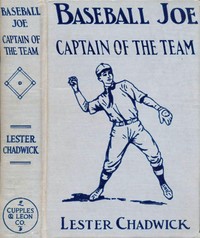
Baseball Joe, Captain of the Team; or, Bitter Struggles on the Diamond — A Reader’s Guide
Fantasy Juvenile Worlds
59,879 recorded words. 0 minutes difference from this book's estimate.
View Gutenberg source #44716
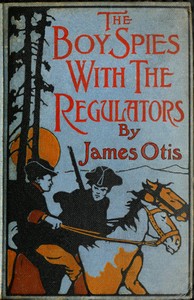
This digital edition of The Boy Spies with the Regulators The Story of How the Boys Assisted the Carolina Patriots to Drive the British from That State — A Reader’s Guide is described by source-level measurements including 59,893 words, 4 hr 21 min estimated reading time, and 6 detected text sections.
The text analysis averages about 27.2 words per sentence, while the detected sections provide another way to judge how the source is divided.
Project Gutenberg metadata also associates the work with “Conduct of life -- Juvenile fiction,” connecting these edition facts with the source record’s subject description.
Explore this collection
These alternatives are selected using recorded categories and estimated reading time.
About 261 minutes
Fantasy Juvenile Worlds
59,879 recorded words. 0 minutes difference from this book's estimate.
View Gutenberg source #44716About 261 minutes
Fantasy Juvenile Worlds
59,939 recorded words. 0 minutes difference from this book's estimate.
View Gutenberg source #45022About 259 minutes
Fantasy Juvenile Worlds
59,410 recorded words. 2 minutes difference from this book's estimate.
View Gutenberg source #44950Search stored excerpts and compare books → Choose by your preferences →
Choices use stored catalog measurements. Estimates vary with reading speed. A shared category is a catalog label, not a claim that two books have the same argument or literary quality.
Search reads excerpt text stored with this catalog and links to its associated Gutenberg record. The connection is stored in the site database; this tool does not recheck that every excerpt is word-for-word identical to that external record. Excerpt search does not cover every chapter and does not verify historical publication dates.
Catalog snapshot checked: 2026-09-25. Coverage: 96 public books, 96 available source excerpts.
Read the complete public-domain text at its original source.
Read on Project GutenbergThe narrator, Clare Butler, opens by declaring he will not attempt a scholar's story but rather set down an account for his descendants. This framing establishes a personal, retrospective voice that occasionally yields to quoted historical sources, as when he copies a historian's description of the Stamp Act's effects. The narrative thus moves between Clare's immediate experiences and broader context, a structural choice that shapes the reader's sense of both individual and collective memory.
The excerpts show a story that alternates between domestic scenes—Clare's mother clasping his hand and speaking of prudence—and large assemblies where the fate of the colony hangs on a trial. The tension between these scales is central to the work's pacing.
Clare Butler narrates in first person, but he does not rely solely on his own memory. Early in the text he inserts a lengthy quotation from a historian, introduced with the phrase "I shall copy here what was written many years later by one who may justly style himself a historian." This move signals that Clare considers his own words insufficient to paint a full picture of the Carolinas in 1768. The result is a hybrid voice: Clare's personal observations are supplemented by an external, authoritative account. Readers should note how often the narrative pauses for such borrowed passages, and whether the historian's tone differs markedly from Clare's own plain style.
The excerpts repeatedly juxtapose intimate family conversations with the looming public trial. When Clare returns to his parents, his mother speaks in a low tone, and his father responds thoughtfully, hinting at fears he will not fully share. Clare then thinks of the vast assembly and the governor's possible influence. This back-and-forth creates a rhythm of anticipation: the reader moves from a quiet family exchange to the imagined scene of a packed courthouse. The pacing accelerates when Clare reflects on the judges and their supposed subservience to Tryon, then slows again as his mother tells him to forget her words. Such shifts in tempo are a deliberate feature of the narrative design.
Several details recur across the excerpts. The Alamance River is named as the location of the boys' homes and later the site of what Clare calls "the first battle in the struggle of the colonies for independence." The names Tryon and Fanning appear repeatedly, always as oppressors. Clare's cousin Sidney Hubbard is introduced early and then reappears in the scene where Sandy Wells is rescued, though the rescue itself is dismissed as "a trifling incident" compared to the trial. The narrative voice maintains a consistent register—Clare uses phrases like "I count to set down" and "I cannot set down in my own words"—which gives the prose a deliberate, somewhat old-fashioned quality that matches the 1901 publication date.
Readers will benefit from paying attention to the interplay between Clare's personal narrative and the inserted historical passages. The story does not simply recount events; it reflects on how those events are remembered and recorded. The pacing, which alternates between domestic quiet and public tension, rewards careful attention to scene transitions. The excerpts suggest a work that is as much about the act of telling history as about the history itself.
There’s a particular ache in reading The Boy Spies with the Regulators — the way those trial scenes and whispered councils feel so close, yet so distant. It reminds me of the quieter households in Elsie's Young Folks in Peace and War — Story, Setting & Ideas, where war was something that seeped in slowly, changing the furniture of everyday life. Both leave me missing a world I never knew.
Create a short personal record of your experience with this book.