About 247 minutes
Scamp and I: A Story of City By-Ways — A Closer Reading
Fantasy Juvenile Worlds
56,599 recorded words. 1 minutes difference from this book's estimate.
View Gutenberg source #43144
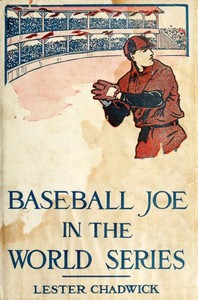
This digital edition of Baseball Joe in the World Series; or, Pitching for the Championship — Edition Insights is described by source-level measurements including 56,989 words, 4 hr 8 min estimated reading time, and 7 detected text sections.
The text analysis averages about 14.8 words per sentence, while the detected sections provide another way to judge how the source is divided.
Project Gutenberg metadata also associates the work with “Conduct of life -- Juvenile fiction,” connecting these edition facts with the source record’s subject description.
Explore this collection
These alternatives are selected using recorded categories and estimated reading time.
About 247 minutes
Fantasy Juvenile Worlds
56,599 recorded words. 1 minutes difference from this book's estimate.
View Gutenberg source #43144About 247 minutes
Fantasy Juvenile Worlds
56,735 recorded words. 1 minutes difference from this book's estimate.
View Gutenberg source #54022About 244 minutes
Fantasy Juvenile Worlds
56,054 recorded words. 4 minutes difference from this book's estimate.
View Gutenberg source #46437Search stored excerpts and compare books → Choose by your preferences →
Choices use stored catalog measurements. Estimates vary with reading speed. A shared category is a catalog label, not a claim that two books have the same argument or literary quality.
Search reads excerpt text stored with this catalog and links to its associated Gutenberg record. The connection is stored in the site database; this tool does not recheck that every excerpt is word-for-word identical to that external record. Excerpt search does not cover every chapter and does not verify historical publication dates.
Catalog snapshot checked: 2026-09-25. Coverage: 96 public books, 96 available source excerpts.
Read the complete public-domain text at its original source.
Read on Project GutenbergLester Chadwick opens Baseball Joe in the World Series with a burst of collective exclamation: “Here he comes!” “Hurrah for Matson!” The crowd’s fragmented shouts immediately establish Joe Matson as a figure of public adulation. Chadwick relies on exclamatory dialogue and third-person narration that mirrors the spectators’ excitement, using phrases like “a wild uproar” and “the crowd had gone crazy with excitement” to convey mass emotion. This technique recurs throughout the excerpts, where characters often speak in short, emphatic lines that reinforce the story’s high-stakes tone.
Chadwick distinguishes his characters through their speech patterns. Joe Matson’s dialogue is direct and measured: “I guess that’s enough for the present,” he says after thrashing Fleming. In contrast, the villain Fleming is given loud, boisterous lines, and Mabel Varley’s speech is breathless and detailed, as when she recounts her kidnapping: “I ordered him to stop, but he only kept going faster.” The author uses exclamation marks liberally for the crowd and for moments of crisis, but Joe’s replies often remain calm, reinforcing his composed heroism. Supporting characters like Jim contribute wry asides (“Can’t you imagine how desperate Fleming must have been?”), adding a layer of camaraderie.
Chadwick’s fight descriptions are brisk and physical, focusing on impact rather than choreography. When Joe fights Fleming, the narration states: “He met him with an uppercut that shook him from head to foot. Then he sailed into Fleming and gave him a most thorough thrashing.” The phrase “sailed into” suggests energetic aggression, while “thorough thrashing” sums up the outcome without lingering. Similarly, the car chase is rendered through Mabel’s panicked account: “he only laughed and went on at a greater speed.” The author avoids slow-motion detail, instead using speed verbs like “jumped,” “leaped,” and “rushed” to maintain momentum.
Chadwick repeatedly structures scenes around last-minute interventions. In the excerpts, Joe arrives just as Mabel is being forced into a car, and a freight train conveniently blocks Fleming’s escape. Jim’s comment—“How lucky it was that that freight train just happened to be passing”—acknowledges the contrivance, but Chadwick treats it as providential. The author also uses physical tokens like Mabel’s “absurdly little handkerchief” to evoke vulnerability. These recurring details—timely rescues, small personal items, and the hero’s unmarked appearance after violence—create a consistent pattern of wish-fulfillment logic.
Chadwick draws sharp moral lines through voice. Fleming’s dialogue is characterized by threats and drunken laughter: “he was going to get even with me for the cut I had given him.” Joe’s responses are terse and principled: “Less than the rascal deserved.” The narrator’s own voice occasionally intrudes with phrases like “It was no wonder that the crowd had gone crazy,” guiding reader sympathy. Mabel’s speech mixes fear and relief, using repetition (“I begged and threatened, but he only laughed”) to heighten tension. These vocal contrasts ensure that even without explicit moralizing, the reader instantly identifies hero and villain.
Readers attentive to Chadwick’s craft will notice how he uses dialogue tags, exclamation frequency, and verb choice to telegraph character and plot. The author’s preference for short, punchy sentences in action sequences and longer, explanatory speeches in moments of reflection creates a rhythm that suits serialized adventure. By observing these patterns, one can appreciate how the book builds its world through verbal cues rather than elaborate description.
Reading how Chadwick builds suspense through Joe’s measured pitches reminds me of evenings my father described—old ballgames on the radio, the crowd’s hush before a strike. That same quiet tension lived in the tomboy’s scrapes in Running to Waste: The Story of a Tomboy — Text and Context, where every reckless choice felt like a held breath. Both books make heroism feel less like glory, more like waiting.
Use these questions to collect your thoughts before moving on.