About 243 minutes
Betty Lee, Senior — Themes and Context
Fantasy Juvenile Worlds
55,883 recorded words. 1 minutes difference from this book's estimate.
View Gutenberg source #44808
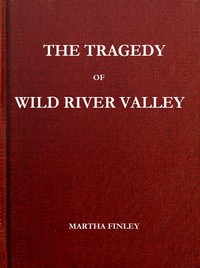
The Tragedy of Wild River Valley — Inside the Classic can be approached with a clearer sense of reading commitment from its source measurements: 56,054 words, 4 hr 4 min estimated reading time, and 20 detected text sections.
The text analysis averages about 20.3 words per sentence, while the detected sections provide another way to judge how the source is divided.
Project Gutenberg metadata also associates the work with “Conduct of life -- Juvenile fiction,” connecting these edition facts with the source record’s subject description.
Explore this collection
These alternatives are selected using recorded categories and estimated reading time.
About 243 minutes
Fantasy Juvenile Worlds
55,883 recorded words. 1 minutes difference from this book's estimate.
View Gutenberg source #44808About 243 minutes
Fantasy Juvenile Worlds
55,879 recorded words. 1 minutes difference from this book's estimate.
View Gutenberg source #46269About 247 minutes
Fantasy Juvenile Worlds
56,599 recorded words. 3 minutes difference from this book's estimate.
View Gutenberg source #43144Search stored excerpts and compare books → Choose by your preferences →
Choices use stored catalog measurements. Estimates vary with reading speed. A shared category is a catalog label, not a claim that two books have the same argument or literary quality.
Search reads excerpt text stored with this catalog and links to its associated Gutenberg record. The connection is stored in the site database; this tool does not recheck that every excerpt is word-for-word identical to that external record. Excerpt search does not cover every chapter and does not verify historical publication dates.
Catalog snapshot checked: 2026-09-25. Coverage: 96 public books, 96 available source excerpts.
Read the complete public-domain text at its original source.
Read on Project GutenbergMartha Finley's The Tragedy of Wild River Valley begins not with the valley itself but with a man walking a quiet road. The returning Union veteran Phelim is described with a “sinister expression” and a covetous glance at farmhouses, establishing a pattern of movement between public roads and private homes that structures the early chapters. The story shifts rapidly from this roadside encounter to a rude cabin, where Phelim’s homecoming is marked by whiskey, a dirty pipe, and a mother’s wild cry. Finley uses these contrasting spaces—the open road and the cramped cabin—to introduce a world where domestic interiors are repeatedly invaded by outside threats.
The novel’s opening chapter establishes a clear spatial logic. Phelim’s walk along a “quiet road” is interrupted by his turn into a “bit of woods” leading to a cabin. This movement from public to private space recurs throughout the excerpts: later scenes take place on a porch where Serena and Miriam discuss mortgages, and in a “cosey sitting-room” where a sleeping infant is observed. The porch becomes a threshold where outside dangers—Bangs’s threats, financial ruin—are voiced. Finley uses these settings to create a geography of vulnerability: the road brings strangers, the cabin hides secrets, and the porch exposes family troubles to the open air.
Several objects appear repeatedly, linking scenes across the narrative. The mortgage on Lakeside is introduced as a “hard alternative” that threatens to “rob us of the home.” Money itself appears early: Phelim pulls out “a handful of gold and silver coins and a roll of bank-notes,” a gesture that echoes later financial anxieties. The infant—described as “plump, fair, golden-haired, blue-eyed”—is a recurring image of innocence placed in jeopardy. These objects are not merely props; they are nodes around which character motivations and conflicts cluster. The mortgage document, the coins, and the crib each carry weight beyond their physical presence, signaling the novel’s preoccupation with property, inheritance, and vulnerability.
Finley distinguishes characters through speech patterns. Phelim’s dialogue is marked by Irish dialect (“me son! me bye Phalim come home till his mither”), while Serena speaks in “low, silvery laugh” and Miriam in anguished exclamations. The excerpts show conversations that move rapidly from domestic pleasantries to urgent confessions. Miriam’s revelation about Bangs’s mortgage threat is delivered in broken sentences: “I cannot—oh, it would be impossible!—I never, never could.” These verbal hesitations and interruptions mirror the novel’s structural movement between calm and crisis. The dialogue often carries the weight of exposition, with characters explaining past events and future dangers through their exchanges.
Phelim’s homecoming in the first chapter sets a pattern of return that disrupts domestic order. His mother’s “wild cry” and the father’s trembling eagerness contrast with the “sinister expression” that marks his face. The knapsack and blue overcoat signal his military past, but his talk of “inventing, embellishing, or suppressing occurrences” suggests an unreliable narrator within the story. This figure of the returning soldier—carrying both physical souvenirs and hidden intentions—introduces a tension between home and world, loyalty and greed. Later excerpts shift to other households, but the initial scene lingers: the cabin, the potato patch, and the whiskey bottle establish a baseline of rural poverty against which the more comfortable homes of Serena and Miriam are measured.
Readers attentive to the novel’s structure will notice how Finley uses movement between indoor and outdoor spaces to signal shifts in power and secrecy. The recurring images of money, infants, and documents reward close attention, as they often reappear at moments of crisis. The excerpts suggest a narrative that builds tension through confined settings and urgent dialogue, rather than through extended action sequences. This editorial note is based solely on the provided excerpts and catalog metadata; the complete work may develop these patterns further or introduce new elements.
The rain kept time with Phelim’s slow, creeping dread—that heavy feeling of unpaid debts and hidden papers. Finley’s world is severe, almost unrelenting. Yet afterward, I found myself drifting toward Mildred and Elsie — A Closer Reading, seeking a quieter version of moral strain, less about exposed treachery and more about quiet, private endurance. The storm outside softened. That was enough.
Answer a few questions and save a private reflection on this device.