About 243 minutes
Betty Lee, Senior — Themes and Context
Fantasy Juvenile Worlds
55,883 recorded words. 0 minutes difference from this book's estimate.
View Gutenberg source #44808
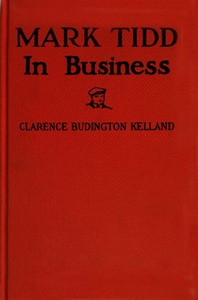
The catalog record for Mark Tidd in Business — Reading Notes provides practical reading context through 55,879 words, 4 hr 3 min estimated reading time, and 19 detected text sections.
The text analysis averages about 12.6 words per sentence, while the detected sections provide another way to judge how the source is divided.
Project Gutenberg metadata also associates the work with “Friendship -- Juvenile fiction,” connecting these edition facts with the source record’s subject description.
Explore this collection
These alternatives are selected using recorded categories and estimated reading time.
About 243 minutes
Fantasy Juvenile Worlds
55,883 recorded words. 0 minutes difference from this book's estimate.
View Gutenberg source #44808About 244 minutes
Fantasy Juvenile Worlds
56,054 recorded words. 1 minutes difference from this book's estimate.
View Gutenberg source #46437About 240 minutes
Fantasy Juvenile Worlds
55,190 recorded words. 3 minutes difference from this book's estimate.
View Gutenberg source #53821Search stored excerpts and compare books → Choose by your preferences →
Choices use stored catalog measurements. Estimates vary with reading speed. A shared category is a catalog label, not a claim that two books have the same argument or literary quality.
Search reads excerpt text stored with this catalog and links to its associated Gutenberg record. The connection is stored in the site database; this tool does not recheck that every excerpt is word-for-word identical to that external record. Excerpt search does not cover every chapter and does not verify historical publication dates.
Catalog snapshot checked: 2026-09-25. Coverage: 96 public books, 96 available source excerpts.
Read the complete public-domain text at its original source.
Read on Project GutenbergThe story opens with a double calamity: school is closed due to diphtheria, and Plunk Smalley's father is injured by an automobile and taken to a Detroit hospital. Plunk's mother must accompany him, leaving the family store—Smalley's Bazar—without anyone to run it. The narrative voice is Plunk's own, colloquial and immediate, as he recounts his despair and the sudden relief of seeing his fat friend Mark Tidd on the porch. Mark's characteristic response—squinting, pinching his cheek, and declaring "M-must be some way out"—establishes him as the problem-solver who will drive the plot.
The novel is narrated in first person by Plunk Smalley, whose speech is marked by colloquialisms and a direct, unpolished tone: "I was 'most cryin', but I didn't let on any more than I could help." This vernacular style extends to dialogue, where characters like Old Mose Miller use distinctive rural idioms: "I calc'late you figger you're growed up past spankin's." The author, Clarence Budington Kelland, frequently renders dialect through phonetic spelling and contractions, such as "hain't" and "dun'no'." Mark Tidd himself is given a stutter, represented as "P-plunk" and "W-what's that?"—a verbal tic that distinguishes him without slowing the pace. The effect is a strong sense of place and period, grounding the story in small-town Michigan circa 1915.
Smalley's Bazar is more than a setting; it is the central problem and the arena for action. Plunk describes it as a place "where you can buy almost anything—if father can find where he put it," hinting at a chaotic inventory that will likely require organization. The store's fate drives the plot: with the parents absent, the boys must keep it running to generate income. This premise turns retail management into an adventure, mixing practical challenges (stock, customers, accounts) with the social dynamics of a small town. The excerpts show the store as a gathering point, where townspeople converge to petition Old Mose for votes, creating a lively, crowded scene that blends commerce and politics.
The excerpt featuring Old Mose Miller showcases Kelland's use of exaggerated, farcical dialogue. Old Mose is a curmudgeon who rebuffs every friendly advance with escalating bluster: "I'd rather be catched stealin' sheep than to have folks remember I was your uncle." The scene piles on characters—Chet, Chancy, Mrs. Bloom, Mrs. Peterson, and three young women—each trying to win Old Mose's favor for different reasons. Their overlapping appeals create a comic chaos that Old Mose meets with increasing fury. This pattern of misunderstanding and overreaction recurs throughout the novel, pitting the boys' schemes against adult stubbornness. The humor relies on rapid-fire exchanges and physical comedy, such as Old Mose backing "off and got around the end of the counter."
Readers should pay attention to how Kelland balances the serious stakes of the Smalley family's financial trouble with the lighthearted, often absurd interactions among the townspeople. The narrative voice of Plunk Smalley provides a consistent, sympathetic viewpoint, while Mark Tidd's strategic mind and stuttering speech become the engine of the plot. The novel rewards attention to its period details and the layered humor of small-town politics and commerce.
That rainy afternoon, Mark Tidd in Business kept me company while the gutters sang, and I found myself lingering on Plunk’s quiet loyalty more than the schemes. It reminded me, gently, of another schoolboy’s weightier worries, and I reached for Ward Hill, the Senior — Edition Insights, where growing up feels less comic, more solemn—yet somehow just as familiar, like two faces of the same long afternoon.
Save your reaction, strongest insight, and memorable passage.