About 222 minutes
Sarah Dillard's Ride: A Story of the Carolinas in 1780 — Reading Notes
Fantasy Juvenile Worlds
50,945 recorded words. 4 minutes difference from this book's estimate.
View Gutenberg source #43806
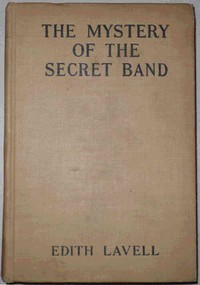
The catalog record for The Mystery of the Secret Band — Reading Notes provides practical reading context through 49,967 words, 3 hr 38 min estimated reading time, and 8 detected text sections.
The text analysis averages about 12.2 words per sentence, while the detected sections provide another way to judge how the source is divided.
Project Gutenberg metadata also associates the work with “Detective and mystery stories,” connecting these edition facts with the source record’s subject description.
Explore this collection
These alternatives are selected using recorded categories and estimated reading time.
About 222 minutes
Fantasy Juvenile Worlds
50,945 recorded words. 4 minutes difference from this book's estimate.
View Gutenberg source #43806About 227 minutes
Fantasy Juvenile Worlds
52,173 recorded words. 9 minutes difference from this book's estimate.
View Gutenberg source #46188About 227 minutes
Fantasy Juvenile Worlds
52,009 recorded words. 9 minutes difference from this book's estimate.
View Gutenberg source #53071Search stored excerpts and compare books → Choose by your preferences →
Choices use stored catalog measurements. Estimates vary with reading speed. A shared category is a catalog label, not a claim that two books have the same argument or literary quality.
Search reads excerpt text stored with this catalog and links to its associated Gutenberg record. The connection is stored in the site database; this tool does not recheck that every excerpt is word-for-word identical to that external record. Excerpt search does not cover every chapter and does not verify historical publication dates.
Catalog snapshot checked: 2026-09-25. Coverage: 96 public books, 96 available source excerpts.
Read the complete public-domain text at its original source.
Read on Project GutenbergThe first chapter of Edith Lavell's The Mystery of the Secret Band opens not with a crime but with a school Christmas entertainment, where Mary Louise Gay recounts a classmate's comic stage fright: little Rosemary Dotts repeats 'I'm going to have plum pudding!' while rubbing her tummy. The scene establishes a colloquial, breezy voice—Mary Louise says 'Swell!' and 'keen'—and a domestic setting that will soon give way to detective work. The narrative pace quickens markedly when Mary Louise begins planning a stakeout at the Bellevue Hotel, coordinating with a chaperon and a hotel manager. Lavell uses short, action-driven paragraphs and dialogue to propel the plot, while the protagonist's methodical note-taking and careful descriptions of suspects (a 'striking brunette' and 'noticeably blond' companion) hint at a more deliberate, procedural layer beneath the casual tone.
Lavell's prose in the opening chapters is marked by a colloquial, almost conversational energy. Mary Louise exclaims 'Swell!' and 'keen,' and her mother's replies are warm and understated. Dialogue carries much of the narrative weight, with characters speaking in short, natural bursts. However, as the mystery deepens, the language becomes more deliberate. When Mary Louise describes suspects to hotel manager Mr. Hayden, her sentences grow precise and list-like: 'Pauline Brooks—or Catherine Smith, as she called herself here—was a striking brunette, and ... Mary Green—or Mary Jackson—was noticeably blond; that both girls were short and slender and wore fur coats and expensive jewelry.' This shift from casual to methodical mirrors the protagonist's dual role as a teenager and an amateur detective. The voice never becomes stiff; even in procedural moments, Lavell retains a lightness through interjections like 'How correct this girl was about everything!'
Lavell controls pace primarily through paragraph length and dialogue rhythm. Early scenes feature longer paragraphs with descriptive asides, such as Mary Louise's anecdote about Rosemary Dotts. As tension mounts, paragraphs shorten. During the hotel planning sequence, many paragraphs consist of a single line of dialogue or a brief action: 'Mary Louise laughed.' 'She went to her own room, packed only her toilet articles ... and lay down for her nap.' This fragmentation creates a staccato effect, mimicking the character's hurried thoughts. The narrative also uses time markers—'Immediately afterwards,' 'When it was over'—to compress or expand time. The stakeout preparation, which spans several pages, feels rapid because Lavell omits transitions and focuses on discrete actions: phoning, packing, napping, meeting. The result is a pace that accelerates as Mary Louise moves from home to hotel, from leisure to vigilance.
The settings in the excerpts—a snow-covered porch, a cozy living room, a hotel lobby—are rendered with sensory details that influence both voice and pace. The opening snow and goloshes ground the story in a specific winter atmosphere, while the hotel's 'tenth floor' and 'reception rooms' introduce a more formal, anonymous space. Lavell's descriptions are functional rather than ornate: the hotel is defined by room numbers and corridors, not decor. This spareness shifts the narrative voice from the warm, familial register of the home to a clipped, professional tone. The contrast between settings also affects pacing. At home, time slows for conversation; at the hotel, time is measured in appointments and deadlines ('I'm going to sleep now till six o'clock'). The physical movement between these spaces—from porch to living room to hotel—marks transitions in the story's rhythm, with each new location tightening the narrative focus on the impending investigation.
Readers attentive to shifts in language and tempo will find that Lavell embeds clues not only in plot but in prose rhythm. The early, chatty exchanges give way to clipped, purposeful dialogue as Mary Louise assumes her detective role. Notice how the author uses paragraph breaks to signal changes in tension, and how the protagonist's vocabulary expands when she discusses procedure. These stylistic choices reward a close reading of the text's surface, offering a secondary layer of suspense beyond the mystery itself.
There’s something tender about Mary Louise’s earnest sleuthing, that mix of school-girl chatter and quiet watchfulness. It reminds me of the stray narrator in Scamp and I: A Story of City By-Ways — A Closer Reading, who finds friendship in alleys rather than classrooms. Both books understand that childhood confidence often hides a lonely, patient heart, and that’s a truth worth sitting with a moment.
Capture what you thought, learned, and would like to remember.