About 450 minutes
Cædwalla; or, The Saxons in the Isle of Wight: A Tale — Themes and Context
Exploration Survival Adventure Tales
103,330 recorded words. 35 minutes difference from this book's estimate.
View Gutenberg source #53726
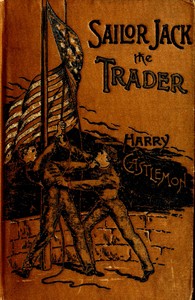
Before opening Sailor Jack, the Trader — Inside the Classic, the edition data offers a quick orientation: 95,411 words, 6 hr 55 min estimated reading time, and 20 detected text sections.
The text analysis averages about 21.5 words per sentence, while the detected sections provide another way to judge how the source is divided.
Project Gutenberg metadata also associates the work with “Conduct of life -- Juvenile fiction,” connecting these edition facts with the source record’s subject description.
Explore this collection
These alternatives are selected using recorded categories and estimated reading time.
About 450 minutes
Exploration Survival Adventure Tales
103,330 recorded words. 35 minutes difference from this book's estimate.
View Gutenberg source #53726About 365 minutes
Exploration Survival Adventure Tales
83,927 recorded words. 50 minutes difference from this book's estimate.
View Gutenberg source #55021About 360 minutes
Exploration Survival Adventure Tales
82,751 recorded words. 55 minutes difference from this book's estimate.
View Gutenberg source #45098Search stored excerpts and compare books → Choose by your preferences →
Choices use stored catalog measurements. Estimates vary with reading speed. A shared category is a catalog label, not a claim that two books have the same argument or literary quality.
Search reads excerpt text stored with this catalog and links to its associated Gutenberg record. The connection is stored in the site database; this tool does not recheck that every excerpt is word-for-word identical to that external record. Excerpt search does not cover every chapter and does not verify historical publication dates.
Catalog snapshot checked: 2026-09-25. Coverage: 96 public books, 96 available source excerpts.
Read the complete public-domain text at its original source.
Read on Project GutenbergFrom its first line—a startled exclamation of dialect—Sailor Jack, the Trader announces a narrative voice that oscillates between colloquial energy and formal report. The opening chapter thrusts readers into a conversation between Lieutenant Lambert and the ragged Tom Randolph, whose complaints about Yankees and “traitors” like Rodney Gray set a tone of grievance and immediacy. Yet the prose soon shifts to a more distanced, summarizing style when describing events “the last time we saw these two worthies.” This alternation between vivid dialogue and compressed backstory establishes a rhythm that persists throughout the excerpts, with pacing that accelerates during action sequences and slows for moral exchanges.
The novel opens with Tom Randolph’s colloquial speech—“Well, by gum! Am I dreamin’?”—and his self-pitying contrast between his own ragged state and the better-clad enslaved people of the settlement. This vernacular immediacy gives way to Lambert’s more measured replies, creating a layered exchange that reveals character through idiom. Later, Rodney Gray’s voice is markedly different: he speaks with earnest directness (“I know when I have had enough”) and is described as acting “honestly,” his words punctuated by physical gestures like shaking hands with a “husky” voice. The excerpts show no single narrative register; instead, the author shifts between Randolph’s bitter colloquialism, Rodney’s principled plainness, and the formal tone of the narrator’s summaries. This variety suggests a deliberate strategy to differentiate characters by their linguistic habits, though without the full text one cannot assess consistency across all twenty chapters.
The narrative frequently condenses elapsed time into brief phrases: “The last time we saw these two worthies was shortly after…” or “Matters could not have worked more to Rodney Gray’s satisfaction if he had had the planning of them himself.” These transitions leap over days or weeks, creating a staccato pace that contrasts with the detailed dialogue scenes. For instance, Chapter X begins with a summary of events—the note to Rodney’s mother, the arrival of his father and the doctor—before plunging into the arrival of Colonel Grierson. The effect is a rhythm of rapid scene shifts, with action often reported rather than staged. The excerpts also show a tendency to break chapters at moments of tension (e.g., “Knowi…” at the end of a fragment), suggesting that chapter endings are used to heighten suspense, though the incomplete excerpts prevent full analysis of this pattern.
Rodney Gray’s scenes are marked by slower, more reflective pacing, as when he explains his change of allegiance: “When I was whipped I quit.” This line, delivered in response to a soldier’s challenge, anchors a moment of moral reckoning that the narrative allows to unfold through dialogue rather than action. Similarly, the extended handshake and failed attempt at thanks (“his voice grew husky and finally broke”) slow the tempo to emphasize emotional weight. In contrast, Tom Randolph’s opening complaint moves quickly, driven by indignation and list of grievances. The excerpts thus present two distinct paces: one tied to resentment and rapid-fire accusation, the other to deliberation and reconciliation. Without the complete novel, it is unclear how these pacing strategies map onto the overall arc, but the contrast is evident in the available material.
Readers attentive to voice will find that Sailor Jack, the Trader relies on dialogue to advance both plot and character, while its narrative summaries often compress time abruptly. The excerpts suggest a work that balances sectional bitterness with moments of personal transformation, though the full scope of that transformation remains to be seen. Pay particular attention to how the narrator’s tone shifts between chapters, and whether the pace of moral reflection changes as the story progresses.
Years of shelving these old volumes taught me a quiet kinship: Sailor Jack’s Rodney Gray, burdened by measured calm amid war’s chaos, finds a distant echo in the girls’ determined cheer across France’s battlefields. Both books understand that courage often whispers, not shouts. I often think of them side by side, especially when recalling The Camp Fire Girls in Glorious France — Background and Themes, whose spirit lingers like dust on a sunlit spine.
Create a short personal record of your experience with this book.