About 360 minutes
Boris the Bear-Hunter — Context and Discussion
Exploration Survival Adventure Tales
82,751 recorded words. 5 minutes difference from this book's estimate.
View Gutenberg source #45098
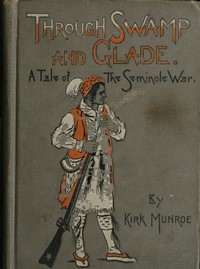
Through Swamp and Glade: A Tale of the Seminole War — Reading Companion can be approached with a clearer sense of reading commitment from its source measurements: 83,927 words, 6 hr 5 min estimated reading time, and 7 detected text sections.
The text analysis averages about 22.1 words per sentence, while the detected sections provide another way to judge how the source is divided.
Project Gutenberg metadata also associates the work with “Adventure stories,” connecting these edition facts with the source record’s subject description.
Explore this collection
These alternatives are selected using recorded categories and estimated reading time.
About 360 minutes
Exploration Survival Adventure Tales
82,751 recorded words. 5 minutes difference from this book's estimate.
View Gutenberg source #45098About 360 minutes
Exploration Survival Adventure Tales
82,695 recorded words. 5 minutes difference from this book's estimate.
View Gutenberg source #50811About 344 minutes
Exploration Survival Adventure Tales
78,946 recorded words. 21 minutes difference from this book's estimate.
View Gutenberg source #53544Search stored excerpts and compare books → Choose by your preferences →
Choices use stored catalog measurements. Estimates vary with reading speed. A shared category is a catalog label, not a claim that two books have the same argument or literary quality.
Search reads excerpt text stored with this catalog and links to its associated Gutenberg record. The connection is stored in the site database; this tool does not recheck that every excerpt is word-for-word identical to that external record. Excerpt search does not cover every chapter and does not verify historical publication dates.
Catalog snapshot checked: 2026-09-25. Coverage: 96 public books, 96 available source excerpts.
Read the complete public-domain text at its original source.
Read on Project GutenbergKirk Munroe's Through Swamp and Glade (1896) opens with a dedication to readers asserting that "the principal incidents in the story of Coacoochee, as related in the following pages, are historically true." This framing immediately distinguishes the novel from pure invention, grounding its adventure in the real Second Seminole War (1835–1842). The catalog subjects list "Seminole Indians" and "Osceola" alongside "cruelty" and "slavery," but the excerpts reveal a more complex treatment: Coacoochee is portrayed as a sympathetic leader, and the narrative includes a white character, Ralph Boyd, described as Coacoochee's "friend, his only friend among all the millions of white men." The story thus complicates simple binaries of hero and villain.
Munroe's prefatory note insists on historical truth for Coacoochee's story, yet the excerpts show clear fictional devices: a forest betrothal, a captive girl named Anstice, and a dramatic rescue involving flatboats and slave-catchers. The catalog subject "Seminole War, 2nd, 1835-1842 -- Juvenile fiction" accurately places the setting, but the novel's romantic subplots and cliffhanger chapter titles (e.g., "Cruel Death of Ul-we, the Staghound") indicate a strong adventure-fiction bent. The author's note also describes the post-war Seminole remnant as "industrious, peaceful lives"—a political stance that colors the narrative's sympathy toward Native characters.
The catalog includes "Slavery -- Juvenile fiction," and the excerpts depict a scene where captives—"a dark mass of humanity" with "the unmistakable accent of negroes"—are freed by Seminoles. This aligns with historical accounts of Seminoles harboring escaped slaves, but the novel frames it as a rescue rather than a critique of the institution. The character Louis Pacheco, listed in the table of contents as "bides his Time," suggests a subplot involving a figure of color with strategic patience. The swamp setting itself becomes a site of contested agency: Anstice, a white girl, is both captive and observer, while Coacoochee moves "noiselessly" through the landscape, asserting control.
Munroe employs a third-person omniscient narrator who shifts between characters' perspectives, as when Anstice "unconsciously" asks questions aloud. The prose is dense with sensory detail—"blood-chilling Seminole war-cry," "horrid sounds of a death-struggle"—and relies on cliffhanger chapter endings. The catalog's "Adventure stories" subject fits, but the excerpts also reveal a didactic undercurrent: the author's note directly addresses readers about the Seminoles' plight. The novel's structure, with 39 chapters and a table of contents listing events like "Osceola signs the Treaty," suggests a chronological sweep from 1835 to 1842, though the excerpts focus on a single night of action.
Readers should approach Through Swamp and Glade as a hybrid of historical fiction and adventure romance, where Munroe's stated commitment to truth coexists with melodramatic plotting. The catalog subjects offer a starting point, but the excerpts show a work that resists easy categorization—neither pure propaganda nor neutral history. Pay attention to how the swamp functions as both a physical obstacle and a symbolic space of refuge and danger, and note the tension between the author's sympathy for Seminole characters and the era's racial assumptions.
That rainy afternoon, Through Swamp and Glade left me with Coacoochee’s quiet dignity, how survival meant holding a self the world tried to erase. The thought lingered while I shelved it, drifting toward another kind of service—a woman’s steadying presence in wartime. Strange how one story opens a door, almost by accident, to Sally Scott of the WAVES — A Reader’s Guide, another quiet refusal to disappear.
Capture what you thought, learned, and would like to remember.