About 212 minutes
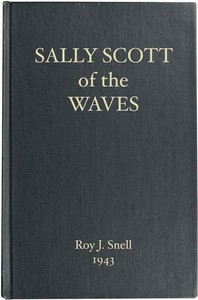
Sally Scott of the WAVES — A Reader’s Guide
Exploration Survival Adventure Tales
48,564 recorded words. 0 minutes difference from this book's estimate.
View Gutenberg source #44813

This digital edition of The Camp Fire Girls in Glorious France — Background and Themes is described by source-level measurements including 48,585 words, 3 hr 32 min estimated reading time, and 7 detected text sections.
The text analysis averages about 19.6 words per sentence, while the detected sections provide another way to judge how the source is divided.
Project Gutenberg metadata also associates the work with “Adventure stories,” connecting these edition facts with the source record’s subject description.
Explore this collection
These alternatives are selected using recorded categories and estimated reading time.
About 212 minutes
Exploration Survival Adventure Tales
48,564 recorded words. 0 minutes difference from this book's estimate.
View Gutenberg source #44813About 213 minutes
Exploration Survival Adventure Tales
48,907 recorded words. 1 minutes difference from this book's estimate.
View Gutenberg source #43374About 208 minutes
Exploration Survival Adventure Tales
47,718 recorded words. 4 minutes difference from this book's estimate.
View Gutenberg source #50651Search stored excerpts and compare books → Choose by your preferences →
Choices use stored catalog measurements. Estimates vary with reading speed. A shared category is a catalog label, not a claim that two books have the same argument or literary quality.
Search reads excerpt text stored with this catalog and links to its associated Gutenberg record. The connection is stored in the site database; this tool does not recheck that every excerpt is word-for-word identical to that external record. Excerpt search does not cover every chapter and does not verify historical publication dates.
Catalog snapshot checked: 2026-09-25. Coverage: 96 public books, 96 available source excerpts.
Read the complete public-domain text at its original source.
Read on Project GutenbergMargaret Vandercook opens The Camp Fire Girls in Glorious France with a striking juxtaposition: an old French farmhouse whose windows stand open on a March afternoon, curtains blowing “like white flags of truce.” The simile immediately signals a nation recovering from war. Inside, girls’ voices speak English, not French, and one sings an original Camp Fire song with an “odd foreign accent.” The song’s lyrics—composed by a character named Bettina—explicitly invoke the “law of loving” and end with “France, we come to thy side!” This is not a generic adventure; Vandercook is positioning her American heroines as purposeful visitors in a specific historical moment.
Vandercook’s word choices repeatedly underscore the transitional atmosphere of 1919 France. The March day is “unusually warm,” the sky “a delicate blue,” clouds “changing into fantastic shapes”—language that suggests fragility and renewal. When describing Paris, she notes houses built of “white stone or yellow cement,” making the city appear “white and gold in the sunlight.” This palette is deliberate: it evokes purity and value, aligning with the novel’s title. Yet the narrative also includes blunt reminders of conflict: the Japanese delegates are “small men in black frock coats,” the French Premier is called “The Tiger,” and the crowd’s cry “Vive le Wilson!” rings through “clear air.” Vandercook mixes the ceremonial with the intimate, as when Mrs. Burton admits she is “always afraid of crowds,” and Miss Patricia replies unsympathetically. The dialogue is clipped, revealing character through tone rather than exposition.
The excerpts show Vandercook using dialogue to differentiate her large cast quickly. Mary Gilchrist speaks with “forceful and erect” directness; Peggy Webster loses her “usual color” and is “pale with emotion.” Bettina Graham, the songwriter, is observant—she identifies President Wilson without hesitation. The exchange between Mrs. Burton and Miss Patricia is particularly telling: Mrs. Burton’s caution (“I am always afraid of crowds”) is met with blunt dismissal (“Then you should never have set foot in Paris today”). This friction suggests generational or temperamental conflict without stating it. Vandercook also uses dialogue to convey information naturally: the plan for splitting into groups is delivered as a series of commands, each girl assigned a different companion. The effect is a sense of organized chaos, fitting a story about American girls navigating a foreign city during a historic peace conference.
Vandercook repeatedly positions her characters as observers. In the Paris scene, the girls watch from a balcony as delegations arrive at the French Foreign Office. This framing device allows the author to describe the procession—Japanese, Siamese, East Indians in “picturesque turbans”—while keeping her protagonists physically separate. The balcony becomes a stage from which history is viewed, not participated in. The narrative zooms in on specific details: the fanfare of trumpets, the “tall man” with “hair almost white” who smiles and bows. When the doors close, the crowd disperses, and the girls must decide whether to wait. Vandercook uses this spatial separation to emphasize the girls’ role as witnesses rather than actors, which is consistent with the novel’s genre: adventure through tourism and observation, not direct intervention.
The Camp Fire song that opens the novel is not a one-off decoration. Its lyrics—“The ill, the hungry and dying, / Are they not calling you?”—introduce a moral undertone that Vandercook weaves into later scenes. The song is performed by a character with an “odd foreign accent,” hinting at the multinational setting. Later, the narrative returns to the idea of nations gathering “in the interest of a world peace,” echoing the song’s call to service. Vandercook also repeats visual motifs: the “white flags of truce” of the curtains, the “white and gold” of Paris, the “pale sunshine” of March. These recurring images create a cohesive sensory world. The song itself is a structural marker: it appears at the start, and the novel’s final chapter is titled “L’Envoi to Glorious France,” suggesting a circular return to the theme of farewell and gratitude.
Readers approaching The Camp Fire Girls in Glorious France should attend to how Vandercook balances the documentary impulse—recording real places and events like the 1919 Paris Peace Conference—with the conventions of series fiction. The excerpts reveal a writer attentive to sensory detail, dialogue rhythm, and the symbolic potential of setting. The novel rewards those who read for the texture of its historical moment rather than for plot alone.
That editorial on Vandercook’s wartime Camp Fire Girls made me pause over how carefully she lets silences sit between the songs and the crowd noise. It felt like reading a letter someone almost forgot to send. I keep thinking about that same quiet ache in Ned in the Block-House: A Tale of Early Days in the West — A Closer Reading, where the frontier’s hush does its own slow work. Some stories just stay, don’t they?
Use these questions to collect your thoughts before moving on.