About 285 minutes
Ned in the Block-House: A Tale of Early Days in the West — A Closer Reading
Exploration Survival Adventure Tales
65,533 recorded words. 12 minutes difference from this book's estimate.
View Gutenberg source #43675
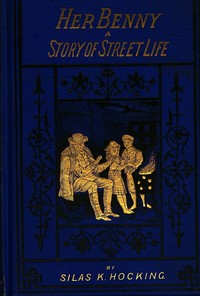
The catalog record for Her Benny: A Story of Street Life — A Reader’s Guide provides practical reading context through 68,091 words, 4 hr 57 min estimated reading time, and 8 detected text sections.
The text analysis averages about 17.6 words per sentence, while the detected sections provide another way to judge how the source is divided.
Project Gutenberg metadata also associates the work with “Christian life -- Juvenile fiction,” connecting these edition facts with the source record’s subject description.
Explore this collection
These alternatives are selected using recorded categories and estimated reading time.
About 285 minutes
Exploration Survival Adventure Tales
65,533 recorded words. 12 minutes difference from this book's estimate.
View Gutenberg source #43675About 282 minutes
Exploration Survival Adventure Tales
64,717 recorded words. 15 minutes difference from this book's estimate.
View Gutenberg source #48904About 281 minutes
Exploration Survival Adventure Tales
64,608 recorded words. 16 minutes difference from this book's estimate.
View Gutenberg source #54954Search stored excerpts and compare books → Choose by your preferences →
Choices use stored catalog measurements. Estimates vary with reading speed. A shared category is a catalog label, not a claim that two books have the same argument or literary quality.
Search reads excerpt text stored with this catalog and links to its associated Gutenberg record. The connection is stored in the site database; this tool does not recheck that every excerpt is word-for-word identical to that external record. Excerpt search does not cover every chapter and does not verify historical publication dates.
Catalog snapshot checked: 2026-09-25. Coverage: 96 public books, 96 available source excerpts.
Read the complete public-domain text at its original source.
Read on Project GutenbergThe story opens with a precise temporal marker—the Town Hall clock striking four—yet the fog that hangs over Liverpool immediately blurs certainty, establishing a world where time and visibility are unreliable. Hocking alternates between cramped interiors (the hut of Joe Wrag, the office of Mr. Lawrence) and open spaces (the woods, the farm), each setting carrying distinct moral and emotional weight. The narrative voice frequently pauses to comment on Benny's inner state, using physical description—his flushed face, his steady gaze—as shorthand for character.
The opening fog is not mere atmosphere; it functions as a structural device that isolates characters and forces encounters. Hocking repeatedly returns to weather and light: the 'damp and dismal' afternoon, the 'cheerful blaze' of a grate contrasted with those 'without a spark of fire.' These contrasts are not decorative but mark the story's movement between deprivation and comfort. The street itself is a stage where Benny and Nelly perform their daily survival, and Hocking often notes the exact hour—'only just struck four'—to anchor scenes in a relentless clock time that governs the poor differently than the wealthy.
Joe Wrag's hut and Mr. Lawrence's office represent opposing domestic orders. The hut is described through its lack—no fire, meager furnishings—while the office is a space of arrangement: books placed on shelves, furniture dusted. Benny moves between these poles, and Hocking uses the physical details of each to signal his moral trajectory. When Benny is accused of stealing a five-pound note, the office becomes a courtroom; his flushed face and steady gaze are the only evidence he can offer. The hut, by contrast, is where spiritual discernment is tested, as when Joe Wrag questions Benny's understanding of faith.
Hocking explicitly divides Benny's development into physical, mental, and moral growth, a tripartite structure that organizes the later chapters. Physical growth is noted in his development 'for his age' despite neglected childhood. Mental growth is shown through his diligence with copies and borrowed books, with knowledge shifting from 'means to an end' to 'joy and delight.' Moral growth is tied to Sunday-school attendance and the 'old, old story' gaining fascination. This schematic approach risks didacticism, but Hocking anchors it in concrete details: Benny's struggle to unlearn 'old expressions,' his eagerness to speak correctly, and his fear of being 'a disgrace.'
Two images recur across the excerpts: fire and song. The opening poem contrasts a 'glowing grate' with those 'without a spark of fire,' and later Benny hums 'There is beauty all around, When there's love at home' while dusting the office. These are not random; they tie domestic warmth to moral safety. The song, in particular, becomes a private refrain that marks Benny's hope. Hocking also uses light—or its absence—to signal turning points: the fog lifts only when the narrative moves toward resolution, and the 'cheerful blaze' of the grate is a luxury the street children rarely experience. These images create a sensory shorthand for the story's moral landscape.
Readers attentive to Hocking's use of setting will notice how each location—the foggy street, the sparse hut, the ordered office—carries a specific moral temperature. The story does not simply move from poverty to prosperity; it tests Benny's integrity in each space. Pay particular attention to the moments when Hocking pauses to describe a character's posture or expression; these physical details often carry more weight than the narrator's explicit moralizing.
That rainy afternoon, I finished Her Benny and sat with the ache of its muddy Liverpool streets, the quiet way Nelly’s faith held through hunger. Then, by chance, I picked up Boris the Bear-Hunter — Context and Discussion, and found the same steady moral core, though wrapped in snow and woods instead of cobblestones.
Your answers remain private and are stored only in this browser.