About 344 minutes
George at the Wheel; Or, Life in the Pilot-House — Themes and Context
Exploration Survival Adventure Tales
78,946 recorded words. 21 minutes difference from this book's estimate.
View Gutenberg source #53544
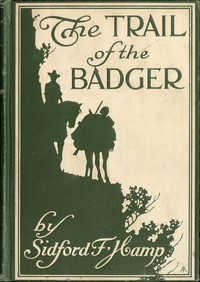
The source record for The Trail of The Badger: A Story of the Colorado Border Thirty Years Ago — Reading Notes measures this digital text at 74,114 words, 5 hr 23 min estimated reading time, and 7 detected text sections.
The text analysis averages about 20.2 words per sentence, while the detected sections provide another way to judge how the source is divided.
Project Gutenberg metadata also associates the work with “Teenage boys -- Juvenile fiction,” connecting these edition facts with the source record’s subject description.
Explore this collection
These alternatives are selected using recorded categories and estimated reading time.
About 344 minutes
Exploration Survival Adventure Tales
78,946 recorded words. 21 minutes difference from this book's estimate.
View Gutenberg source #53544About 297 minutes
Exploration Survival Adventure Tales
68,091 recorded words. 26 minutes difference from this book's estimate.
View Gutenberg source #43325About 360 minutes
Exploration Survival Adventure Tales
82,751 recorded words. 37 minutes difference from this book's estimate.
View Gutenberg source #45098Search stored excerpts and compare books → Choose by your preferences →
Choices use stored catalog measurements. Estimates vary with reading speed. A shared category is a catalog label, not a claim that two books have the same argument or literary quality.
Search reads excerpt text stored with this catalog and links to its associated Gutenberg record. The connection is stored in the site database; this tool does not recheck that every excerpt is word-for-word identical to that external record. Excerpt search does not cover every chapter and does not verify historical publication dates.
Catalog snapshot checked: 2026-09-25. Coverage: 96 public books, 96 available source excerpts.
Read the complete public-domain text at its original source.
Read on Project GutenbergThe preface to The Trail of the Badger frames the story as an illustration of “Desert Reclamation,” a subject listed in the catalog. The author states that the two young protagonists are “dimly conscious” of contributing to a community by making land productive. This editorial note examines how the catalog subjects—teenage boys, frontier life, desert reclamation—are reflected in the excerpts, without assuming the full plot.
The catalog lists “Desert reclamation -- Juvenile fiction” as a subject. The preface explicitly ties the boys’ adventures to this theme, noting they aim to “make two ears of corn … grow upon a spot of ground where only one grew before.” In the excerpts, however, the focus is on exploration and problem-solving—finding a lost mine and crossing a canyon—rather than on irrigation or farming. The reclamation theme appears more as a stated intention than a demonstrated action in the available text. The author’s preface suggests the boys are “ahead of their time” in recognizing opportunity, but the excerpts show them engaged in typical frontier adventure: tracking, climbing, and deciphering old bridge supports.
The catalog includes “Teenage boys -- Juvenile fiction” and “Guardian and ward -- Juvenile fiction.” The excerpts introduce two boys, Dick and Frank, who act independently: they ride, explore, and make decisions without adult supervision. Dick takes the lead, pointing out the bridge niches and reasoning about the mine’s location. Frank follows but contributes observations. The guardian-ward relationship is not evident in the excerpts; no guardian appears. The boys seem to be partners, as Frank calls Dick “my partner.” The catalog subject may refer to a subplot not present in the excerpts, or the guardian role may emerge later. The evidence shows self-reliant teenagers, not wards.
The catalog specifies “Frontier and pioneer life -- Colorado -- Juvenile fiction” and “Colorado -- History -- 19th century -- Juvenile fiction.” The excerpts place the boys in a rugged canyon landscape, with “great bare-topped ridges and pinnacles of rock” and a chasm spanned by a ruined bridge. The setting is described in detail: a “cañon” with a stream, rocky cliffs, and a “little ravine” on the opposite side. The boys discuss the “Spanish Trail” and a mine possibly worked by Indians or Spaniards. The frontier is presented as a place of physical obstacles—inaccessible terrain, a missing bridge—that require ingenuity to overcome. The catalog’s “Colorado border” is evoked by the mention of “the fringes of two discordant civilizations” in the preface, but the excerpts focus on the natural environment.
Readers should note that the excerpts cover only the early chapters and a later scene. The catalog subjects provide a framework, but the actual text may emphasize adventure over didactic themes. Pay attention to how the boys’ dialogue reveals their knowledge of the land and their problem-solving methods, which are more concrete than the preface’s reclamation rhetoric.
That rainy afternoon, The Trail of the Badger kept returning to the quiet stubbornness of its young hero—how he solved things alone, without fuss. Later, drying the cover, I found myself thinking of another coastal story with that same unspoken resolve. Somewhere between chapters, I picked up The Young Deliverers of Pleasant Cove — A Reader’s Guide, and the afternoon simply folded into itself.
Capture what you thought, learned, and would like to remember.