About 212 minutes
Sally Scott of the WAVES — A Reader’s Guide
Exploration Survival Adventure Tales
48,564 recorded words. 1 minutes difference from this book's estimate.
View Gutenberg source #44813
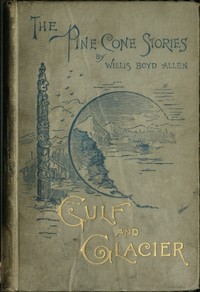
The catalog record for Gulf and Glacier; or, The Percivals in Alaska — A Reader’s Guide provides practical reading context through 48,907 words, 3 hr 33 min estimated reading time, and 6 detected text sections.
The text analysis averages about 18.3 words per sentence, while the detected sections provide another way to judge how the source is divided.
Project Gutenberg metadata also associates the work with “Animals -- Juvenile fiction,” connecting these edition facts with the source record’s subject description.
Explore this collection
These alternatives are selected using recorded categories and estimated reading time.
About 212 minutes
Exploration Survival Adventure Tales
48,564 recorded words. 1 minutes difference from this book's estimate.
View Gutenberg source #44813About 212 minutes
Exploration Survival Adventure Tales
48,585 recorded words. 1 minutes difference from this book's estimate.
View Gutenberg source #45236About 208 minutes
Exploration Survival Adventure Tales
47,718 recorded words. 5 minutes difference from this book's estimate.
View Gutenberg source #50651Search stored excerpts and compare books → Choose by your preferences →
Choices use stored catalog measurements. Estimates vary with reading speed. A shared category is a catalog label, not a claim that two books have the same argument or literary quality.
Search reads excerpt text stored with this catalog and links to its associated Gutenberg record. The connection is stored in the site database; this tool does not recheck that every excerpt is word-for-word identical to that external record. Excerpt search does not cover every chapter and does not verify historical publication dates.
Catalog snapshot checked: 2026-09-25. Coverage: 96 public books, 96 available source excerpts.
Read the complete public-domain text at its original source.
Read on Project GutenbergThe opening chapter of Gulf and Glacier establishes a brisk, observational tone through the controlled chaos of a Boston railway depot. The narrator draws a deliberate contrast between the “light-hearted suburbans” on local trains and the “more serious and anxious” transcontinental passengers, immediately signaling a shift in scale and expectation. The prose moves from the specific—the “bunches of pond lilies” carried by day-trippers—to the sweeping promise of “rolling Western prairies” and “the blue waters of the Pacific.” This early passage sets a pattern: the narrative voice oscillates between close attention to domestic detail and a wider, almost promotional view of the journey ahead.
The first chapter’s pace is deliberately unhurried, dwelling on the sensory details of the station: the “army of particularly busy ants,” the “massive trucks and heavy English build” of the Canadian Pacific cars. The narrator pauses to reflect on the social dynamics of travel—the silent questions passengers ask one another—before the conductor’s repeated “All aboard!” propels the action forward. This measured opening contrasts with the later sea voyage, where the narrative accelerates into a series of geographical and geological observations. The transition from land to water is marked by a change in sentence rhythm: shorter, more declarative statements (“Near the ship, porpoises leaped merrily”) replace the earlier, more elaborate descriptions. The effect is a shift from contemplative to kinetic, mirroring the characters’ own movement from the known to the unfamiliar.
Once the steamer leaves Juneau, the narrative introduces an “old Alaskan traveler” who serves as a conduit for factual information. His dialogue is notably direct and unadorned: “That is the largest glacier hereabouts—the Davidson,” he says, and “It’s something like three miles wide at the foot.” The skeptical passenger’s disbelief (“It doesn’t look over a dozen rods wide”) is corrected not through argument but through the offer of a telescope, allowing the reader to share in the revelation. This technique—embedding exposition in a character’s speech—keeps the narrative voice from becoming purely didactic. The traveler’s presence also alters the pace: his measured explanations slow the scene, creating a pause for reflection before the steamer resumes its southward course and the wind “swept the decks with stinging force.” The shift from calm instruction to physical discomfort is abrupt, underscoring the volatility of the Alaskan environment.
Despite the adventure framework, the narrator often withholds emotional certainty. When the hunters fail to return on schedule, Mr. Percival’s reassurances are described as “by no means reassuring” to his wife, and his “indifferent manner” is noted as a deliberate concealment. The younger characters “easily fell in with his method of accounting,” but the narrative does not confirm whether his explanation is truthful. This restraint creates a subtle tension: the reader is left to infer that the adults are managing their own fears. The prose here is economical, avoiding melodrama. The phrase “with real pleasure, therefore, all but one settled themselves” introduces a single dissenter without naming them, a narrative choice that invites curiosity without breaking the surface calm. This technique—hinting at unease while maintaining a composed exterior—gives the story a psychological dimension that complements its geographical sweep.
Readers attentive to narrative craft will notice how Allen uses shifts in sentence length and dialogue to modulate tension. The early chapters reward patience with their layered descriptions of place and character; later scenes rely more on action and direct speech. The interplay between the narrator’s omniscient observations and the characters’ limited perspectives creates a layered reading experience. For those interested in the mechanics of late-nineteenth-century adventure fiction, Gulf and Glacier offers a case study in balancing exposition with forward momentum.
The rain kept me indoors with Gulf and Glacier, its train-out-of-Boston bustle fading into Alaska’s quiet tide. That same unhurried drift—leaving one world for another—stayed with me afterward, and I found myself reaching, almost without thinking, for What Happened at Quasi: The Story of a Carolina Cruise — Inside the Classic. The water there felt warmer, but the pull was the same.
Build a private reading journal entry for this title.