About 360 minutes
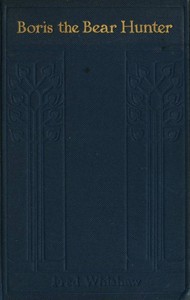
Boris the Bear-Hunter — Context and Discussion
Exploration Survival Adventure Tales
82,751 recorded words. 16 minutes difference from this book's estimate.
View Gutenberg source #45098
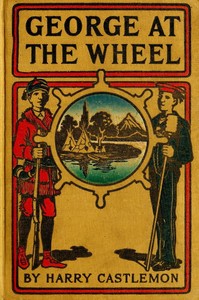
The source record for George at the Wheel; Or, Life in the Pilot-House — Themes and Context measures this digital text at 78,946 words, 5 hr 44 min estimated reading time, and 8 detected text sections.
The text analysis averages about 19.4 words per sentence, while the detected sections provide another way to judge how the source is divided.
Project Gutenberg metadata also associates the work with “Conduct of life -- Juvenile fiction,” connecting these edition facts with the source record’s subject description.
Explore this collection
These alternatives are selected using recorded categories and estimated reading time.
About 360 minutes
Exploration Survival Adventure Tales
82,751 recorded words. 16 minutes difference from this book's estimate.
View Gutenberg source #45098About 360 minutes
Exploration Survival Adventure Tales
82,695 recorded words. 16 minutes difference from this book's estimate.
View Gutenberg source #50811About 323 minutes
Exploration Survival Adventure Tales
74,114 recorded words. 21 minutes difference from this book's estimate.
View Gutenberg source #43989Search stored excerpts and compare books → Choose by your preferences →
Choices use stored catalog measurements. Estimates vary with reading speed. A shared category is a catalog label, not a claim that two books have the same argument or literary quality.
Search reads excerpt text stored with this catalog and links to its associated Gutenberg record. The connection is stored in the site database; this tool does not recheck that every excerpt is word-for-word identical to that external record. Excerpt search does not cover every chapter and does not verify historical publication dates.
Catalog snapshot checked: 2026-09-25. Coverage: 96 public books, 96 available source excerpts.
Read the complete public-domain text at its original source.
Read on Project GutenbergThe first chapter of George at the Wheel; Or, Life in the Pilot-House opens with a conversation between Uncle John and Ned, establishing a pattern of dialogue-driven exposition. The narrative quickly introduces the protagonist, George, through reported speech rather than direct action. The early pages emphasize narrow escapes and the presence of ranchemen, hinting at dangers that will later involve guerrilla warfare. The pilot-house, though central to the title, is not immediately featured; instead, the reader is drawn into a world of river travel and frontier tension.
The title promises life in the pilot-house, yet the excerpts reveal that the pilot-house functions more as a symbolic center than a constant setting. In Chapter VIII, titled "Life in the Pilot-House," the narrative finally places George at the wheel, but the surrounding chapters shift focus to other characters and locations. The pilot-house serves as a vantage point—both literal and figurative—from which George observes the river and its perils. This structure suggests that the reader should attend to how the pilot-house frames key moments of decision and danger, rather than expecting a continuous onboard experience.
A significant portion of the middle excerpts centers on Tony Richardson, a boy entrusted with over five hundred dollars. The text reveals his internal conflict: he wishes to run away but recoils at stealing. The narrator states that the idea of taking Mr. Vandegriff's money "would have frightened him" and that he would no more steal than "jump into the river." This moral boundary is tested when two negroes approach him ominously on the barge. The reader is left to infer that Tony's integrity will be challenged by external threats, not just his own desires. The excerpts do not reveal the outcome, but the tension is palpable.
Castlemon embeds technical details of river navigation and coal transport within the adventure. The description of the barge's gunwales rising as coal is removed—from two feet to six or seven feet high—grounds the story in physical reality. Such details create suspense: the reader understands the barge's changing stability and the vulnerability of those aboard. The author uses these mechanics to heighten danger, as when Tony notices the negroes moving along the gunwales. The reader is encouraged to watch for how the river's practical demands intersect with the characters' fates.
The catalog subjects list "Guerrillas -- Juvenile fiction" and "Mexico -- Juvenile fiction," and the excerpts confirm that the story moves beyond river life into armed conflict. Chapter III is titled "The Contra-Guerrillas," and later chapters reference "Silk Stocking" and "Silver Buttons," suggesting a cast of irregular fighters. The opening mention of ranchemen and narrow escapes sets up a world where danger is both natural and human. The reader should note how the threat evolves from individual outlaws to organized guerrilla bands, and how George's piloting skills become crucial in navigating not just rivers but also combat.
As you read George at the Wheel, pay attention to how Castleman balances technical river lore with moral tests and sudden violence. The pilot-house is both a literal place and a metaphor for control amid chaos. The excerpts leave many questions unanswered—Tony's fate, the role of the guerrillas, George's full journey—but they establish a clear pattern: every calm stretch of river may hide a rapid, and every trustworthy face may conceal a threat.
I’ve shelved Castlemon’s pilot-house tales for decades, and something in Tony’s quiet wrestling with duty reminds me of another boy’s journey into an unfamiliar land, where moral weather shifts without warning. Both books share that hush before a choice—the river’s turn, the savanna’s heat. There’s a gentle kinship there, like old friends nodding across a reading room. Oscar in Africa — A Reader’s Guide holds that same patient light.
A brief reflection can help important ideas stay with you longer.