About 282 minutes
Arthur Brown, The Young Captain — Text and Context
Exploration Survival Adventure Tales
64,717 recorded words. 1 minutes difference from this book's estimate.
View Gutenberg source #48904
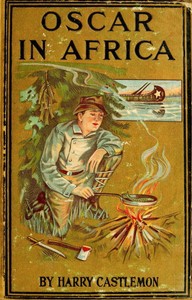
The source record for Oscar in Africa — A Reader’s Guide measures this digital text at 64,608 words, 4 hr 41 min estimated reading time, and 7 detected text sections.
The text analysis averages about 21.5 words per sentence, while the detected sections provide another way to judge how the source is divided.
Project Gutenberg metadata also associates the work with “Animals -- Juvenile fiction,” connecting these edition facts with the source record’s subject description.
Explore this collection
These alternatives are selected using recorded categories and estimated reading time.
About 282 minutes
Exploration Survival Adventure Tales
64,717 recorded words. 1 minutes difference from this book's estimate.
View Gutenberg source #48904About 278 minutes
Exploration Survival Adventure Tales
63,927 recorded words. 3 minutes difference from this book's estimate.
View Gutenberg source #53420About 285 minutes
Exploration Survival Adventure Tales
65,533 recorded words. 4 minutes difference from this book's estimate.
View Gutenberg source #43675Search stored excerpts and compare books → Choose by your preferences →
Choices use stored catalog measurements. Estimates vary with reading speed. A shared category is a catalog label, not a claim that two books have the same argument or literary quality.
Search reads excerpt text stored with this catalog and links to its associated Gutenberg record. The connection is stored in the site database; this tool does not recheck that every excerpt is word-for-word identical to that external record. Excerpt search does not cover every chapter and does not verify historical publication dates.
Catalog snapshot checked: 2026-09-25. Coverage: 96 public books, 96 available source excerpts.
Read the complete public-domain text at its original source.
Read on Project GutenbergThe opening chapter of Oscar in Africa introduces its protagonist not through his own actions but through the suspicious questions of a Maritzburg landlord and his rough clientele. "Who is he, anyhow?" the first speaker demands, and the answer—"He is from America"—is delivered with a mixture of pity and contempt. This early scene establishes a persistent undercurrent of colonial rivalry: the English-speaking settlers view the Yankee outsider as naive, while Oscar quietly demonstrates competence by handling his own affairs without their help.
The catalog subjects list "Conduct of life" and "Courage" prominently, but the excerpts show these qualities emerging less through moral instruction than through practical encounters: a goat stolen by a hyena, a broken rope examined by lamplight, and a Kaffir servant soothed with tobacco after a blow. Castlemon's narrative voice stays close to Oscar's observations, often letting the boy's limited knowledge create suspense before an experienced local explains the danger.
The catalog assigns Oscar in Africa to "Adventure stories" and "Voyages and travels," but the excerpts reveal a more specific social drama. In Maritzburg, Oscar is immediately marked as an outsider: the cattle-dealers and speculators see him as a mark, and the landlord notes that Oscar "has had nothing to do with anybody about the hotel" and "acted as independent as you please." The word "Yankee" is used as a mild slur, and the locals' tone "betrayed both the pity and contempt they felt for one who was willing to acknowledge that he came from so benighted a region."
This dynamic recurs throughout the excerpts. Oscar carries letters of introduction to English gentlemen like Mr. Evans, who receive him cordially, but the narrative repeatedly contrasts the boy's self-reliance with the expectation that he will need guidance. When a hyena steals a goat, Oscar does not think of attempting a rescue—"the night was pitch dark"—and instead examines the broken rope, estimating the goat's weight. His response is practical, not heroic. The story's tension often comes from the gap between what Oscar knows and what the local experts assume he does not know.
The catalog lists "Natural history -- Juvenile fiction" and "Animals -- Juvenile fiction," but the excerpts deliver natural history not as lecture but as embedded explanation. When Oscar asks what animal stole his goat, Mr. Evans replies with a detailed description of the spotted hyena: "In point of cunning and rapacity, the spotted hyena surpasses every beast of prey in Africa." He then recounts how hyenas once visited Cape Town streets and still enter Kaffir villages to carry off children, describing the raised floor of native houses and the door that is "nothing but a piece" of covering.
This information arrives in dialogue, not exposition, and it is tied to a specific incident the reader has just witnessed. The hyena's howling is said to sound like laughing—hence "laughing hyenas"—and the detail about Table Mountain gives the account a geographic anchor. Castlemon uses such moments to fold natural history into the adventure, letting a character with authority explain the danger after the fact. The effect is that the reader learns alongside Oscar, who "could only look the surprise that these words occasioned."
The excerpts cover only the opening chapters and a later camp scene, leaving much of the 64,608-word book unknown. The table of contents lists thirty-two chapters with titles like "African Treachery," "The Battle in the Grove," and "Oscar Shows his Courage," but the available text does not reveal what those battles or acts of courage entail. The catalog subject "Hunting -- Juvenile fiction" is clearly central—Oscar is "going into the interior on a sporting expedition"—but the excerpts show more preparation than action.
What is visible is Castlemon's narrative voice: third-person, closely aligned with Oscar, and given to understated reactions. When the dogs fail to attack the hyena, Oscar thinks, "Whew! I don't want anything to do with such a varmint in the dark." The colloquial "varmint" and the exclamation mark are characteristic. The prose is efficient, often moving from action to reflection in a single sentence. Readers should note that the excerpts do not confirm whether Oscar's collecting of specimens—implied by the chapter "More Specimens"—or his conflicts with the Irish servant Paddy O'Brian develop into the moral lessons the catalog subjects suggest.
The excerpts from Oscar in Africa reveal a book more interested in the practical challenges of a colonial hunting trip than in the moralizing its catalog subjects imply. Oscar earns respect not through speeches about conduct but through quiet competence: he examines rope, estimates weight, and soothes a servant's anger with tobacco. Readers who approach this text as a period adventure will find a specific, well-observed world of Maritzburg landlords, Kaffir after-riders, and the constant threat of hyenas. The full book may expand these threads, but the opening chapters establish a clear pattern: Oscar learns by doing, and Castlemon lets the landscape and its dangers teach.
In all my years stemming shelves, I’ve noticed how certain books whisper to each other across decades. Castlemon’s Oscar, seeking specimens in Natal, carries that same restless, unformed certainty as the young men in The Young Vigilantes: A Story of California Life in the Fifties — Story, Setting & Ideas. Both are boyhoods testing themselves against a raw frontier, where the map is empty and the code is still being written. A quiet kinship, indeed.
Create a short personal record of your experience with this book.