About 415 minutes
Sailor Jack, the Trader — Inside the Classic
Exploration Survival Adventure Tales
95,411 recorded words. 35 minutes difference from this book's estimate.
View Gutenberg source #54049
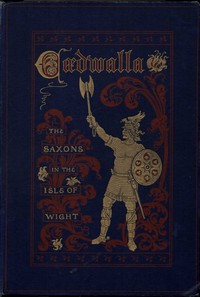
Cædwalla; or, The Saxons in the Isle of Wight: A Tale — Themes and Context can be approached with a clearer sense of reading commitment from its source measurements: 103,330 words, 7 hr 30 min estimated reading time, and 13 detected text sections.
The text analysis averages about 24.9 words per sentence, while the detected sections provide another way to judge how the source is divided.
Project Gutenberg metadata also associates the work with “Adventure stories,” connecting these edition facts with the source record’s subject description.
Explore this collection
These alternatives are selected using recorded categories and estimated reading time.
About 415 minutes
Exploration Survival Adventure Tales
95,411 recorded words. 35 minutes difference from this book's estimate.
View Gutenberg source #54049About 365 minutes
Exploration Survival Adventure Tales
83,927 recorded words. 85 minutes difference from this book's estimate.
View Gutenberg source #55021About 360 minutes
Exploration Survival Adventure Tales
82,751 recorded words. 90 minutes difference from this book's estimate.
View Gutenberg source #45098Search stored excerpts and compare books → Choose by your preferences →
Choices use stored catalog measurements. Estimates vary with reading speed. A shared category is a catalog label, not a claim that two books have the same argument or literary quality.
Search reads excerpt text stored with this catalog and links to its associated Gutenberg record. The connection is stored in the site database; this tool does not recheck that every excerpt is word-for-word identical to that external record. Excerpt search does not cover every chapter and does not verify historical publication dates.
Catalog snapshot checked: 2026-09-25. Coverage: 96 public books, 96 available source excerpts.
Read the complete public-domain text at its original source.
Read on Project GutenbergFrank Cowper’s 1888 tale opens not with a battle but with a preface that lays out his historical method: he names Bede, the Saxon Chronicle, and modern scholars like Dr. Guest and Kemble, and acknowledges the Rev. J. Boucher James for antiquarian knowledge of the Isle of Wight. The author states he has “many times threaded the channels at the entrance to Chichester Harbour” and climbed Bembridge and Brading Downs, grounding the fiction in walked terrain. He also declares that sentiment is omitted because the story is for young people—a clue to the spare, action-driven style that follows.
Cowper’s preface does more than thank helpers. It cites Daniel, Bishop of Winchester, as Bede’s source for the South Saxons and Wihtwaras, and lists Eddius, Asser, Ethelweard, Florence of Worcester, and Henry of Huntingdon as supplementary authorities. He also mentions consulting Neander’s “Memorials of Christian Life” and Montalembert’s “Monks of the West” for theology, and Mallet’s “Northern Antiquities” for Teutonic mythology—though he notes that source belongs to a later period. This scholarly scaffolding tells a first reader that the novel aims for historical plausibility, not just adventure.
In the excerpt, the boy Ædric is physically unable to walk, yet the monks Corman and Dicoll have no conveyance to carry him the five or six miles to Selsea. This practical obstacle—forgotten because their minds were “occupied with speculation” and daily religious duties—creates a quiet comedy of ineptitude. Cowper uses the delay to let Ædric overhear the monks’ bitter complaints about Bishop Wilfrid, who calls them “stubborn schismatics.” The boy’s bewilderment at Christian infighting is rendered in a child’s terms: “Wulfstan and I often quarrel, but we always make it up.”
The monks’ animosity toward Wilfrid is not mere background. Cowper explains that the British church’s older traditions clashed with Roman customs over the date of Easter and the style of tonsure—differences that caused “one set of Christians fasting while the other set were feasting.” The narrator notes that the new Roman missionaries had sided with “the victorious and pagan Saxon,” adding insult to the British. This doctrinal friction, not pagan attack, drives the immediate tension: Ædric is reluctant to go to Wilfrid because the monks’ talk has prejudiced him. The adventure, so far, is internal and ecclesiastical.
Cowper’s prose is plain and declarative, with occasional archaisms (“Beate Columba!”) and a tendency to explain motives explicitly. The narrative voice is that of a Victorian schoolmaster: patient, moral, and fond of parentheses. The excerpt’s structure alternates between dialogue and explanatory paragraphs that summarize the historical context. A first reader should note that the story’s pace is deliberate—Cowper pauses for exposition on church history and geography. The action, when it comes, will likely be shaped by these doctrinal divisions rather than simple swordplay.
These excerpts suggest that Cædwalla is as much a religious-historical primer as an adventure tale. The reader who expects constant combat may be surprised by the weight given to Easter calculations and monastic rivalries. Cowper’s own walks over the Isle of Wight’s downs and channels, however, promise that the landscape will eventually become a stage for the Teutonic warriors his preface invokes. Approach the novel as a guided tour of seventh-century Christianity, with a boy’s education at its center.
Reading of Cædwalla’s boyish bewilderment amid the island’s old holy feuds, I found my thoughts drifting to another cruise, another coast. That quiet Carolina book, What Happened at Quasi: The Story of a Carolina Cruise — Inside the Classic, carries its own gentle sense of distant, half-understood histories, though the salt air there feels warmer, less fraught. Both left me holding a small, lingering ache for simpler days I never lived.
Use these questions to collect your thoughts before moving on.