About 294 minutes
The Young Ship-Builders of Elm Island — A Closer Reading
Fantasy Juvenile Worlds
67,485 recorded words. 0 minutes difference from this book's estimate.
View Gutenberg source #50475
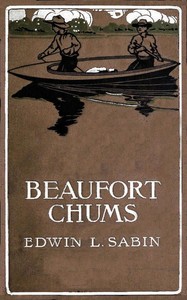
For Beaufort Chums — A Reader’s Guide, the stored edition analysis reports 67,555 words, 4 hr 54 min estimated reading time, and 21 detected text sections.
The text analysis averages about 14.4 words per sentence, while the detected sections provide another way to judge how the source is divided.
Project Gutenberg metadata also associates the work with “Fishing -- Juvenile fiction,” connecting these edition facts with the source record’s subject description.
Explore this collection
These alternatives are selected using recorded categories and estimated reading time.
About 294 minutes
Fantasy Juvenile Worlds
67,485 recorded words. 0 minutes difference from this book's estimate.
View Gutenberg source #50475About 291 minutes
Fantasy Juvenile Worlds
66,897 recorded words. 3 minutes difference from this book's estimate.
View Gutenberg source #45651About 290 minutes
Fantasy Juvenile Worlds
66,623 recorded words. 4 minutes difference from this book's estimate.
View Gutenberg source #46871Search stored excerpts and compare books → Choose by your preferences →
Choices use stored catalog measurements. Estimates vary with reading speed. A shared category is a catalog label, not a claim that two books have the same argument or literary quality.
Search reads excerpt text stored with this catalog and links to its associated Gutenberg record. The connection is stored in the site database; this tool does not recheck that every excerpt is word-for-word identical to that external record. Excerpt search does not cover every chapter and does not verify historical publication dates.
Catalog snapshot checked: 2026-09-25. Coverage: 96 public books, 96 available source excerpts.
Read the complete public-domain text at its original source.
Read on Project GutenbergThe catalog subjects for Beaufort Chums list fishing, camping, hunting, and the Mississippi River as central topics. Yet the excerpts—spanning a flood, a political parade, and a tense march through enemy territory—reveal a book more occupied with the social rules of boyhood than with outdoor pursuits. The June rise is treated not as a fishing opportunity but as a source of parental anxiety and a chance for a risky boat trip. The parade chapter dwells on the indignities of being relegated to the rear, dust and soot included. The catalog may promise nature; the text delivers peer dynamics.
The opening chapter establishes a pattern: Ned’s excitement about the rising river is immediately checked by his mother’s rebuke (“‘Neddie! How often have I told you not to address anybody with “say”?’”) and his father’s sobering reminder of the flood’s serious side. Ned’s enthusiasm is not crushed but channeled—he asks permission for the island trip and promises to be careful. This negotiation between adult caution and boyish adventure recurs throughout the excerpts. The catalog subject “Friendship” is present, but it operates within a framework of household rules and community expectations. The boys are not free agents; they are boys who must answer to parents, and their adventures are framed by permission and warning.
In the campaign parade, Ned and Hal are initially thrilled to be classed among “men,” but they are quickly elbowed aside by taller participants and end up as “remainders” at the tail. The description is precise: they become “the frayed tip” of a “whip lash of bobbing lights.” Their station is the most uncomfortable—dust, soot, and reek drift back to them; spectators have already cheered and moved on. Worse, the rear guard must pass through South Beaufort, enemy territory. The catalog subject “Boys” is here rendered as a social hierarchy: the two friends are simultaneously proud and vulnerable, holding their torches high while dirt clods strike their capes. The episode shows that adventure in this book often involves managing humiliation and risk, not just outdoor fun.
The Mississippi River appears in the first chapter as a rising threat and a source of sport, but the excerpts do not depict fishing or hunting directly. Instead, the river is a backdrop for a permission-asking scene. The parade takes place on Beaufort streets, and the boys’ journey into South Beaufort is a social crossing, not a geographical one. The catalog subject “Camping” is listed but absent from the provided text; “Hunting” appears only in a chapter title (“Ned the Nimrod”). The setting that matters most in the excerpts is the social landscape: the porch steps, the supper table, the parade route, the boundary between Beaufort and South Beaufort. The physical environment is real but secondary to the codes of conduct and rivalry that define the boys’ world.
Readers expecting a manual of outdoor skills will find instead a chronicle of boyhood negotiation—with parents, peers, and rival gangs. The excerpts suggest that the book’s interest lies less in nature than in the social order that governs access to it. The catalog subjects are not misleading, but they are incomplete. Approach Beaufort Chums as a study in the politics of boyhood, with the river and woods as a stage rather than the main event.
Among the floodwaters and parade noise of Beaufort Chums, I’ve often noticed how quiet family affection sits beneath the boys’ bravado. That same tender undercurrent dwells in Jessica's First Prayer; and, Jessica's Mother — Story, Setting & Ideas, where a child’s longing softens the sternest rooms. They share a warmth that hums under the surface—steady, patient, and worth remembering.
A brief reflection can help important ideas stay with you longer.