About 218 minutes
The Castaways of Pete's Patch (A Sequel to The Adopting of Rosa Marie) — Inside the Classic
Science Fiction Utopias
49,917 recorded words. 1 minutes difference from this book's estimate.
View Gutenberg source #46386
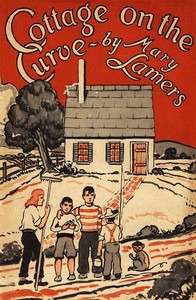
The catalog record for Cottage on the Curve — Key Ideas to Explore provides practical reading context through 49,739 words, 3 hr 37 min estimated reading time, and 20 detected text sections.
The text analysis averages about 12.8 words per sentence, while the detected sections provide another way to judge how the source is divided.
Project Gutenberg metadata also associates the work with “Vacations -- Juvenile fiction,” connecting these edition facts with the source record’s subject description.
Explore this collection
These alternatives are selected using recorded categories and estimated reading time.
About 218 minutes
Science Fiction Utopias
49,917 recorded words. 1 minutes difference from this book's estimate.
View Gutenberg source #46386About 232 minutes
Science Fiction Utopias
53,203 recorded words. 15 minutes difference from this book's estimate.
View Gutenberg source #45576About 240 minutes
Science Fiction Utopias
55,015 recorded words. 23 minutes difference from this book's estimate.
View Gutenberg source #47307Search stored excerpts and compare books → Choose by your preferences →
Choices use stored catalog measurements. Estimates vary with reading speed. A shared category is a catalog label, not a claim that two books have the same argument or literary quality.
Search reads excerpt text stored with this catalog and links to its associated Gutenberg record. The connection is stored in the site database; this tool does not recheck that every excerpt is word-for-word identical to that external record. Excerpt search does not cover every chapter and does not verify historical publication dates.
Catalog snapshot checked: 2026-09-25. Coverage: 96 public books, 96 available source excerpts.
Read the complete public-domain text at its original source.
Read on Project GutenbergMary Lamers wrote Cottage on the Curve in 1945, framing it as a wartime memory of peace: “Once upon a time there were happy times like these.” The novel opens on the last day of school, with Janie Murray walking home past “inverted rutabaga” turrets, her mind on summer plans. The foreword addresses “long-legged little boys” who have “sailed away” to war, establishing a tension between the idyllic lake setting and the absent older generation. The story focuses on the Murray children’s small crises—a turtle towing a boat, a purse in the trash pile, a storm rescue—but the foreword’s elegiac tone suggests these are not merely carefree episodes.
The foreword, dated “Summer, 1945,” is not a nostalgic afterthought but a deliberate frame. Lamers writes that children who played at Oak Lake “have sailed away” and now remember its “cool depths” in “jungle heat” and “the hot blare of battle.” This directly links the cottage’s pleasures—trips, steaks, tennis balls, double-decker ice-cream cones—to a wartime context. The opening chapters do not mention war again, but the foreword’s longing inflects every subsequent scene. When Billy battles a storm to rescue his rabbits, or Janie earns a dollar, the reader is reminded that these are the very moments the older boys are fighting to preserve. The foreword functions as a quiet, persistent counterpoint to the children’s present-tense adventures.
The Murray children repeatedly solve problems on their own, often without consulting parents. In the storm chapter, Billy sneaks out to save his rabbits, falls in the gutter, and climbs through a window, startling his brother James. His mother’s first reaction is not praise but “Billy Murray! Have you lost your mind?” The children’s independence is also visible in smaller moments: Janie decides to skip ice cream to tend to Butchie’s paw, and the siblings investigate the peppered cake mystery without adult direction. Lamers portrays a world where children are competent but not invulnerable—Billy’s rescue is messy and frightening, and he relies on his own wits. This self-reliance is presented as natural, not heroic, and it aligns with the foreword’s implication that these children are being prepared for a world that will demand it.
Lamers grounds the story in precise, tactile details of southern Wisconsin. The Murray house has a turret with circular windows that offer views “all over town, and down the valley to the river.” The storm scene is rendered through physical sensation: Billy fights “step by step” through the rock garden, a branch whacks his head, and the rain “seemed to pin him down.” The lightning makes the black-top road “look like a rushing river.” These details are not decorative; they create a world that feels lived in. The children’s summer is defined by the lake, the cottage, the rabbit hutch, and the “maple-shaded street” of Springhill. Even the turret’s “inverted rutabaga” remark—a child’s defiance of an architect’s opinion—marks the place as beloved and idiosyncratic.
The excerpts offer only a partial view of the novel’s twenty chapters, but the foreword’s wartime framing and the children’s autonomous problem-solving suggest a story that balances nostalgia with realism. Readers may notice how the absence of adult intervention in many scenes contrasts with the foreword’s awareness of loss. The cottage on the curve is both a refuge and a reminder of what is at stake.
That rainy afternoon, Cottage on the Curve kept me company while thunder rolled over the lake. I kept thinking about the Murray children’s quiet resourcefulness, how they solved small problems without fuss. Later, my hand drifted to an old shelf, and I found Andy Gordon; Or, The Fortunes of A Young Janitor — Background and Themes, which carried that same unpretentious grit. One book simply led to the other, like a path through wet grass.
Use these questions to collect your thoughts before moving on.