About 247 minutes
Andy Gordon; Or, The Fortunes of A Young Janitor — Background and Themes
Science Fiction Utopias
56,748 recorded words. 3 minutes difference from this book's estimate.
View Gutenberg source #52097
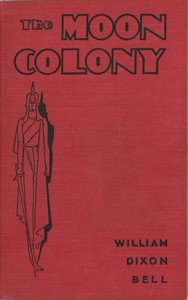
For The Moon Colony — A Closer Reading, the stored edition analysis reports 56,030 words, 4 hr 4 min estimated reading time, and 30 detected text sections.
The text analysis averages about 15.2 words per sentence, while the detected sections provide another way to judge how the source is divided.
Project Gutenberg metadata also associates the work with “Science fiction,” connecting these edition facts with the source record’s subject description.
Explore this collection
These alternatives are selected using recorded categories and estimated reading time.
About 247 minutes
Science Fiction Utopias
56,748 recorded words. 3 minutes difference from this book's estimate.
View Gutenberg source #52097About 240 minutes
Science Fiction Utopias
55,015 recorded words. 4 minutes difference from this book's estimate.
View Gutenberg source #47307About 232 minutes
Science Fiction Utopias
53,203 recorded words. 12 minutes difference from this book's estimate.
View Gutenberg source #45576Search stored excerpts and compare books → Choose by your preferences →
Choices use stored catalog measurements. Estimates vary with reading speed. A shared category is a catalog label, not a claim that two books have the same argument or literary quality.
Search reads excerpt text stored with this catalog and links to its associated Gutenberg record. The connection is stored in the site database; this tool does not recheck that every excerpt is word-for-word identical to that external record. Excerpt search does not cover every chapter and does not verify historical publication dates.
Catalog snapshot checked: 2026-09-25. Coverage: 96 public books, 96 available source excerpts.
Read the complete public-domain text at its original source.
Read on Project GutenbergWilliam Dixon Bell's The Moon Colony (1937) opens not on the moon but in the cockpit of a gold-laden airship over the American desert, where secret service agent Julian Epworth and pilot Billy Sand trade clipped, radio-era dialogue about air pirates and two-million-dollar shipments. The novel's language is brisk and functional, with characters speaking in short, declarative sentences that mirror the urgency of their mission. Yet as the story moves from Earth to the lunar surface, the prose shifts dramatically: the matter-of-fact tone gives way to sensory overload, with phosphorescent glows, chirping cricket armies, and sudden falls into bottomless craters. This editorial note examines three key features of the work—its opening dialogue, its handling of lunar physics, and its use of recurring motifs—to illuminate how Bell's narrative voice and pacing evolve across the text.
The novel's first chapter establishes a voice rooted in 1930s aviation thrillers. Epworth and Sand speak in terse, almost telegraphic exchanges: “What’s the big idea about all this fancy maneuvering?” Billy asks, and Epworth replies with a matter-of-fact explanation of the gold shipment. The dialogue is functional, conveying plot information without embellishment. Bell avoids interior monologue; characters reveal themselves through action and direct speech. This style persists through the early chapters, where the threat is human—air pirates—and the setting is familiar. The prose is lean, with sentences rarely exceeding twenty words, and the narrative moves at a steady, businesslike pace. This opening section reads like a serialized adventure, efficient and unadorned.
Once the characters reach the moon, the narrative voice undergoes a marked transformation. Bell introduces lunar physics that alter the rules of movement and perception: characters can “jump a long ways and land without being hurt” and fall into deep holes without fatal consequences. The prose becomes more sensory and speculative. Descriptions of the lunar environment emphasize phosphorescent glows, ashy floors, and “bone-like tentacles” that twist around characters. The dialogue, too, changes—Joan’s exclamation “It is spooky” and her scream “Something’s got me” replace the earlier clipped exchanges. The pacing accelerates into breathless action sequences, with sentences growing longer and more complex as Epworth fights off giant crickets. This shift from controlled, dialogue-driven narrative to immersive, sensory prose marks a clear change in Bell’s approach.
Bell employs several recurring elements that anchor the narrative across its tonal shifts. The tear gun appears as a versatile tool, first used against human threats and later against the moon’s cricket-like inhabitants. The crickets themselves are described with a mix of biological specificity and menace: they stand on hind legs, make “saddles” of their middle limbs, and chirp “savagely” or with “musical notes of triumph.” The motif of falling recurs throughout the excerpts—Epworth and Joan tumble into a hole, and the narrative dwells on the sensation of descent and the uncertainty of the landing. These repeated details give the story a cohesive texture even as the voice changes. They also hint at Bell’s interest in physical vulnerability: even on the moon, where gravity is weaker, characters are subject to sudden, disorienting falls.
Readers approaching The Moon Colony should attend to how Bell modulates his prose between the Earth-bound prologue and the lunar adventure. The early chapters reward those who enjoy brisk, dialogue-driven plotting; later sections appeal to readers who savor atmospheric description and rapid action. The novel’s shifts in pace and voice are not flaws but deliberate choices that mirror the characters’ journey from a familiar world to an alien one. Pay attention to the recurring motifs—tear gas, crickets, falling—as they provide a thread through the narrative’s changing landscape.
There’s something about Bell’s moon boys—their dogged, half-bright hope—that reminds me of an old janitor’s quiet climb in Andy Gordon; Or, The Fortunes of A Young Janitor — Background and Themes. Both feel like relics of a kinder century, where pluck was enough. I still think about that first airship heist, oddly, the way one remembers a childhood afternoon’s light.
Build a private reading journal entry for this title.