About 308 minutes
The Hard-Scrabble of Elm Island — Story, Setting & Ideas
Science Fiction Utopias
70,721 recorded words. 23 minutes difference from this book's estimate.
View Gutenberg source #54767
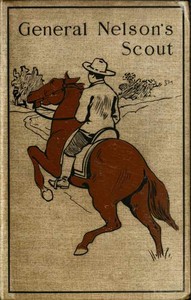
This digital edition of General Nelson's Scout — Background and Themes is described by source-level measurements including 75,987 words, 5 hr 31 min estimated reading time, and 8 detected text sections.
The text analysis averages about 15.0 words per sentence, while the detected sections provide another way to judge how the source is divided.
Project Gutenberg metadata also associates the work with “Fathers and sons -- Juvenile fiction,” connecting these edition facts with the source record’s subject description.
Explore this collection
These alternatives are selected using recorded categories and estimated reading time.
About 308 minutes
Science Fiction Utopias
70,721 recorded words. 23 minutes difference from this book's estimate.
View Gutenberg source #54767About 282 minutes
Science Fiction Utopias
64,691 recorded words. 49 minutes difference from this book's estimate.
View Gutenberg source #53692About 258 minutes
Science Fiction Utopias
59,154 recorded words. 73 minutes difference from this book's estimate.
View Gutenberg source #49173Search stored excerpts and compare books → Choose by your preferences →
Choices use stored catalog measurements. Estimates vary with reading speed. A shared category is a catalog label, not a claim that two books have the same argument or literary quality.
Search reads excerpt text stored with this catalog and links to its associated Gutenberg record. The connection is stored in the site database; this tool does not recheck that every excerpt is word-for-word identical to that external record. Excerpt search does not cover every chapter and does not verify historical publication dates.
Catalog snapshot checked: 2026-09-25. Coverage: 96 public books, 96 available source excerpts.
Read the complete public-domain text at its original source.
Read on Project GutenbergByron A. Dunn's General Nelson's Scout opens with an author's note that explicitly intertwines history and fiction, set in the 'dark and stormy days of 1861' amid Kentucky's bitter neutrality. The introduction foregrounds Lieutenant William Nelson, a real U.S. Navy officer tasked with raising Union regiments, as the 'chief historic figure.' Dunn quotes Sir Walter Scott's The Lady of the Lake to characterize Nelson's 'fiery vehemence of youth,' signaling a romantic-heroic tone. The narrative quickly shifts to young Fred Shackelford, whose capture by Confederate partisans introduces a grim subplot: the mistreatment of a fellow prisoner, Robert Ferror, a former slaveholder's son now forced into menial service. The excerpts suggest a story that balances military history with personal peril, emphasizing class tensions and the psychological toll of war.
Dunn's introduction declares that 'the threads of history and fiction are closely interwoven,' and the excerpts bear this out. The riot in Louisville, the fight for arms, and the train derailment are cited as historical incidents, while characters like Colonel Peyton and his son Bailie are named as real figures. The author's claim that 'every real character in the story is called by his true name' invites readers to treat the novel as a hybrid: a fictional plot anchored to documented events. However, the excerpts do not reveal how seamlessly these elements merge; readers must judge whether the historical scaffolding supports or overwhelms the personal story of Fred Shackelford.
Fred's capture shifts the narrative to a confined, tense viewpoint. The description of his captors—a 'gloomy, taciturn' man named Lyle, a cruel Captain Bascom, and the tormented boy Robert Ferror—creates a microcosm of Confederate irregulars. The scene where Bascom strikes Ferror from his horse, then forces whisky down his throat, is rendered with stark physical detail: 'the blood from his face,' 'murderous look.' Fred's observation that 'Bascom has cause to fear that boy' hints at a revenge plot, but the excerpts do not confirm it. The prisoners' night in a 'noisome hole' of a jail, entered through the roof, emphasizes degradation and relief when the rebels retreat. This section grounds the war's larger movements in visceral, small-scale suffering.
Kentucky's landscape and weather are more than backdrop. The opening situates the story 'amid the waving trees and blue grass fields of Central Kentucky,' and later excerpts show a 'pine forest at the base of a mountain' where 'the wind howled mournfully' and 'cold pitiless rain chilled to the bone.' The retreating army camps under 'black clouds,' with 'huge fires' kindled for warmth. These details evoke the discomfort and uncertainty of campaign life. Dunn also uses setting to mirror mood: the confusion of Piketon's evacuation, the 'frenzy of excitement' as commissary stores burn, contrasts with the stillness of the forest camp. Readers attentive to place will find a landscape that shifts from pastoral to menacing.
The narrative voice in the excerpts is omniscient but leans into Fred's perspective, noting his 'sick at heart' feeling when friends are near yet unreachable. The authorial aside—'Fred always wondered how he lived through the night'—keeps the focus on subjective experience. Dunn does not shy from moral complexity: the Confederate boy Ferror, who 'felt himself degraded' by cleaning boots, whispers 'My mother's niggers used to do this for me,' revealing a lost world of privilege. The 'murderous look' he gives Bascom suggests a cycle of violence. The text does not condemn or excuse; it presents actions and reactions. This restraint, combined with the historical framing, gives the novel a documentary feel that invites readers to draw their own conclusions about loyalty and cruelty.
Readers approaching General Nelson's Scout should attend to the interplay between Dunn's declared historical accuracy and the fictional narrative's emotional weight. The excerpts offer a concentrated sample of the novel's method: real generals and battles provide a skeleton, while the experiences of Fred, Bob, and their captors supply the flesh. The story does not resolve the tensions it raises—between Union and Confederate, master and servant, courage and brutality—within these pages. A first reading might focus on how Dunn uses the scout's limited viewpoint to filter larger events, and whether the promised historical fidelity enriches or constrains the tale.
Some evenings I think of Fred Shackelford, caught between loyalties in that divided Kentucky, and my mind drifts to another quiet kind of courage—a nurse’s steady hands in a ward full of boys. Both books hold that same human ache beneath the history, a tenderness I wasn’t expecting. I found myself reflecting on it again with Nancy Dale, Army Nurse — Text and Context.
Use these questions to collect your thoughts before moving on.