About 217 minutes
Cottage on the Curve — Key Ideas to Explore
Science Fiction Utopias
49,739 recorded words. 29 minutes difference from this book's estimate.
View Gutenberg source #54946
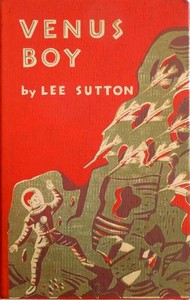
The source record for Venus Boy — Themes and Context measures this digital text at 43,023 words, 3 hr 8 min estimated reading time, and 5 detected text sections.
The text analysis averages about 11.0 words per sentence, while the detected sections provide another way to judge how the source is divided.
Project Gutenberg metadata also associates the work with “Science fiction,” connecting these edition facts with the source record’s subject description.
Explore this collection
These alternatives are selected using recorded categories and estimated reading time.
About 217 minutes
Science Fiction Utopias
49,739 recorded words. 29 minutes difference from this book's estimate.
View Gutenberg source #54946About 218 minutes
Science Fiction Utopias
49,917 recorded words. 30 minutes difference from this book's estimate.
View Gutenberg source #46386About 232 minutes
Science Fiction Utopias
53,203 recorded words. 44 minutes difference from this book's estimate.
View Gutenberg source #45576Search stored excerpts and compare books → Choose by your preferences →
Choices use stored catalog measurements. Estimates vary with reading speed. A shared category is a catalog label, not a claim that two books have the same argument or literary quality.
Search reads excerpt text stored with this catalog and links to its associated Gutenberg record. The connection is stored in the site database; this tool does not recheck that every excerpt is word-for-word identical to that external record. Excerpt search does not cover every chapter and does not verify historical publication dates.
Catalog snapshot checked: 2026-09-25. Coverage: 96 public books, 96 available source excerpts.
Read the complete public-domain text at its original source.
Read on Project GutenbergThe novel opens with a striking image: a fifty-foot statue of a twelve-year-old boy, Virgil Dare Watson, smiling with a jewel bear on his shoulder atop New Plymouth Rock. This monument, inscribed with a dedication to friendship, immediately signals that the story will revolve around Johnny and his pet Baba. The first chapter establishes a playful dynamic—Baba turns pages to fool the teacher—and hints at three secrets that will drive the plot. Readers are introduced to a Venus where the yearly rocket from Earth is a major event, and where the colony of New Plymouth feels both familiar and alien.
The statue described in the opening pages functions as a narrative promise. It tells readers that Johnny will become a hero, but not how. The inscription—"Virgil Dare (Johnny) Watson And the Marva, Baba. May their Friendship Endure!"—emphasizes the bond between boy and bear. This forward-looking device invites readers to watch for the moments that lead to this honor. The statue also grounds the story in a specific setting: New Plymouth, named after the historic colony, and Venus, a green planet with its own wildlife. The contrast between the grand monument and the ordinary schoolroom where Johnny hides Baba under his geography book sets up a tension between everyday life and adventure.
Baba is not merely a companion; the text repeatedly shows the bear acting with intelligence and agency. In the classroom, Baba turns pages to help Johnny pretend to study. Later, Baba communicates with Johnny and even suggests exploring a leopard’s cave. The narrator states that Baba is "just as clever as a person" and that all Venusian animals can understand the marva language. This elevates Baba from pet to partner. The relationship is reciprocal: Johnny teaches the leopard cubs to like roasted meat fruit, and he learns their growls. The bond between Johnny and Baba is the emotional core, and readers should pay attention to how their cooperation solves problems.
The excerpts introduce a range of Venusian creatures that are more than obstacles. The sabre-tooth leopard, initially threatening, becomes a protective presence: Johnny sleeps with his head against her flank, and she communicates through growls. The horned river snakes are dangerous, but the text suggests they might be reasoned with. The rhinosaur stampede in the table of contents hints at large-scale action. The animals have their own language, which Johnny begins to learn. This treatment of wildlife as intelligent and communicative sets the novel apart from simple monster stories. Readers should note how Johnny’s empathy—his willingness to understand animals—shapes his journey.
The first chapter introduces Johnny’s three secrets, though only the first two are hinted at in the excerpts. The secrets are the engine of the plot: they get Johnny, Baba, and the colony into "desperate trouble" and lead to his heroism. The table of contents shows chapters like "The First Two Secrets" and "The Third Secret," indicating a deliberate reveal structure. Readers should track what each secret is and how it escalates the stakes. The secrets also connect to the larger world—the "Treasure of Venus" and the "Price of a Brother" suggest that Johnny’s personal choices have colony-wide consequences. This narrative device keeps the story focused on Johnny’s perspective while expanding the scope.
As you read, watch for how the opening statue’s promise is fulfilled through Johnny’s choices and his bond with Baba. The novel rewards attention to the details of Venusian ecology and the ways animals communicate. The three secrets are not just plot devices but keys to understanding Johnny’s growth from a lonely boy to a hero worthy of a monument.
I keep thinking about how that statue in Venus Boy holds the whole story in stillness, the way a held breath does. It reminded me of something quieter in General Nelson's Scout — Background and Themes, where the bond between the boy and his bear feels like that same unspoken gravitas. Some books just settle into you that way, without ever raising their voice.
Capture what you thought, learned, and would like to remember.