About 240 minutes
Nancy Dale, Army Nurse — Text and Context
Science Fiction Utopias
55,015 recorded words. 8 minutes difference from this book's estimate.
View Gutenberg source #47307
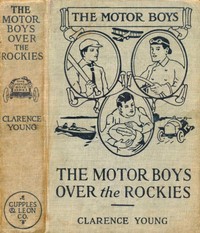
This digital edition of The Motor Boys Over the Rockies; Or, A Mystery of the Air — Context and Discussion is described by source-level measurements including 53,203 words, 3 hr 52 min estimated reading time, and 31 detected text sections.
The text analysis averages about 14.1 words per sentence, while the detected sections provide another way to judge how the source is divided.
Project Gutenberg metadata also associates the work with “Indians of North America -- Juvenile fiction,” connecting these edition facts with the source record’s subject description.
Explore this collection
These alternatives are selected using recorded categories and estimated reading time.
About 240 minutes
Science Fiction Utopias
55,015 recorded words. 8 minutes difference from this book's estimate.
View Gutenberg source #47307About 244 minutes
Science Fiction Utopias
56,030 recorded words. 12 minutes difference from this book's estimate.
View Gutenberg source #47576About 218 minutes
Science Fiction Utopias
49,917 recorded words. 14 minutes difference from this book's estimate.
View Gutenberg source #46386Search stored excerpts and compare books → Choose by your preferences →
Choices use stored catalog measurements. Estimates vary with reading speed. A shared category is a catalog label, not a claim that two books have the same argument or literary quality.
Search reads excerpt text stored with this catalog and links to its associated Gutenberg record. The connection is stored in the site database; this tool does not recheck that every excerpt is word-for-word identical to that external record. Excerpt search does not cover every chapter and does not verify historical publication dates.
Catalog snapshot checked: 2026-09-25. Coverage: 96 public books, 96 available source excerpts.
Read the complete public-domain text at its original source.
Read on Project GutenbergThe Motor Boys Over the Rockies opens with the three protagonists—Jerry, Ned, and Bob—debating their vacation plans on a hot afternoon, chewing grass blades and complaining about the heat. This mundane domestic scene is immediately undercut by the theft of their airship, the Comet, setting in motion a chase that will take them from their comfortable eastern home to the rugged mining camps of the Rockies. The book juxtaposes the new technology of air travel with the rough-and-tumble world of gold prospecting, where miners like Sledge Hammer Tod express skepticism about airships, lumping them with Santa Claus until they see one land.
The story’s central tension lies between the futuristic Comet and the traditional mining enterprise. The boys own a gold mine in the Rockies, worked by veteran miners Jim Nestor and Sledge Hammer Tod. When they arrive by air, Tod’s disbelief—"Never havin' seen one, I put 'em in the same class with Santa Claus"—highlights the clash of worlds. Yet the airship proves practical: it carries them across the continent, and earlier they used it to run a cable over a river, solving a town’s problem. The mine itself is doing well, but the real mystery lies in a valley that requires aerial reconnaissance. The technology is not mere spectacle; it is a tool for exploration and rescue.
Professor Snodgrass, a recurring character in the series, provides comic relief through his single-minded pursuit of specimens. In the excerpt, he lunges at Sledge Hammer Tod, begging him not to move, because he has spotted something—likely an insect—on the miner. The scientist’s priorities are comically misaligned with the boys’ urgent mission: while they discuss Noddy Nixon and the missing Mr. Bell, Snodgrass is oblivious, focused on his collection. This pattern recurs throughout the book, as the professor’s entomological zeal interrupts serious conversations and creates minor chaos. His presence underscores the variety of motives among the travelers: the boys seek adventure and justice, the professor seeks bugs.
The dialogue distinguishes characters through regional and occupational speech. Jim Nestor uses colloquialisms like "Land sakes" and "I never see such boys!" while Sledge Hammer Tod speaks in folksy metaphors: "If it's a rattlesnake, jest stomp on its head." The boys themselves speak in a more standard but informal American English, with Jerry often taking the lead in planning. The narrative voice is brisk, favoring action over introspection. Chapter titles like "The Airship Stolen" and "The Professor Is Missing" telegraph a serialized, episodic structure. The prose is efficient, rarely pausing for description longer than a few sentences, which keeps the pace suited to its young audience.
Readers should pay attention to how the book balances multiple threads: the theft of the airship, the search for Mr. Bell, the mystery of the valley, and the ongoing threat from Noddy Nixon. The excerpts suggest that the narrative resolves these through a combination of aerial mobility and on-the-ground grit. The professor’s comic interludes and the miners’ earthy wisdom provide contrast to the boys’ earnest heroism, making this a layered adventure rather than a simple chase story.
Rain slid down the window while the Motor Boys bickered about their airship’s valve, and I found myself missing the quiet mud of home. That miner’s yarn about a haunted bend stayed with me, odd and tender. Later, almost by accident, I picked up Cottage on the Curve — Key Ideas to Explore, and the same slow, knotty warmth returned, like a lamp left on.
Capture what you thought, learned, and would like to remember.