About 247 minutes
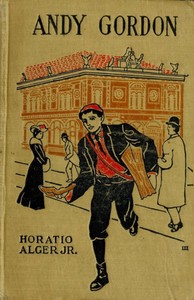
Andy Gordon; Or, The Fortunes of A Young Janitor — Background and Themes
Science Fiction Utopias
56,748 recorded words. 11 minutes difference from this book's estimate.
View Gutenberg source #52097
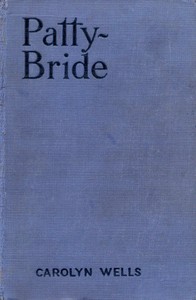
Before opening Patty—Bride — A Closer Reading, the edition data offers a quick orientation: 59,154 words, 4 hr 18 min estimated reading time, and 9 detected text sections.
The text analysis averages about 12.9 words per sentence, while the detected sections provide another way to judge how the source is divided.
Project Gutenberg metadata also associates the work with “War stories,” connecting these edition facts with the source record’s subject description.
Explore this collection
These alternatives are selected using recorded categories and estimated reading time.
About 247 minutes
Science Fiction Utopias
56,748 recorded words. 11 minutes difference from this book's estimate.
View Gutenberg source #52097About 244 minutes
Science Fiction Utopias
56,030 recorded words. 14 minutes difference from this book's estimate.
View Gutenberg source #47576About 240 minutes
Science Fiction Utopias
55,015 recorded words. 18 minutes difference from this book's estimate.
View Gutenberg source #47307Search stored excerpts and compare books → Choose by your preferences →
Choices use stored catalog measurements. Estimates vary with reading speed. A shared category is a catalog label, not a claim that two books have the same argument or literary quality.
Search reads excerpt text stored with this catalog and links to its associated Gutenberg record. The connection is stored in the site database; this tool does not recheck that every excerpt is word-for-word identical to that external record. Excerpt search does not cover every chapter and does not verify historical publication dates.
Catalog snapshot checked: 2026-09-25. Coverage: 96 public books, 96 available source excerpts.
Read the complete public-domain text at its original source.
Read on Project GutenbergThe opening chapter of Patty—Bride immediately establishes a love triangle through tense dialogue. Philip Van Reypen pleads with Patty to reconsider her engagement to Little Billee Farnsworth, while Patty insists on her loyalty. Wells renders the conflict through direct speech: Philip’s “I can’t stand it” versus Patty’s “I’m not mistaken.” The author’s choice to begin in medias res with an emotional confrontation sets a pattern of interpersonal friction that recurs throughout the excerpts.
Wells also introduces a second suitor, Lieutenant Herron, whose flirtatious banter in a dining room reveals a different tone—playful yet intrusive. Patty’s response to him, from anger to a “sudden bright smile,” shows her social agility. The dialogue carries the plot, with description limited to gestures and glances, such as Philip’s “great, dark eyes” full of despair.
Wells relies heavily on dialogue to advance the story and reveal character. In the opening, Philip’s repeated pleas—“I can’t give you up”—and Patty’s firm refusals create a rhythm of push and pull. The author avoids lengthy exposition; instead, the emotional stakes are laid bare in short, clipped exchanges. For instance, Patty’s line “It’s too late, Phil” is met with Philip’s “It’s never too late, until you’re actually married to him.” This back-and-forth not only heightens tension but also defines the characters: Philip as persistent, Patty as resolute but compassionate.
Later, with Lieutenant Herron, the dialogue shifts to a more teasing register. Herron’s comment about Patty’s “blue eyes” flashing and his abrupt proposal—“I’m over head and ears in love with you”—show a different kind of suitor: bold and somewhat impertinent. Patty’s icy reply, “I cannot see that these matters concern you at all,” followed by a softening, demonstrates her ability to navigate social situations. Wells uses these verbal sparring matches to keep the narrative lively and to underscore the romantic complications.
The excerpts place the characters in settings that reflect the wartime backdrop: a dining room with “many small tables” occupied by a “merry crowd,” and references to an Aviation Field. The war is not front and center but filters through conversations. Herron speaks of training new classes and the dangers of aviation, noting that “the proportion continually grows smaller” of those killed. This casual mention of risk contrasts with the romantic turmoil, grounding the story in a specific historical moment.
Wells uses the setting to frame the characters’ concerns. Philip has been in Washington, and Herron is on leave from the Aviation Field. The war provides a reason for the men’s absences and a source of tension—Patty’s fiancé, Little Billee, is presumably also involved. The author does not describe battle scenes; instead, the conflict remains personal, with the war as a distant but present factor. The valentine table at the end of the excerpt, with its “Cupids and turtle-doves,” offers a contrast to the seriousness of aviation, highlighting the blend of romance and reality.
Patty is portrayed through her reactions and the descriptions of her demeanor. When Philip becomes vehement, she looks “a little frightened,” but she quickly asserts herself. Wells describes her as “a gentle soul, and rarely hurt the feelings of anybody,” yet she can be “thoroughly angry” at impertinence. This duality is key: Patty is both soft and firm, capable of shifting from indignation to a “bright smile” to defuse a situation.
Her actions also reveal her character. She changes the subject deftly when Herron becomes too forward, asking about his return to the Aviation Field. This social maneuvering shows her intelligence and control. The author uses physical cues sparingly—Patty’s “blue eyes can flash,” her “air of offended dignity”—to complement the dialogue. These details, though brief, build a picture of a heroine who is emotionally engaged but also pragmatic, navigating multiple suitors with grace.
The excerpts introduce themes of love and loyalty through the love triangle. Patty is engaged to Little Billee and insists she loves him “more than anybody in all the world,” yet Philip and Herron both press their suits. The social codes of the era are evident: Patty expects Philip to respect her engagement, and she is offended when he does not. Herron’s apology—“Forgive me, truly I didn’t mean to!”—reflects the expectation of decorum, even in romantic pursuit.
Wells also touches on the idea of choice and agency. Patty repeatedly asserts her decisions: “I’m engaged to Little Billee, and some day I’m going to marry him.” Yet the men’s persistence suggests a world where women’s commitments are tested. The valentine scene introduces a playful element, with a card that Herron says Patty “wouldn’t dare send” to her fiancé, hinting at the tension between propriety and flirtation. These thematic undercurrents, conveyed through dialogue and small actions, give the story a light but pointed examination of romantic relationships during wartime.
Readers approaching Patty—Bride should attend to how Wells uses conversation to reveal character and advance plot. The excerpts offer only a partial view—the full novel may develop the war subplot or the valentine incident further. Pay attention to shifts in tone between suitors and to Patty’s verbal strategies, as these are the primary means by which the author builds tension and portrays a heroine caught between duty and desire.
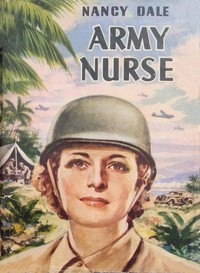
I’ve often thought that Patty’s spirited stubbornness, forged in that anxious wartime sky, found its quiet echo in Nancy Dale’s steady hands. Both women carry a fierce, private resolve beneath their words, and I find myself remembering their struggles as if they shared a shelf in my own heart. Nancy Dale, Army Nurse — Text and Context holds that same tender gravity.
Use these questions to collect your thoughts before moving on.