About 217 minutes
Cottage on the Curve — Key Ideas to Explore
Science Fiction Utopias
49,739 recorded words. 1 minutes difference from this book's estimate.
View Gutenberg source #54946
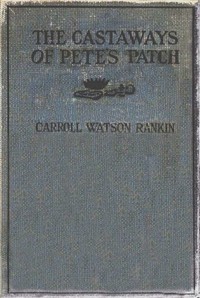
Before opening The Castaways of Pete's Patch (A Sequel to The Adopting of Rosa Marie) — Inside the Classic, the edition data offers a quick orientation: 49,917 words, 3 hr 38 min estimated reading time, and 6 detected text sections.
The text analysis averages about 13.5 words per sentence, while the detected sections provide another way to judge how the source is divided.
Project Gutenberg metadata also associates the work with “Camping -- Juvenile fiction,” connecting these edition facts with the source record’s subject description.
Explore this collection
These alternatives are selected using recorded categories and estimated reading time.
About 217 minutes
Science Fiction Utopias
49,739 recorded words. 1 minutes difference from this book's estimate.
View Gutenberg source #54946About 232 minutes
Science Fiction Utopias
53,203 recorded words. 14 minutes difference from this book's estimate.
View Gutenberg source #45576About 240 minutes
Science Fiction Utopias
55,015 recorded words. 22 minutes difference from this book's estimate.
View Gutenberg source #47307Search stored excerpts and compare books → Choose by your preferences →
Choices use stored catalog measurements. Estimates vary with reading speed. A shared category is a catalog label, not a claim that two books have the same argument or literary quality.
Search reads excerpt text stored with this catalog and links to its associated Gutenberg record. The connection is stored in the site database; this tool does not recheck that every excerpt is word-for-word identical to that external record. Excerpt search does not cover every chapter and does not verify historical publication dates.
Catalog snapshot checked: 2026-09-25. Coverage: 96 public books, 96 available source excerpts.
Read the complete public-domain text at its original source.
Read on Project GutenbergThe Castaways of Pete's Patch opens with a group of girls marooned on a point of land, a premise that immediately establishes the tension between domestic comfort and wilderness exposure. The narrative moves briskly between camp routines—setting up tents, gathering balsam tips for beds—and sudden crises, such as a feverish boy and the arrival of a half-breed named Dave. This oscillation between the ordinary and the alarming gives the story its rhythm.
The book's structure relies on a pattern of calm followed by disruption. Early chapters like “An Innocent Plan” and “The Troubled Whale” introduce a lighthearted camping scheme, but the mood shifts sharply with “A Predicament” and “A Night Out.” The chapter titles themselves signal this alternation: “The Missing Whale” gives way to “The Coming of Dave,” and “Delivered by Dave” leads to “The Pangs of Hunger.” Each crisis is resolved enough to allow a brief return to normalcy before the next complication arises. This creates a cumulative tension that mirrors the characters' growing resourcefulness.
Dave's greenish-black medicine, described as “queer-smelling” and “most unattractive-looking,” appears as a recurring motif. It is administered to the sick boy with a confidence that unsettles the adults: Mrs. Crane shrieks, “you've surely killed that poor child!” Yet Dave insists it is “ver' goo' medicine” from his grandmother, an Ojibway woman. The image of the half-breed kneeling beside the boy, pouring the fluid “a little at a time,” contrasts with the camp's reliance on conventional doctors. The medicine becomes a symbol of the clash between indigenous knowledge and settler skepticism, a tension that runs through the narrative without being resolved.
Rankin renders Dave's speech in a heavy dialect: “Dose boy, she swallow good” and “Ah'm got her off ma gran'modder.” This choice marks Dave as an outsider and a source of both comic relief and genuine aid. The girls' reactions—giggling at his pronunciation, yet accepting his offers to teach them deer-skinning—show their ambivalence. The dialect also distinguishes Dave from the other characters, whose speech is standard English. This linguistic divide reinforces the story's setting on the edge of Lake Superior, where different cultures meet uneasily.
Lake Superior is not just a backdrop but an active participant in the plot. The girls are “marooned on a point of land,” and the lake's moods dictate their safety. A stormy night chapter (“A Stormy Night”) and the need for “Dry Clothes for Five” show how the environment constantly intrudes. The camp itself—Pete's Patch—is a clearing carved from the woods, a fragile space that must be defended against weather, wild animals, and illness. The illustrations, including one of a “stout, placid man” seated on a log, hint at the unexpected visitors the setting attracts.
Readers approaching this sequel should pay attention to how Rankin uses the camp setting to test her characters' ingenuity. The story rewards close observation of small details—the smell of balsam, the color of Dave's medicine, the sound of a dog barking—that accumulate into a vivid sense of place. The incomplete excerpts leave the resolution of the sick boy's fate unclear, but the pattern of crisis and recovery suggests that the castaways will continue to rely on each other and on the unpredictable help of the woods.
There’s something comforting about returning to Dave’s medicine kit and those wilderness emergencies, knowing camp life will steady itself again. That same quiet faith in resilience flickers through Andy Gordon; Or, The Fortunes of A Young Janitor — Background and Themes, where a boy’s steady hands hold a slightly different kind of remedy. I find myself thinking of both books on grey afternoons.
Answer a few questions and save a private reflection on this device.