About 331 minutes
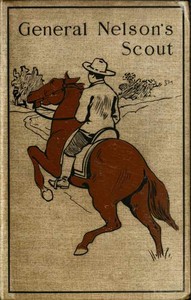
General Nelson's Scout — Background and Themes
Science Fiction Utopias
75,987 recorded words. 23 minutes difference from this book's estimate.
View Gutenberg source #49529
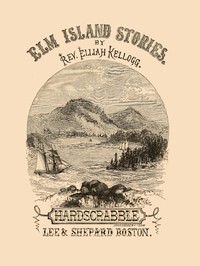
This digital edition of The Hard-Scrabble of Elm Island — Story, Setting & Ideas is described by source-level measurements including 70,721 words, 5 hr 8 min estimated reading time, and 7 detected text sections.
The text analysis averages about 20.0 words per sentence, while the detected sections provide another way to judge how the source is divided.
Project Gutenberg metadata also associates the work with “Boys -- Juvenile fiction,” connecting these edition facts with the source record’s subject description.
Explore this collection
These alternatives are selected using recorded categories and estimated reading time.
About 331 minutes
Science Fiction Utopias
75,987 recorded words. 23 minutes difference from this book's estimate.
View Gutenberg source #49529About 282 minutes
Science Fiction Utopias
64,691 recorded words. 26 minutes difference from this book's estimate.
View Gutenberg source #53692About 258 minutes
Science Fiction Utopias
59,154 recorded words. 50 minutes difference from this book's estimate.
View Gutenberg source #49173Search stored excerpts and compare books → Choose by your preferences →
Choices use stored catalog measurements. Estimates vary with reading speed. A shared category is a catalog label, not a claim that two books have the same argument or literary quality.
Search reads excerpt text stored with this catalog and links to its associated Gutenberg record. The connection is stored in the site database; this tool does not recheck that every excerpt is word-for-word identical to that external record. Excerpt search does not cover every chapter and does not verify historical publication dates.
Catalog snapshot checked: 2026-09-25. Coverage: 96 public books, 96 available source excerpts.
Read the complete public-domain text at its original source.
Read on Project GutenbergThe excerpt from Elijah Kellogg's The Hard-Scrabble of Elm Island captures a moment of inventive problem-solving that defines the book's tone. John and Henry, short on materials, construct a blacksmith's bellows using an old blunderbuss barrel, canvas left from the Ark's sails, and pitch mixed with charcoal dust. Their dialogue reveals a practical, trial-and-error approach: when they lack iron for the nose, they debate clay, soaked wood, and finally settle on the gun barrel. The passage is dense with technical detail—hinges, gimbals, clappers—and the boys' satisfaction when the bellows work is palpable. This scene exemplifies the broader narrative pattern of making do with limited resources, a theme that likely runs through the entire volume.
The bellows episode is not an isolated set piece but a microcosm of the book's method. The preface states that the boys, having completed a hull, run out of funds and turn to hunting, trapping, and weaving canvas in household looms. The excerpt shows this same resourcefulness at the level of a single tool. John's exclamation, “That beats me! If I had iron, I could make it; but there’s not a scrap more on the island,” sets up a problem that the narrative solves through scavenging and repurposing. The old blunderbuss barrel—described as “bell-muzzled, and with an everlasting great bore”—becomes both nose and tewel. This pattern of converting cast-off objects into functional parts recurs throughout the passage: an old bolt is cut and pointed on a stone, and the forge has no chimney, only a hole in the roof. Each solution is rough but effective, and the boys' pride in their work is evident when John calculates their wages at six dollars and fifty cents per day.
The dialogue in the excerpt is brisk and colloquial, marked by a blend of technical talk and dry humor. When Henry suggests making the bellows nose from clay, John counters with practical objections: “It would be breaking. The heat would crack it.” Their exchange is peppered with folk sayings like “The lame and the lazy are always provided for.” John's triumphant “I've got it, Hen! Just the thing!” and his later quip, “that is what I call ‘raising the wind’ in more ways than one,” show a character who enjoys both the work and the wordplay. The narrative voice, though third-person, stays close to the boys' perspective, using terms like “everlasting great bore” and “kicking round Uncle Isaac's shop.” This voice gives the technical descriptions a lived-in quality, as if the reader is overhearing a conversation between young craftsmen. The humor is understated, arising from the contrast between the grand ambition of building a vessel and the makeshift means—a bellows made from a gun barrel and canvas.
The physical world of the excerpt is defined by scarcity and ingenuity. The island setting forces the boys to rely on what is at hand: salt-soaked wood, old bolts, a discarded gun. The detailed description of the bellows—its double-chambered design, leather hinges, ash bows, and canvas covering—grounds the story in a specific material culture. The boys are not just building a tool; they are reconstructing a piece of industrial knowledge. The passage also hints at a broader network of resources: Uncle Isaac's shop, Peter Brock's vice, and the leftover canvas from the Ark. This web of shared materials and skills suggests a community where nothing is wasted. The forge, with its hole in the roof and gas venting freely, is a temporary, improvised space, yet it produces a working bellows. The setting thus becomes a character in its own right, shaping the boys' actions and the story's conflicts.
Readers approaching The Hard-Scrabble of Elm Island should attend to the interplay between technical description and character development. Kellogg embeds moral lessons—perseverance, cooperation, ingenuity—within concrete, physical tasks. The bellows scene rewards careful reading: each component, from the gimbals to the clappers, carries narrative weight. The book's title, Hard-Scrabble, names both the vessel and the struggle to build it, and the excerpt shows that struggle in miniature.
There’s something moving about watching the Elm Island boys turn a blunderbuss into a bellows—that stubborn will to make do. It stayed with me long after I closed the book. Cottage on the Curve — Key Ideas to Explore carries a similar quiet warmth, reminding me of how small patches of resourcefulness shape a life. I think of that old barrel whenever I mend things myself.
A brief reflection can help important ideas stay with you longer.