About 258 minutes
Patty—Bride — A Closer Reading
Science Fiction Utopias
59,154 recorded words. 24 minutes difference from this book's estimate.
View Gutenberg source #49173
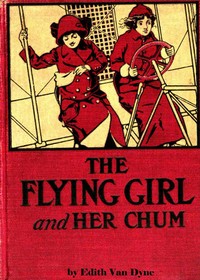
The catalog record for The Flying Girl and Her Chum — Reading Notes provides practical reading context through 64,691 words, 4 hr 42 min estimated reading time, and 7 detected text sections.
The text analysis averages about 15.5 words per sentence, while the detected sections provide another way to judge how the source is divided.
Project Gutenberg metadata also associates the work with “Yachts -- Juvenile fiction,” connecting these edition facts with the source record’s subject description.
Explore this collection
These alternatives are selected using recorded categories and estimated reading time.
About 258 minutes
Science Fiction Utopias
59,154 recorded words. 24 minutes difference from this book's estimate.
View Gutenberg source #49173About 308 minutes
Science Fiction Utopias
70,721 recorded words. 26 minutes difference from this book's estimate.
View Gutenberg source #54767About 247 minutes
Science Fiction Utopias
56,748 recorded words. 35 minutes difference from this book's estimate.
View Gutenberg source #52097Search stored excerpts and compare books → Choose by your preferences →
Choices use stored catalog measurements. Estimates vary with reading speed. A shared category is a catalog label, not a claim that two books have the same argument or literary quality.
Search reads excerpt text stored with this catalog and links to its associated Gutenberg record. The connection is stored in the site database; this tool does not recheck that every excerpt is word-for-word identical to that external record. Excerpt search does not cover every chapter and does not verify historical publication dates.
Catalog snapshot checked: 2026-09-25. Coverage: 96 public books, 96 available source excerpts.
Read the complete public-domain text at its original source.
Read on Project GutenbergThe first chapter of The Flying Girl and Her Chum opens not with a seaplane or a heroine, but with a wry meditation on parlor cars. The narrator observes that such cars “bear so little resemblance to the traditional parlor” and that their swivel seats are often blocked by hand baggage, leaving passengers “imprisoned” and “thoughtful.” This unhurried, ironic voice establishes a leisurely pace and a tone of gentle social observation. The narrator’s eye for detail—the “Spanish-looking gentleman in white,” the “two prim, elderly damsels in black”—suggests a world of comfortable, slightly absurd travel. Yet this calm is a prelude to a sharp shift in pace and voice as the story progresses.
The opening chapter’s measured, descriptive prose gives way to a much faster tempo once the Hydro-Aircraft runs away. In the excerpt from chapter XV, the narrative accelerates through short, exclamatory dialogue: “I think—it's—the—plane-cloth!” gasps Steve, while Mr. Tupper loses his balance and “slid down the deck, landing with a thud.” The laugh that follows is described as “the first heard on the Salvador since she left port,” marking a release of tension. The pace quickens further with a flurry of action verbs: “lowered,” “filled,” “oiled,” “prepared,” “descended.” The launch is readied in “half an hour,” and the rescue party sets off. This compression of time contrasts with the earlier, expansive descriptions of the train journey, demonstrating how the narrative tightens its focus during moments of crisis.
The characters’ voices are distinct and consistent. Chesty Todd’s dialogue is marked by a laconic, practical humor: when asked about food, he replies “Any water in it?” and then “All right. Let 'er go.” Madeline Dentry speaks with authority and decisiveness: “May we take the launch, Miss Dentry?” pleads Steve; she responds, “I was about to order it lowered.” Her command of the situation is reinforced by her precise instructions: “It will carry six comfortably, and more uncomfortably; but as we may have passengers on our return trip only four had better go.” In contrast, Sybil’s voice is more whimsical: “My greatest suffering,” she says, “was for want of coffee. I've dreamed of coffee night after night.” The narrator’s own voice remains wry even in danger, as when Mr. Cumberford puns on “happy coffee-grounds.” These vocal differences create a layered, lively exchange that propels the story forward.
Certain details recur to anchor the narrative. The “plane-cloth” is first spotted through binoculars, then confirmed, becoming a tangible sign of hope. The launch and life-boats are repeatedly inventoried: “The Salvador carried a small gasoline launch and two life-boats, all of which were in good condition.” This repetition reinforces the theme of resourcefulness. Structurally, the story alternates between moments of tense action and relaxed repartee. After the rescue, the pace slows again for “a merry reunion” and an “elaborate dinner,” where the characters “canvass the future.” The narrator notes that “everyone wanted to add an incident,” and the scene becomes a leisurely exchange of stories. This rhythm—from crisis to calm, from action to dialogue—gives the novel a distinctive ebb and flow, balancing adventure with character interaction.
Readers attentive to language will notice how Baum varies sentence length and dialogue density to control tension. The opening’s long, ironic periods give way to clipped exchanges and rapid action sequences. The novel rewards attention to these shifts, as they shape the reading experience more than the plot alone. Approach the text as a study in narrative modulation, where voice and pace are as much the story as the adventures themselves.
Reading the editorial notes on The Flying Girl and Her Chum, I remembered how that ironic, unhurried opening suddenly tightens into real peril—that shift still lingers. It made me think of The Castaways of Pete's Patch (A Sequel to The Adopting of Rosa Marie) — Inside the Classic, where the same soft start quietly gives way to stranded urgency, a gentleness before the wind picks up.
Create a short personal record of your experience with this book.