
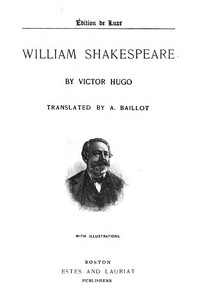
William Shakespeare by Victor Hugo
Let's get one thing straight: Victor Hugo's William Shakespeare is not a straightforward biography. Don't come here looking for dates and a neat timeline of the Bard's life. You won't find them. What you get instead is something far more interesting: a hurricane of ideas from one literary giant about another.
The Story
There isn't a narrative in the traditional sense. Hugo uses Shakespeare as a launching pad. He starts by placing Shakespeare among the world's great 'geniuses'—like Homer and Dante—arguing these figures are peaks in the landscape of human thought. Then, he dives into what makes Shakespeare special. Hugo walks through the plays, not to summarize them, but to pull out the big, messy, glorious themes: the clash between fate and free will, the grotesque sitting right next to the sublime, the raw power of passion and poetry. A huge chunk of the book is actually a sweeping history of European literature and art, showing how everything led to, and exploded from, Shakespeare's work. The final section is a fiery defense of artistic freedom, clearly fueled by Hugo's own battles with critics and censors.
Why You Should Read It
You read this for Hugo's voice. It's extravagant, opinionated, and bursting with energy. He calls Shakespeare 'the ocean' because his work contains everything. This isn't dry analysis; it's worship and wonder. You feel Hugo's frustration with small-minded critics and his absolute joy in the language and ideas of the plays. It makes you see familiar works like Hamlet or King Lear in a new, epic light. You're not just learning about Shakespeare; you're inside Victor Hugo's magnificent, overstuffed brain as he grapples with art, history, and genius itself.
Final Verdict
This book is perfect for Shakespeare fans who want to go deeper, for readers who love passionate, old-school criticism that feels alive, and for anyone curious about how one great artist sees another. It's not an easy, breezy read—Hugo's sentences are big and his ideas are bigger—but it's incredibly rewarding. If you like your literary analysis with a heavy dose of personality and awe, Hugo's wild ride is for you. Just don't expect a simple story. Expect a spectacular argument.
This work has been identified as being free of known copyright restrictions. Preserving history for future generations.
Carol Lewis
9 months agoI came across this while browsing and the character development leaves a lasting impact. Exceeded all my expectations.
Karen Torres
7 months agoComprehensive and well-researched.
Aiden Jones
10 months agoClear and concise.
Melissa White
1 year agoAfter hearing about this author multiple times, the plot twists are genuinely surprising. Truly inspiring.



Jessica Taylor
11 months agoThe author provides a very nuanced critique of current methodologies.