
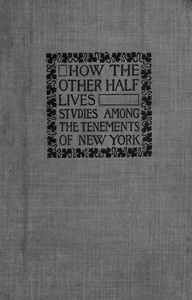
How the Other Half Lives: Studies Among the Tenements of New York by Jacob A. Riis
Let's be clear: this book is a punch to the gut. Jacob Riis doesn't give you a neat, fictional plot. Instead, he takes you on a guided tour of a New York City most people at the time pretended didn't exist. He starts by explaining how the tenements—those cramped, filthy, airless apartment buildings—came to be, fueled by greed and neglect. Then, room by room, alley by alley, he shows you the result. You meet the 'street Arabs' (homeless children), the families packed into dank basements, and the workers earning pennies for 14-hour days. He uses statistics, but they're not the point. The point is the photograph of kids sleeping on a grate for warmth, or the description of a room so dark you need a lamp at noon.
The Story
There's no main character, unless it's the city itself. The 'story' is Riis's journey as a reporter and photographer, documenting block after block of suffering. He organizes it by the people he finds: the Italian immigrant, the Jewish tailor, the Chinese laundry worker. He details their living conditions, their struggles, and the often-prejudiced views society held about them. The narrative builds a powerful, accumulating sense of outrage. It's not a linear tale but a mosaic of despair, with glimmers of resilience shining through. The climax isn't a single event, but the overwhelming weight of evidence that something is terribly, morally wrong.
Why You Should Read It
You should read this because it makes history feel real. Textbooks talk about 'urbanization' and 'industrialization.' Riis shows you the grime under a child's fingernails and the smell of a hallway shared by 40 people. His writing is direct and urgent. Yes, some of his language and stereotypes are painfully dated and reflect the biases of his time, which is itself an important lesson. But his core mission—to make the invisible visible—is profoundly effective. It's impossible to read this and not draw lines to modern conversations about housing, poverty, and immigration. It’s the original piece of investigative journalism that proves a picture (and a powerful story) really is worth a thousand words.
Final Verdict
This book is perfect for anyone interested in the raw material of American history, social justice advocates, and fans of true-crime-style investigative reporting (though the 'crime' here is societal neglect). It's a challenging read, not because the language is hard, but because the reality it presents is. Pair it with some modern photojournalism, and you'll see how little the essential questions have changed. Keep your phone handy to look up Riis's haunting photographs as you read—they complete the experience. It's not a feel-good book, but it is a profoundly important one.
Legal analysis indicates this work is in the public domain. It is available for public use and education.
Robert Davis
2 months agoLooking at the bibliography alone, the breakdown of complex theories into digestible segments is masterfully done. It cleared up a lot of the confusion I had previously.
Mary Walker
9 months agoSimply put, the emotional weight of the story is balanced perfectly. I would gladly recommend this title.
Deborah Thomas
1 year agoFinally found time to read this!
Paul Harris
2 years agoNot bad at all.
John Moore
2 years agoThe balance between academic rigor and readability is perfect.