About 326 minutes
The four Corners — Reading Notes
Historical Psychological Social Fiction
74,887 recorded words. 16 minutes difference from this book's estimate.
View Gutenberg source #45601

For The Rock of the Lion — Reading Notes, the stored edition analysis reports 71,098 words, 5 hr 10 min estimated reading time, and 8 detected text sections.
The text analysis averages about 23.0 words per sentence, while the detected sections provide another way to judge how the source is divided.
Project Gutenberg metadata also associates the work with “Historical fiction,” connecting these edition facts with the source record’s subject description.
Explore this collection
These alternatives are selected using recorded categories and estimated reading time.
About 326 minutes
Historical Psychological Social Fiction
74,887 recorded words. 16 minutes difference from this book's estimate.
View Gutenberg source #45601About 268 minutes
Historical Psychological Social Fiction
61,580 recorded words. 42 minutes difference from this book's estimate.
View Gutenberg source #46010About 267 minutes
Historical Psychological Social Fiction
61,270 recorded words. 43 minutes difference from this book's estimate.
View Gutenberg source #45908Search stored excerpts and compare books → Choose by your preferences →
Choices use stored catalog measurements. Estimates vary with reading speed. A shared category is a catalog label, not a claim that two books have the same argument or literary quality.
Search reads excerpt text stored with this catalog and links to its associated Gutenberg record. The connection is stored in the site database; this tool does not recheck that every excerpt is word-for-word identical to that external record. Excerpt search does not cover every chapter and does not verify historical publication dates.
Catalog snapshot checked: 2026-09-25. Coverage: 96 public books, 96 available source excerpts.
Read the complete public-domain text at its original source.
Read on Project GutenbergThe Rock of Gibraltar, described as "a huge, mysterious shadow, like a couchant lion," dominates the opening of Molly Elliot Seawell's novel, establishing a setting where geography shapes action. The story follows Archy, a young American naval officer, during the Great Siege of Gibraltar (1779–1783). Seawell blends historical figures—such as General Eliot and Paul Jones—with fictional characters, as noted in her preface, which claims "the romancer's just and inalienable right to introduce real persons and events." The narrative's tension emerges early through contrasts: the vast, majestic Rock versus the human scale of a ship like the Thunderer, and the strategic chess game between besieged British forces and Spanish blockaders.
One of the novel's most striking passages shows Archy cultivating the Moorish fisherman Musa through calculated flattery. Archy praises the Moors as "great fellows for fighting" and recounts Othello as "an exact and well-authenticated history." This manipulation is not presented as deceit but as strategic necessity: Archy needs Musa's help to cross the Straits to Tetuan. The episode reveals a pattern of using cultural knowledge—here, Moorish history—to build trust. Seawell underscores Musa's "tremendous supply of racial vanity," a blunt characterization that drives the plot. The resulting plan involves a bogus set of despatches, a ruse that highlights the cat-and-mouse game of siege warfare.
Seawell's sea-faring sequences are dense with technical specifics. Archy prefers an English cutter over Musa's "unwieldy tub with a huge lateen-sail," and he feels capable of sailing "to America if necessary." The escape attempt is described with precise geography: the current through the Straits, the forty-mile straight line to Tetuan, and the risk of Spanish cruisers. The boat's unusual rig might "excite suspicion," yet Archy trusts his seamanship. These passages ground the adventure in practical knowledge, contrasting with the more romanticized Rock. The author's own familiarity with naval matters—she wrote a biography of Paul Jones—shapes the credibility of these scenes.
The siege context creates a web of conflicting allegiances. Archy, an American, serves the British at Gibraltar; the Moors are nominally neutral but courted by both sides; Spanish forces press the blockade. Seawell does not simplify these loyalties. Musa's pride in his ancestors who "died fighting" rather than yield to Spaniards adds a layer of historical grievance. The preface admits only one liberty with chronology, concerning Paul Jones, suggesting a deliberate effort to anchor fiction in fact. The excerpts show characters maneuvering within constraints—political, military, and personal—rather than acting freely. This tension between individual agency and larger historical forces gives the novel its psychological weight.
Readers attentive to the interplay between historical record and fictional invention will find Seawell's preface a useful guide. The novel rewards those who track its careful use of real events—like the siege's timeline—and its invented stratagems. The Rock itself, both setting and symbol, remains a constant presence, its shadow falling over every character's choices.
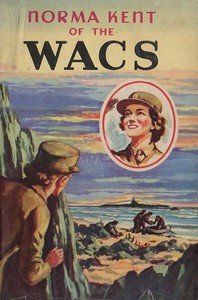
Reading about Archy watching the Rock loom over Gibraltar reminded me of my grandfather’s old war stories—not the battles, but the long silences between them. I once felt that same quiet weight in Norma Kent of the WACS, where duty becomes a kind of landscape. Norma Kent of the WACS — Key Ideas to Explore holds that same patient waiting, that sense of being small under something immense.
Build a private reading journal entry for this title.