About 241 minutes
The Temptation of St. Anthony — Reading Companion
Historical Psychological Social Fiction
55,307 recorded words. 3 minutes difference from this book's estimate.
View Gutenberg source #52225
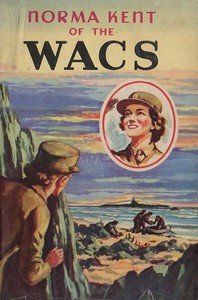
Before opening Norma Kent of the WACS — Key Ideas to Explore, the edition data offers a quick orientation: 54,664 words, 3 hr 58 min estimated reading time, and 9 detected text sections.
The text analysis averages about 10.4 words per sentence, while the detected sections provide another way to judge how the source is divided.
Project Gutenberg metadata also associates the work with “War stories,” connecting these edition facts with the source record’s subject description.
Explore this collection
These alternatives are selected using recorded categories and estimated reading time.
About 241 minutes
Historical Psychological Social Fiction
55,307 recorded words. 3 minutes difference from this book's estimate.
View Gutenberg source #52225About 244 minutes
Historical Psychological Social Fiction
56,063 recorded words. 6 minutes difference from this book's estimate.
View Gutenberg source #44804About 250 minutes
Historical Psychological Social Fiction
57,495 recorded words. 12 minutes difference from this book's estimate.
View Gutenberg source #52964Search stored excerpts and compare books → Choose by your preferences →
Choices use stored catalog measurements. Estimates vary with reading speed. A shared category is a catalog label, not a claim that two books have the same argument or literary quality.
Search reads excerpt text stored with this catalog and links to its associated Gutenberg record. The connection is stored in the site database; this tool does not recheck that every excerpt is word-for-word identical to that external record. Excerpt search does not cover every chapter and does not verify historical publication dates.
Catalog snapshot checked: 2026-09-25. Coverage: 96 public books, 96 available source excerpts.
Read the complete public-domain text at its original source.
Read on Project GutenbergThe novel opens not with a parade ground but with a cot that creaks. Norma Kent lies awake among fifty sleeping recruits, and the first voice she hears whispers, “We’re Mrs. Hobby’s horses now.” That uneasy laughter, the flash of light from Rosa Rosetti’s cot, and the question about spies posed “not twenty-four hours before” establish a pattern: the story advances through small, nocturnal disturbances. Light signals—a gleam in the dark, a camera flash, a beacon—recur as both plot devices and structural markers. Movement between scenes is similarly restless: from the barracks to a foggy studio, from a spotter’s shed to a motorcycle ride, each shift carries Norma toward another piece of evidence she cannot yet explain.
The narrative is propelled by things that vanish or appear without explanation. Norma’s camera disappears from the mantel; she later finds three films left on Carl Langer’s table. A flash of light at Rosa’s cot is never directly explained in the excerpts, but it echoes later when Norma sees “a flash of light where no light was supposed to be.” The missing camera, the black pigeons that “took off with noisy flapping,” and the locked studio door all create a chain of unanswered questions. The structure depends on these small, concrete losses—not grand conspiracies but misplaced objects and fleeting illuminations. Each disappearance forces Norma to move to a new location, linking the physical journey to the investigative one.
Nearly every key moment in the excerpts occurs after dark. Norma’s first suspicion of Rosa comes at night; the spotter shed operates in darkness; the fog that “driven in from the sea” makes the studio “darkest, most gloomy of all.” The chapter titles reinforce this: “A Light in the Night,” “Spotters in the Night,” “Night for a Spy Story.” The night setting does more than create atmosphere—it structures the plot by limiting visibility and forcing characters to rely on sound, touch, and memory. Norma’s internal warnings (“You’ll have to lie still”) mirror the external caution required in blackout conditions. The movement between scenes is often a movement from one dark space to another: from cot to window, from porch to fog, from boat to shed.
The story repeatedly returns to the sea edge: Black Knob, the fishermen’s boats, the spotter shed, the fog over the water. Norma’s camera is meant to capture “the fishermen’s boats coming in”; the sun rises “back of a dark spot rising from the sea.” The coast is both a lookout point and a place of disappearance—the plane that sank “ten minutes later,” the black pigeons that “soar away and lose themselves in the fog out over the sea.” This geography gives the novel a contained, watchful quality. Characters are always scanning the horizon, and the movement between interior scenes (barracks, studio, breakfast table) and exterior ones (porch, dock, foggy road) reinforces the tension between safety and exposure.
The dialogue is clipped and often evasive. When Norma is asked what she would do if she suspected a spy, she answers, “Nothing. At least, not at once.” Later, when Lieutenant Warren presses her about a “hunch,” Norma evades: “Just a hunch, I guess.” The characters speak in short, guarded sentences, and the narration mirrors this by withholding conclusions. The excerpts never reveal whether Rosa is a spy, what the black pigeons mean, or who took the camera. This restraint is structural: the novel builds its suspense not through action but through what is left unsaid. The reader, like Norma, must piece together clues from fragments of conversation and fleeting images.
Readers will find that the novel’s effectiveness depends on attending to its small details: the placement of a camera, the direction of a glance, the timing of a light. The story does not announce its mysteries; it lets them accumulate. Pay particular attention to the transitions between scenes—the motorcycle ride, the walk through fog, the shift from day to night—as these movements often carry more information than the dialogue. The excerpts suggest a work that rewards patience and observation over speed.
I have always found something tender in how Norma Kent of the WACS holds its watchfulness—those quiet, fog-bound glances between barracks. It reminds me of a gentler sort of vigilance in Marjorie Dean Macy's Hamilton Colony — Story, Setting & Ideas, where friendship itself keeps a soft eye on worry. Both seem to know that looking out for one another is its own quiet kind of light.
Answer a few questions and save a private reflection on this device.