About 244 minutes
Betty Lee, Junior — Background and Themes
Historical Psychological Social Fiction
56,063 recorded words. 6 minutes difference from this book's estimate.
View Gutenberg source #44804
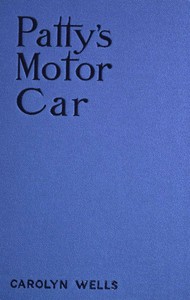
For Patty's Motor Car — Reading Companion, the stored edition analysis reports 57,495 words, 4 hr 10 min estimated reading time, and 8 detected text sections.
The text analysis averages about 13.5 words per sentence, while the detected sections provide another way to judge how the source is divided.
Project Gutenberg metadata also associates the work with “Family -- Juvenile fiction,” connecting these edition facts with the source record’s subject description.
Explore this collection
These alternatives are selected using recorded categories and estimated reading time.
About 244 minutes
Historical Psychological Social Fiction
56,063 recorded words. 6 minutes difference from this book's estimate.
View Gutenberg source #44804About 257 minutes
Historical Psychological Social Fiction
58,921 recorded words. 7 minutes difference from this book's estimate.
View Gutenberg source #53987About 241 minutes
Historical Psychological Social Fiction
55,307 recorded words. 9 minutes difference from this book's estimate.
View Gutenberg source #52225Search stored excerpts and compare books → Choose by your preferences →
Choices use stored catalog measurements. Estimates vary with reading speed. A shared category is a catalog label, not a claim that two books have the same argument or literary quality.
Search reads excerpt text stored with this catalog and links to its associated Gutenberg record. The connection is stored in the site database; this tool does not recheck that every excerpt is word-for-word identical to that external record. Excerpt search does not cover every chapter and does not verify historical publication dates.
Catalog snapshot checked: 2026-09-25. Coverage: 96 public books, 96 available source excerpts.
Read the complete public-domain text at its original source.
Read on Project GutenbergThe opening chapter establishes a pattern of interior warmth and color that recurs throughout the book. Patty is curled in a yellow-flowered chintz chair, surrounded by yellow daffodils and a blazing fire, poring over a small paper-covered book. The room's green walls and yellow accents create a sunshiny atmosphere even on a dull March day. This careful attention to setting—warmth, light, and specific hues—anchors the narrative in sensory detail before any plot unfolds.
The scene also introduces a structural device: Patty's intense concentration, her frustrated book-flinging, and the sudden entrance of her stepmother Nan. The story moves between quiet, reflective moments and bursts of social activity, a rhythm that continues as the motor car becomes the vehicle for both literal travel and shifts in mood.
From the opening paragraph, the narrative consistently links emotional states to physical warmth and specific colors. Patty's study is described with a palette of green and yellow—the curtains, cushions, chintz, daffodils, and fire all contribute to a 'sunshiny air.' Later, when Patty talks to her car, she personifies it as 'Swift Camilla,' and the car's mood is reflected in its mechanical behavior: it 'jumps and balks and shies' when displeased. The car, like the room, becomes an extension of Patty's own warmth or petulance.
This motif extends to other characters. Elise, for instance, describes her father's cars in terms of disposition—'lumberly and fat' versus 'nervousest thing.' The physical environment—whether a cozy study, a veranda, or a moving automobile—is never neutral; it always carries emotional weight. The narrative uses these sensory anchors to ground the reader in each scene's atmosphere.
The story's structure alternates between static, interior settings and active, outdoor travel. Chapter I is entirely within Patty's study; the next chapter moves to a lecture, then to a summer home, and soon to the car itself. This back-and-forth creates a rhythm of retreat and advance. The motor car is not just a vehicle but a catalyst for changing locations and social dynamics.
When Patty drives Elise to 'The Pebbles,' the journey is described with attention to the car's responsiveness and the landscape passing by. The narrative pauses for conversation during the drive, then shifts to the veranda greeting, then to the guest room. Each transition is marked by a change in setting and a corresponding shift in tone—from intimate to social, from reflective to lively. This structural pattern keeps the story moving without relying on dramatic plot twists.
Patty's relationship with her Stanhope car is one of the book's most distinctive features. She names it 'Swift Camilla' and treats it as a sentient companion: 'I talk to it just as I would to a person, and she seems to understand.' The car is described as having 'pulses thrilling' and a 'sensitive nature alive to every passing incident.' This personification is not merely decorative; it affects the plot. Camilla 'likes or dislikes' passengers, and her performance changes accordingly—jumping, balking, or running smoothly based on her mood.
Other characters respond to this idea with varying degrees of credulity. Elise immediately adopts the conceit, while the neighbor Mona is viewed with suspicion partly because she might not appreciate the car's personality. The car thus becomes a litmus test for character: those who understand Camilla are aligned with Patty; those who don't are outsiders. This device gives the automobile a narrative function beyond transportation.
The excerpts show that much of the story's social action is structured around arrivals and departures. Patty's house party is introduced through a series of entrances: Roger arrives by stage, Elise by car, and the neighbor Mona is glimpsed in passing. Each arrival is a small set piece, with greetings, luggage handling, and commentary on the new setting. The veranda and driveway serve as transitional spaces where characters meet and part.
Nan, the stepmother, acts as a social anchor, greeting guests and maintaining a 'chummy acquaintance' with the young men. The narrative gives her a role as a stabilizing presence amid the comings and goings. This focus on the mechanics of hospitality—showing rooms, unpacking trunks, chatting on the porch—gives the story a leisurely, episodic feel. The motor car, by enabling quick movement between houses, accelerates these social exchanges while also providing a private space for conversation.
Readers will find that the book's pleasures lie less in dramatic conflict than in the texture of daily life among a friendly cast. The motor car serves as both a literal vehicle and a narrative device for shifting scenes and moods. Pay attention to how the author uses color and warmth to signal emotional states, and how the rhythm of arrivals and departures structures the story. The personification of the car offers a playful lens through which to view Patty's relationships.
That afternoon, rain streaked the windows while Patty’s rivalry with Mabel simmered, and I noticed how the warmth of Swift Camilla brightened even selfish moments. Later, thumbing the shelf, I found a quieter vessel—a girl on inland waters. The same sun, but gentler, slowed. That’s how Elsie’s Journey on Inland Waters — A Closer Reading found me, replacing wheels with ripples.
Capture what you thought, learned, and would like to remember.