About 307 minutes
Prentice Hugh — Context and Discussion
Fantasy Juvenile Worlds
70,387 recorded words. 5 minutes difference from this book's estimate.
View Gutenberg source #43170
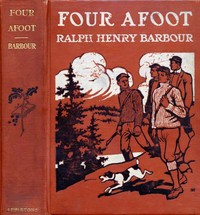
Four Afoot: Being the Adventures of the Big Four on the Highway — Background and Themes can be approached with a clearer sense of reading commitment from its source measurements: 69,351 words, 5 hr 2 min estimated reading time, and 24 detected text sections.
The text analysis averages about 12.2 words per sentence, while the detected sections provide another way to judge how the source is divided.
Project Gutenberg metadata also associates the work with “Dogs -- Juvenile fiction,” connecting these edition facts with the source record’s subject description.
Explore this collection
These alternatives are selected using recorded categories and estimated reading time.
About 307 minutes
Fantasy Juvenile Worlds
70,387 recorded words. 5 minutes difference from this book's estimate.
View Gutenberg source #43170About 294 minutes
Fantasy Juvenile Worlds
67,485 recorded words. 8 minutes difference from this book's estimate.
View Gutenberg source #50475About 294 minutes
Fantasy Juvenile Worlds
67,555 recorded words. 8 minutes difference from this book's estimate.
View Gutenberg source #54887Search stored excerpts and compare books → Choose by your preferences →
Choices use stored catalog measurements. Estimates vary with reading speed. A shared category is a catalog label, not a claim that two books have the same argument or literary quality.
Search reads excerpt text stored with this catalog and links to its associated Gutenberg record. The connection is stored in the site database; this tool does not recheck that every excerpt is word-for-word identical to that external record. Excerpt search does not cover every chapter and does not verify historical publication dates.
Catalog snapshot checked: 2026-09-25. Coverage: 96 public books, 96 available source excerpts.
Read the complete public-domain text at its original source.
Read on Project GutenbergThe catalog subjects for Four Afoot list dogs, friendship, circus, baseball, and walking, but the excerpts reveal a story more concerned with fundraising logistics than with any of these. The four boys—Nelson, Dan, Bob, and Tom—spend much of their dialogue calculating how to pay for a stranger's education, not chasing adventures. The walking itself is barely described; the circus appears only in the table of contents. The dog Barry is introduced in chapter VII, but the excerpts show no interaction with him. The baseball subject is entirely absent from the provided text.
The central action in the excerpts is a prolonged negotiation over how to finance one year at Hillton School for Jerry Hinkley, a young man they met on the road. The boys debate costs, write letters home, and propose that Dan's father hold the money. Bob suggests investing the four hundred dollars at four percent to yield sixteen dollars annually for Jerry's railway fare. This financial planning occupies far more space than any physical adventure. The catalog subject "friendship" is here expressed not through shared exploits but through collective problem-solving and trust in each other's judgment.
Barbour's prefatory note warns readers that the Long Island locations are real but renamed, except Sag Harbor and Jericho—and the boys never reach Jericho. This playful acknowledgment of fictional geography is a rare moment of authorial intrusion. The story's setting is thus a deliberately altered landscape, where the reader is invited to recognize but not verify the places. The catalog subject "Long Island (N.Y.) — Juvenile fiction" is accurate only in a loose sense; the island is a backdrop, not a character, and the specific towns are inventions.
Despite the catalog listing "Circus — Juvenile fiction" and "Dogs — Juvenile fiction," the excerpts contain no circus scenes and no dog named Barry. The table of contents promises a rescue and an addition to the party in chapter VI, and Barry's distinction in chapter VII, but the provided text ends before these events. The circus is mentioned only in the chapter list. This gap between catalog and content suggests that the subjects may have been assigned based on the full book, not the excerpts, or that the excerpts are unrepresentative. Readers expecting a dog story or circus adventure will find instead a fundraising committee.
The excerpts from Four Afoot show a book that is less about the advertised adventures and more about the practicalities of helping a friend. Readers interested in early twentieth-century boys' series fiction will find here a detailed depiction of how young characters navigate adult systems of money and education. The walking trip is a frame; the real journey is financial and moral.
Reading about the Big Four’s earnest fundraising schemes for Jerry, I thought of how quietly our own good intentions often get tangled in logistics. There’s a similar humble persistence in Sarah Dillard's Ride: A Story of the Carolinas in 1780 — Reading Notes, where the journey itself matters more than the destination. Old books have a way of reminding me that.
Use these questions to collect your thoughts before moving on.