About 336 minutes
The Wonderful Garden; or, The Three Cs — Edition Insights
Fantasy Juvenile Worlds
77,208 recorded words. 6 minutes difference from this book's estimate.
View Gutenberg source #52907

Phaeton Rogers: A Novel of Boy Life — Inside the Classic can be approached with a clearer sense of reading commitment from its source measurements: 75,882 words, 5 hr 30 min estimated reading time, and 10 detected text sections.
The text analysis averages about 16.8 words per sentence, while the detected sections provide another way to judge how the source is divided.
Project Gutenberg metadata also associates the work with “Conduct of life -- Juvenile fiction,” connecting these edition facts with the source record’s subject description.
Explore this collection
These alternatives are selected using recorded categories and estimated reading time.
About 336 minutes
Fantasy Juvenile Worlds
77,208 recorded words. 6 minutes difference from this book's estimate.
View Gutenberg source #52907About 338 minutes
Fantasy Juvenile Worlds
77,633 recorded words. 8 minutes difference from this book's estimate.
View Gutenberg source #52610About 320 minutes
Fantasy Juvenile Worlds
73,599 recorded words. 10 minutes difference from this book's estimate.
View Gutenberg source #53479Search stored excerpts and compare books → Choose by your preferences →
Choices use stored catalog measurements. Estimates vary with reading speed. A shared category is a catalog label, not a claim that two books have the same argument or literary quality.
Search reads excerpt text stored with this catalog and links to its associated Gutenberg record. The connection is stored in the site database; this tool does not recheck that every excerpt is word-for-word identical to that external record. Excerpt search does not cover every chapter and does not verify historical publication dates.
Catalog snapshot checked: 2026-09-25. Coverage: 96 public books, 96 available source excerpts.
Read the complete public-domain text at its original source.
Read on Project GutenbergThe opening chapter of Phaeton Rogers begins with a playful, hyperbolic description of a morning canter—not on a real horse, but on an imaginary one shared by three boys. The narrator directly addresses the reader, explaining that "an indefinite number of boys may enjoy a ride on one horse, all at the same time." This establishes a colloquial, knowing voice that characterizes much of the early narrative. The tone is light and digressive, with the narrator offering wry observations about boyhood logic and the spectacle of a novice rider drawing a crowd. However, this voice is not uniform throughout the excerpts. Later chapters shift into more earnest, dialogue-driven scenes, as when Ned Burton visits his Aunt Mercy to seek help for an injured friend. The contrast between the opening's whimsical exposition and the later, tense conversation reveals a deliberate modulation in narrative pace and register.
The narrator of Phaeton Rogers adopts a confiding, slightly ironic tone that mimics oral storytelling. In the first chapter, he breaks the fourth wall to explain the logistics of imaginary horseback riding, using phrases like "I think the best number of riders is three." This creates a sense of shared amusement between narrator and reader. However, the register shifts markedly in later excerpts. When Ned confronts his aunt about helping Jimmy Redmond, the prose becomes more restrained and dialogue-heavy. The narrator steps back, letting the characters' words carry the emotional weight. Aunt Mercy's speech is peppered with dramatic accusations—"It was that wretched, brutal brother of yours"—while Ned's internal dilemma is rendered in a series of conditional clauses: "To convince his aunt... would have been hopeless; to plead guilty... would have been unjust." This shift from expansive commentary to tight, psychological narration signals a change in pace, as the story moves from comic adventure to moral seriousness.
Johnson varies the pace of his descriptions to match the emotional stakes. Early chapters feature leisurely, cumulative sentences that linger on sensory details: the dew on the grass, the robins' songs, the sunrise reddening the east. This relaxed rhythm suits the idyllic summer setting. In contrast, the description of Jimmy's sickroom is more measured and precise. The narrator notes the sunbeams "broken into all sorts of shapes by the foliage of a wistaria," and the shadows moving "to and fro across a breadth of rag carpet." The pace slows to a near-halt, focusing on the stillness of the room. Then, when Ned bursts out "Oh, Jimmy, dear Jimmy, you mustn't die!" the prose accelerates into short, urgent sentences and exclamation points. This rapid shift from stillness to outburst creates a palpable change in tempo, underscoring the gravity of Jimmy's condition.
The dialogue in the excerpts reveals character through voice and subtext. Aunt Mercy speaks in emphatic, moralizing declarations: "You lovely, benevolent boy!" and "You're an ornament to the family." Her language is florid and judgmental, contrasting with Ned's more hesitant, pragmatic speech. When Ned says, "I wished I could help him a little by paying his doctor's bill, and not let him know anything about it," his words are careful and indirect, reflecting his desire to avoid conflict with his aunt while still achieving his goal. The narrator also interjects with commentary on the difficulty of the conversation, noting that "it is difficult to say what answer Ned ought to have made." This metafictional aside highlights the complexity of social negotiation in the story. The dialogue thus serves not only to advance the plot but to demonstrate how characters manage relationships through what is said—and left unsaid.
Readers attentive to narrative voice will notice how Johnson uses the contrast between the narrator's playful asides and the characters' earnest dialogues to create a layered reading experience. The shifts in pace—from leisurely exposition to tense conversation to rapid emotional outburst—are not arbitrary but serve to highlight moments of moral decision and vulnerability. Pay particular attention to how the narrator's presence fades in and out, and how the rhythm of the prose changes when the story turns from boyish schemes to the consequences of those schemes.
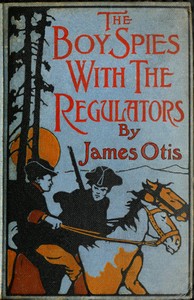
That rainy afternoon, Phaeton’s wild schemes and sudden quiet moments of boyish kindness stayed with me long after I closed the book. Somehow, that led me to The Boy Spies with the Regulators The Story of How the Boys Assisted the Carolina Patriots to Drive the British from That State — A Reader’s Guide, where the same mix of reckless adventure and earnest loyalty felt like an old friend.
Answer a few questions and save a private reflection on this device.