About 338 minutes
Ward Hill, the Senior — Edition Insights
Fantasy Juvenile Worlds
77,633 recorded words. 2 minutes difference from this book's estimate.
View Gutenberg source #52610
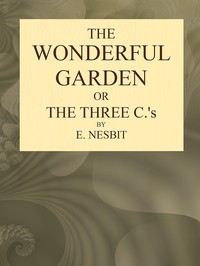
The catalog record for The Wonderful Garden; or, The Three Cs — Edition Insights provides practical reading context through 77,208 words, 5 hr 36 min estimated reading time, and 28 detected text sections.
The text analysis averages about 14.2 words per sentence, while the detected sections provide another way to judge how the source is divided.
Project Gutenberg metadata also associates the work with “Friendship -- Juvenile fiction,” connecting these edition facts with the source record’s subject description.
Explore this collection
These alternatives are selected using recorded categories and estimated reading time.
About 338 minutes
Fantasy Juvenile Worlds
77,633 recorded words. 2 minutes difference from this book's estimate.
View Gutenberg source #52610About 330 minutes
Fantasy Juvenile Worlds
75,882 recorded words. 6 minutes difference from this book's estimate.
View Gutenberg source #48313About 320 minutes
Fantasy Juvenile Worlds
73,599 recorded words. 16 minutes difference from this book's estimate.
View Gutenberg source #53479Search stored excerpts and compare books → Choose by your preferences →
Choices use stored catalog measurements. Estimates vary with reading speed. A shared category is a catalog label, not a claim that two books have the same argument or literary quality.
Search reads excerpt text stored with this catalog and links to its associated Gutenberg record. The connection is stored in the site database; this tool does not recheck that every excerpt is word-for-word identical to that external record. Excerpt search does not cover every chapter and does not verify historical publication dates.
Catalog snapshot checked: 2026-09-25. Coverage: 96 public books, 96 available source excerpts.
Read the complete public-domain text at its original source.
Read on Project GutenbergThe catalog subjects for The Wonderful Garden; or, The Three Cs list magic, flowers, and books and reading, but the excerpts reveal a story grounded in the consequences of well-intentioned meddling. The three C.s—Caroline, Charlotte, and Charles—are not simply exploring a magical garden; they are actively trying to cure a boy named Rupert using a threefold spell, which leads to a scolding from their uncle. The narrative voice is playful and direct, often addressing the reader with asides like “I will draw a veil over that scene.” The children’s dialogue is full of earnest pleas and mixed metaphors, such as Charlotte’s “Are we to be hanged for a sheep as a lamb?” This suggests a world where childhood logic collides with adult authority.
The catalog subject “Magic” might suggest spells and enchantments, but the excerpts show the children’s magic is practical and botanical. They administer a “threefold spell” to Rupert, and the uncle later extracts a promise that they will not apply their remedies internally or externally to anyone without consulting him. The children’s approach is experimental: they try to cure Rupert by acting like “the Rosicurians in olden days.” The uncle acknowledges that a “symbolic bouquet” was enough in his case, hinting that flowers have symbolic power rather than literal magic. The magic here is more about belief and intention than supernatural forces.
The excerpts repeatedly emphasize the theme of interference. The uncle scolds the children for “taking too much on yourselves,” and Charlotte translates this as “shoving our oar in.” The children’s desire to help Rupert is genuine, but their methods are reckless. Caroline reflects that “you can’t do right without it turning out wrong sometimes,” and that doing nothing is “the only safe way.” This tension between action and restraint is central. The uncle’s final speech is not about punishment but about responsibility: he asks for a promise to refrain from further experiments. The children’s remorse is real, but they also defend their motives, showing that Nesbit is interested in the ethics of good intentions.
Nesbit’s narrative voice is distinctive: it is omniscient, slightly ironic, and occasionally breaks the fourth wall. For example, after the scolding scene, the narrator says “I will draw a veil over that scene,” and later comments that “a right-down good talking to is never a pleasant thing to record.” The story is structured around the children’s adventures, but the excerpts show that the uncle’s authority is a constant counterpoint. The children’s names—Caroline, Charlotte, Charles—all begin with C, echoing the subtitle “The Three Cs.” The illustrations listed in the contents suggest dramatic moments: a lady in trailing velvet, a hand raised, footprints of a boy. These visual cues hint at a story with mystery and suspense, but the excerpts focus on dialogue and moral lessons.
Readers approaching The Wonderful Garden should expect a story that balances childhood curiosity with adult oversight. The catalog subjects of friendship, siblings, and uncles are clearly present, but the excerpts suggest that the real engine of the plot is the children’s flawed attempts to do good. Pay attention to how Nesbit uses the uncle as a moral anchor, and how the children’s language reveals their personalities. The garden itself is more a setting for their schemes than a source of overt magic.
Those three children in The Wonderful Garden meant so well, yet their herbal meddling tangled everything gently out of place. It reminded me of that quiet ache in Betty Lee, Senior — Themes and Context, where good intentions curl softly around regret. I found myself thinking about how we all stumble into consequences, then carry the memory of them like a pressed flower. Strange, how a story stays.
Use these questions to collect your thoughts before moving on.