About 253 minutes
With the Black Prince — Key Ideas to Explore
Fantasy Juvenile Worlds
58,004 recorded words. 0 minutes difference from this book's estimate.
View Gutenberg source #46233
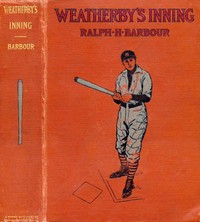
Before opening Weatherby's Inning: A Story of College Life and Baseball — Background and Themes, the edition data offers a quick orientation: 58,126 words, 4 hr 13 min estimated reading time, and 25 detected text sections.
The text analysis averages about 15.4 words per sentence, while the detected sections provide another way to judge how the source is divided.
Project Gutenberg metadata also associates the work with “Conduct of life -- Juvenile fiction,” connecting these edition facts with the source record’s subject description.
Explore this collection
These alternatives are selected using recorded categories and estimated reading time.
About 253 minutes
Fantasy Juvenile Worlds
58,004 recorded words. 0 minutes difference from this book's estimate.
View Gutenberg source #46233About 248 minutes
Fantasy Juvenile Worlds
56,989 recorded words. 5 minutes difference from this book's estimate.
View Gutenberg source #43455About 247 minutes
Fantasy Juvenile Worlds
56,599 recorded words. 6 minutes difference from this book's estimate.
View Gutenberg source #43144Search stored excerpts and compare books → Choose by your preferences →
Choices use stored catalog measurements. Estimates vary with reading speed. A shared category is a catalog label, not a claim that two books have the same argument or literary quality.
Search reads excerpt text stored with this catalog and links to its associated Gutenberg record. The connection is stored in the site database; this tool does not recheck that every excerpt is word-for-word identical to that external record. Excerpt search does not cover every chapter and does not verify historical publication dates.
Catalog snapshot checked: 2026-09-25. Coverage: 96 public books, 96 available source excerpts.
Read the complete public-domain text at its original source.
Read on Project GutenbergFrom its opening chapter, Weatherby's Inning establishes a pattern of movement between enclosed, institutional spaces and open, often inhospitable outdoor settings. The first scene places Jack Weatherby in a drafty gymnasium hall reading a baseball tryout notice, then pushes him out onto granite steps overlooking a flooded walkway and a Common described as a 'dismal waste of pools and streams.' This juxtaposition of interior discipline and exterior chaos recurs throughout the excerpts, with the baseball diamond itself serving as a transitional space where social tensions surface and are resolved.
The novel repeatedly stages key encounters in liminal architectural spaces: hallways, doorways, steps, and gates. Jack reads the call for baseball tryouts in a 'little drafty hall' before pushing through a heavy oak door. Later, conversations about Jack's character take place in corridors and on paths. These threshold settings mirror the protagonist's uncertain social position—neither fully inside the college community nor outside it. The gymnasium, training table, and batting nets represent structured belonging, while the flooded paths and the Common suggest emotional exposure. Barbour uses these physical transitions to mark shifts in Jack's status, from the isolation of his early meals eaten in silence to the tentative inclusion signaled by his joke being met with delayed laughter.
Water imagery pervades the excerpts, often linked to questions of character and concealment. The opening scene's melted snow and 'veritable lake' at the crossing establish a world where surfaces are unstable. Later, a character speculates that Jack's refusal to swim—a skill taken for granted among 'water-rats'—might explain his evasiveness. The narrator notes that Jack would have been surprised to learn he was the subject of discussion about whether he could swim. This detail ties physical competence to social transparency. Weather itself functions as a barometer: the cheerless, watery landscape of Chapter I contrasts with the drier, more hopeful atmosphere as Jack begins to earn acceptance. The recurring motif of wetness suggests both discomfort and the potential for cleansing or revelation.
Baseball in this novel is not merely a backdrop but a structural device that organizes character arcs and social dynamics. The tryout notice in Chapter I sets a deadline that propels the plot. Jack's performance on the diamond directly alters his standing: after his 'performance of Saturday'—likely a strong showing—fellows at the training-table become friendly, and he begins to 'bid for their friendship.' The sport provides a visible, rule-bound arena where unspoken tensions (such as the suspicion of theft involving a lost watch) can be temporarily set aside. The chapter titles themselves—'Catcher and pitcher,' 'A fly to left-fielder,' 'A triple play'—map emotional confrontations onto baseball positions and plays, suggesting that the game's structure offers a vocabulary for resolving conflicts that words alone cannot address.
One of the more nuanced elements in the excerpts is the handling of Anthony's internal conflict over Jack's possible theft of a watch. The narrative enters Anthony's perspective to reveal that he has 'argued with himself' and 'practically convinced himself' of Jack's innocence, yet doubts 'creep back.' The detail of Anthony's eighty-five-cent alarm clock—which gains an hour upright and loses twenty minutes on its back—serves as a comic but pointed emblem of unreliable perception. This mechanical whimsy contrasts with the moral seriousness of the suspicion. The excerpts do not resolve whether Jack is guilty, but they show how friendship and evidence can pull in opposite directions. Anthony's affection for Jack is described as 'big-hearted, generous,' capable of persisting even if Jack were guilty, which complicates any simple reading of the theft subplot.
Readers approaching Weatherby's Inning will find a story that uses baseball not as an end in itself but as a framework for exploring loyalty, reputation, and the slow work of belonging. Pay attention to how spaces—indoors and out, public and private—shape the characters' interactions, and note the recurring references to water and weather as subtle indicators of emotional states. The novel's structure, with its alternation between diamond action and quieter moments of reflection, rewards attention to the intervals between innings.
Some evenings, when rain taps the library windows, I think of Barbour’s boys stepping from diamond into dormitory, how weather always turned their games inward. I see that same quiet hinge in That Girl in Black; and, Bronzie — Themes and Context — the way a costume, like a wet glove, shapes who we become. Both books whisper the same secret: we are all caught, briefly, between innings.
Create a short personal record of your experience with this book.