About 253 minutes
Weatherby's Inning: A Story of College Life and Baseball — Background and Themes
Fantasy Juvenile Worlds
58,126 recorded words. 0 minutes difference from this book's estimate.
View Gutenberg source #45142
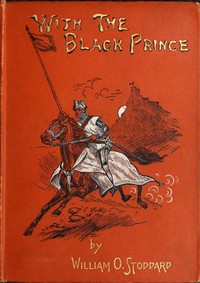
The catalog record for With the Black Prince — Key Ideas to Explore provides practical reading context through 58,004 words, 4 hr 13 min estimated reading time, and 6 detected text sections.
The text analysis averages about 15.7 words per sentence, while the detected sections provide another way to judge how the source is divided.
Project Gutenberg metadata also associates the work with “Conduct of life -- Juvenile fiction,” connecting these edition facts with the source record’s subject description.
Explore this collection
These alternatives are selected using recorded categories and estimated reading time.
About 253 minutes
Fantasy Juvenile Worlds
58,126 recorded words. 0 minutes difference from this book's estimate.
View Gutenberg source #45142About 248 minutes
Fantasy Juvenile Worlds
56,989 recorded words. 5 minutes difference from this book's estimate.
View Gutenberg source #43455About 247 minutes
Fantasy Juvenile Worlds
56,599 recorded words. 6 minutes difference from this book's estimate.
View Gutenberg source #43144Search stored excerpts and compare books → Choose by your preferences →
Choices use stored catalog measurements. Estimates vary with reading speed. A shared category is a catalog label, not a claim that two books have the same argument or literary quality.
Search reads excerpt text stored with this catalog and links to its associated Gutenberg record. The connection is stored in the site database; this tool does not recheck that every excerpt is word-for-word identical to that external record. Excerpt search does not cover every chapter and does not verify historical publication dates.
Catalog snapshot checked: 2026-09-25. Coverage: 96 public books, 96 available source excerpts.
Read the complete public-domain text at its original source.
Read on Project GutenbergThe story opens on the Golden Horn in July 1346, with a south wind and thick mist obscuring the English fleet. Richard Neville, a young nobleman, commands a company of archers, but the ship's captain, Piers Fleming, and his son Hans are secretly plotting to deliver the vessel to French allies from Calais. Stoddard establishes tension through small details: the archers quietly distributing extra weapons, the Fleming's grim smiles, and Richard's trust in his men, especially the archer Guy the Bow. The excerpt shows a layered narrative where the reader knows more than the protagonist—a device that builds suspense as the ship changes course toward a mysterious whistle.
The opening introduces a deliberately multinational crew: English bowmen, Irish kerns under the red-haired O'Rourke, Welshmen led by David Griffith, and London seamen. Stoddard uses this diversity to show the patchwork nature of Edward III's army. Each group speaks its own language—O'Rourke talks to his men “in their own tongue”—and carries distinct weapons: the Irish prefer pikes and axes, the Welsh short swords and darts. Richard moves among them, aware that loyalty is not guaranteed. The author does not explain these groups; he expects readers to infer their roles from context. This technique rewards attention: a first-time reader should note how each nationality is characterized by its leader and arms, as these details may foreshadow how they fight later.
Stoddard contrasts the crew's casual behavior with their hidden preparations. Most men remove armor and lay aside arms because of the summer heat, while the archers quietly hand up “sheaves of arrows, extra spears, with poleaxes and battle-axes and shields” from the hold. The author uses the mist as a narrative veil: it hides the fleet from each other and lets Fleming steer northward without Richard suspecting. The reader is told that “it was not thought of by Richard as of any importance” that the ship runs before the wind. This gap between what Richard knows and what the reader sees creates a steady undercurrent of danger. The passage also notes the date—July 2, 1346—grounding the fiction in the historical timeline of the Crécy campaign, though the excerpt does not yet reveal the battle.
Stoddard differentiates characters through speech patterns. Richard speaks in formal, chivalric tones: “seek among the sailors for a true Englishman fit to take the helm if I smite off the head of this Piers Fleming.” Piers Fleming uses a rougher, more pragmatic idiom: “We will lay this tubful of English pirates alongside right speedily.” The archer Ben o' Coventry calls the situation “a cutthroat business,” while O'Rourke is defined by his role as “captain of the Irish.” Even the whistle that signals the French ship is described as “a long-drawn vibrating whistle” heard thrice—a small auditory detail that marks the moment of decision. These vocal signatures help the reader track the large cast without explicit introductions. A first-time reader should listen to how each man speaks; it often reveals his allegiance before his actions do.
The final excerpted scene shows Richard on the after-deck, giving a wave that his men below can see. In response, buff coats are donned, bows strung, and sheaves of arrows distributed. The Irish tighten their grip on pikes and axes. Stoddard writes action through small, coordinated movements rather than broad description. Fleming addresses Richard as “my Lord Neville” with exaggerated respect, then announces he will “speak” the approaching ship. Richard loosens his sword and Guy the Bow sets an arrow on the string. The author does not state that a fight is imminent; he shows it through these physical preparations. The passage ends with the ship changing course toward the whistle, leaving the reader in suspense. This structure—slow buildup, then sudden readiness—characterizes Stoddard's method throughout the excerpts: he trusts readers to connect the dots.
The catalog subjects list the Battle of Crécy (1346) and Edward the Black Prince as key elements, but the excerpts do not reach the battle itself. Instead, Stoddard builds the world around it: the date is given, the fleet is at sea, and the ship's name—Golden Horn—suggests a merchant vessel pressed into service. The author inserts fictional characters like Richard Neville and Guy the Bow into a historical framework, but he does not explain where fact ends and invention begins. Readers familiar with the period will recognize the mention of La Hogue as a Norman landing point. Others may need to consult external sources to understand the campaign's geography. The excerpts offer no backstory for Richard or the Longwood archers; their past is implied through dialogue and action, not exposition.
Stoddard's narrative rewards careful reading of small signals: a change in wind, a muttered phrase, a hand on a sword hilt. The excerpts show a writer who prefers showing over telling, and who expects his audience to keep track of multiple characters and their shifting loyalties. A first-time reader should pay attention to the crew's nationalities, the ship's course, and the moments when Richard's confidence wavers—or does not. The story moves toward Crécy, but the journey there is as important as the destination.
The rain kept time with the archers' drumming in With the Black Prince, that patient loyalty before Crécy. Afterwards, I sat thinking how fiction shapes memory, and my hand drifted to another set of notes. The coincidence of finding it felt less accident than echo—that other book, Who Was Paul Grayson? — Reading Notes, quietly asking the same question in a different key. I closed both a little moved.
Save your reaction, strongest insight, and memorable passage.