About 126 minutes
Jessica's First Prayer; and, Jessica's Mother — Story, Setting & Ideas
Fantasy Juvenile Worlds
28,960 recorded words. 8 minutes difference from this book's estimate.
View Gutenberg source #50104
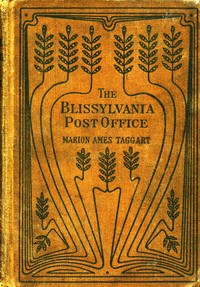
This digital edition of The Blissylvania Post-Office — Story, Setting & Ideas is described by source-level measurements including 30,711 words, 2 hr 14 min estimated reading time, and 4 detected text sections.
The text analysis averages about 16.2 words per sentence, while the detected sections provide another way to judge how the source is divided.
Project Gutenberg metadata also associates the work with “Friendship -- Juvenile fiction,” connecting these edition facts with the source record’s subject description.
Explore this collection
These alternatives are selected using recorded categories and estimated reading time.
About 126 minutes
Fantasy Juvenile Worlds
28,960 recorded words. 8 minutes difference from this book's estimate.
View Gutenberg source #50104About 116 minutes
Fantasy Juvenile Worlds
26,613 recorded words. 18 minutes difference from this book's estimate.
View Gutenberg source #43134About 153 minutes
Fantasy Juvenile Worlds
34,982 recorded words. 19 minutes difference from this book's estimate.
View Gutenberg source #45975Search stored excerpts and compare books → Choose by your preferences →
Choices use stored catalog measurements. Estimates vary with reading speed. A shared category is a catalog label, not a claim that two books have the same argument or literary quality.
Search reads excerpt text stored with this catalog and links to its associated Gutenberg record. The connection is stored in the site database; this tool does not recheck that every excerpt is word-for-word identical to that external record. Excerpt search does not cover every chapter and does not verify historical publication dates.
Catalog snapshot checked: 2026-09-25. Coverage: 96 public books, 96 available source excerpts.
Read the complete public-domain text at its original source.
Read on Project GutenbergThe first chapter of The Blissylvania Post-Office opens not with a post-office but with a dreary, rain-soaked afternoon. The narrator dwells on the weather with a comic precision—lilacs droop, a robin chirps in “vehement disgust,” and a boy named Jack Hildreth lies on the hearth-rug, deliberately unraveling a stitch in his stocking. The scene introduces four children: Jack, his cousin Margaret Gresham (pale and curled in a leather chair), Amy Tracy (plump and sunny), and Beatrice “Trix” Lane (dark-eyed, gypsy-faced, and listless). Their conversation quickly turns to lost things, and Trix announces she will ask St. Anthony to find the sun. Margaret is shocked; Jack laughs. The exchange establishes a pattern: the children’s play is lightly irreverent, and their moral boundaries are not uniform.
The post-office itself emerges from a desire to relieve a gloomy day. The children invent a game of correspondence, assigning each other fanciful titles: Margaret becomes “Lady Griselda of the Castle of the Lonely Lake,” and a mysterious adult correspondent, Mr. Oliver Twist, sends parcels ranging from candy to ducklings. The catalog subject “Letter writing” fits, but the excerpts show that the postal game is less about communication than about performance. Margery (Margaret) writes poems under duress, and her gratitude to Mr. Twist is quickly tested when he asks for samples of her work. The children’s reactions are mixed: Jack sheepishly admits he revealed Margery’s poetry, Amy is impressed, Trix dismisses the fuss, and Margery sighs over “the trials of geniuses with indiscreet friends.” The post-office is a vehicle for social negotiation, not just cheerful correspondence.
The catalog lists “Kindness” and “Cheerfulness” as subjects, but the excerpts complicate these labels. Margery’s gratitude to Mr. Twist is genuine, yet she sends her poems reluctantly, calling them “silly.” When Mr. Twist replies, the matter is “forgotten” as school ends and summer heat arrives. The children divide their time between Miss Isabel (a gentle, ailing figure) and Mr. Dean, a new friend. A telling detail emerges: though the children speak freely to Mr. Dean about Miss Isabel, she “did not care to hear them talk of Mr. Dean.” The narrator notes this puzzles the children “sorely,” hinting at adult tensions the story does not fully explain. Kindness here is not simple; it involves secrets, obligations, and unspoken rules.
The narrator’s voice is precise and gently ironic. The opening paragraph personifies weather as “two gray ghosts of pleasant weather,” and the robin’s chirp is described as a protest that “tilted him forward.” The children’s dialogue is natural and varied: Jack’s teasing, Trix’s bluntness, Margaret’s shock, and Amy’s earnestness are distinct. The excerpts include two full poems—“Millie Maloe” and “The Knight”—written in Margery’s voice, with simple rhymes and conventional sentiment. These are presented as juvenile work, not as accomplished verse. The structure of the novel, judging by the table of contents, moves from the post-office’s founding through episodes like “The Invasion of the Amazons” and “A Wedding,” suggesting a serial, episodic plot. The excerpts do not reveal the resolution of the postal game or the fate of the characters’ relationships.
The catalog subjects—friendship, siblings, kindness, cousins, cheerfulness, letter writing—paint a picture of wholesome domestic play. The excerpts confirm that the book is about children inventing a game, but they also show that the game involves negotiation, embarrassment, and unspoken adult dynamics. Readers should attend to the moments when the children’s cheerfulness falters: Margery’s reluctance, Trix’s listlessness, and Miss Isabel’s unexplained discomfort. These details suggest a story more layered than its sunny title implies.
That rainy afternoon, The Blissylvania Post-Office made me remember how even pretend kindness has rules and bargains tucked inside. Margery’s awkward poe-sharing scene stayed with me, prompting a hunt for similar honest struggles. I found myself lingering over Baseball Joe, Captain of the Team; or, Bitter Struggles on the Diamond — A Reader’s Guide, whose quiet grit reminded me of those same small negotiations.
Save your reaction, strongest insight, and memorable passage.