About 157 minutes
Ella Clinton; or, By Their Fruits Ye Shall Know Them — Reading Notes
Fantasy Juvenile Worlds
36,095 recorded words. 4 minutes difference from this book's estimate.
View Gutenberg source #46317
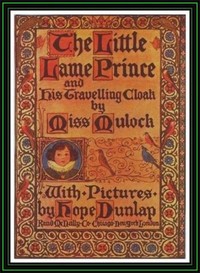
For The Little Lame Prince and His Travelling Cloak — Text and Context, the stored edition analysis reports 34,982 words, 2 hr 33 min estimated reading time, and 13 detected text sections.
The text analysis averages about 20.9 words per sentence, while the detected sections provide another way to judge how the source is divided.
Project Gutenberg metadata also associates the work with “Fantasy fiction,” connecting these edition facts with the source record’s subject description.
Explore this collection
These alternatives are selected using recorded categories and estimated reading time.
About 157 minutes
Fantasy Juvenile Worlds
36,095 recorded words. 4 minutes difference from this book's estimate.
View Gutenberg source #46317About 171 minutes
Fantasy Juvenile Worlds
39,251 recorded words. 18 minutes difference from this book's estimate.
View Gutenberg source #45452About 134 minutes
Fantasy Juvenile Worlds
30,711 recorded words. 19 minutes difference from this book's estimate.
View Gutenberg source #48552Search stored excerpts and compare books → Choose by your preferences →
Choices use stored catalog measurements. Estimates vary with reading speed. A shared category is a catalog label, not a claim that two books have the same argument or literary quality.
Search reads excerpt text stored with this catalog and links to its associated Gutenberg record. The connection is stored in the site database; this tool does not recheck that every excerpt is word-for-word identical to that external record. Excerpt search does not cover every chapter and does not verify historical publication dates.
Catalog snapshot checked: 2026-09-25. Coverage: 96 public books, 96 available source excerpts.
Read the complete public-domain text at its original source.
Read on Project GutenbergFrom its opening pages, The Little Lame Prince and His Travelling Cloak establishes a distinctive narrative voice that alternates between direct, conversational addresses to child readers—"as you will find, my children, when you are older"—and the intimate, often sorrowful interiority of Prince Dolor. The prose moves fluidly between brisk exposition and lyrical passages that linger on sensory details: the "sweet pale face" of the prince, the "rough collie" barking with delight, or the cloak's "soothing kind of motion, as if he were in somebody's arms." This rhythmic variation in pace mirrors the prince's own emotional shifts, from quiet resignation to sudden, painful longing.
The narrator frequently breaks the fourth wall, addressing readers as "my children" and offering gentle philosophical asides. When Prince Dolor asks why he was born disabled, the narrator responds not with a solution but with a shared admission of ignorance: "There is much that we do not know, and cannot understand—we big folks, no more than you little ones." This technique creates a sense of intimacy and trust, positioning the adult narrator as a companion rather than an authority. The direct address also controls pacing, slowing the narrative to allow reflection on difficult questions. Notably, the narrator never mocks or condescends to the prince's pain; instead, the voice becomes a quiet, comforting presence, much like the godmother's cloak itself.
Craik devotes considerable space to Prince Dolor's internal reactions, especially during the cloak's journeys. When he watches a shepherd boy run, the prose shifts from excited description of the boy's "legs—oh, what a pair of legs he had!" to the prince's quiet devastation: "How nice it must be to run like that!" The narrative lingers on his physical posture—"sitting like a Turk, with his arms wrapped round his feeble, useless legs"—and his self-directed bitterness: "You're no good to me." These moments are rendered in plain, unadorned language that avoids sentimentality. The pace slows dramatically, allowing readers to sit with the prince's grief before the cloak's gentle rocking offers wordless comfort. This pattern of observation, pain, and solace recurs throughout the excerpts, shaping the emotional rhythm of the story.
The narrative's tempo mirrors the prince's physical constraints and the cloak's liberating power. Confined to his tower, the prose is measured, dwelling on stillness and thought. But when the cloak carries him aloft, sentences lengthen and become more kinetic: "first across the level common, greatly disturbing the quiet sheep; and then tearing away across country, scrambling through hedges, and leaping ditches." The shepherd boy's race is described with breathless momentum, yet the prince remains a passive observer. Even the cloak's motion is described as "rocking gently to and fro"—soothing but not active. This contrast between the freedom of movement and the prince's fixed position creates a persistent tension. The story never lets the reader forget that the cloak's magic offers sight, not participation, a limitation that shapes both the plot and the emotional arc.
Readers attentive to shifts in narrative tempo will notice how Craik uses pace to underscore the prince's emotional state: rapid, breathless passages during flights contrast with the slow, heavy moments of self-reflection. The direct-address asides function as breathing spaces, inviting the reader to pause alongside the narrator. Pay particular attention to the recurring motif of watching—the prince observes, but rarely acts—and how the cloak's magic consistently withholds full participation. This restraint is central to the story's quiet power, and it rewards a careful, patient reading.
Reading again about Prince Dolor’s cloak-wrapped flights, I kept thinking of how another lonely boy, Bernard, also found his world through movement and accident—not magic, but chance. Both stories linger on that quiet ache of wanting more than one’s given room. It made me set down The Little Lame Prince and reach for Bernard Brooks' Adventures: The Experience of a Plucky Boy — Background and Themes, remembering how resilience can wear so many plain, unremarkable faces.
Build a private reading journal entry for this title.