About 175 minutes
The Crimson Patch — Edition Insights
Fantasy Juvenile Worlds
40,220 recorded words. 4 minutes difference from this book's estimate.
View Gutenberg source #52509
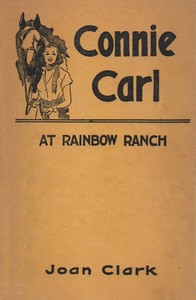
Before opening Connie Carl at Rainbow Ranch — Themes and Context, the edition data offers a quick orientation: 39,251 words, 2 hr 51 min estimated reading time, and 21 detected text sections.
The text analysis averages about 11.8 words per sentence, while the detected sections provide another way to judge how the source is divided.
Project Gutenberg metadata also associates the work with “Bildungsromans,” connecting these edition facts with the source record’s subject description.
Explore this collection
These alternatives are selected using recorded categories and estimated reading time.
About 175 minutes
Fantasy Juvenile Worlds
40,220 recorded words. 4 minutes difference from this book's estimate.
View Gutenberg source #52509About 157 minutes
Fantasy Juvenile Worlds
36,095 recorded words. 14 minutes difference from this book's estimate.
View Gutenberg source #46317About 153 minutes
Fantasy Juvenile Worlds
34,982 recorded words. 18 minutes difference from this book's estimate.
View Gutenberg source #45975Search stored excerpts and compare books → Choose by your preferences →
Choices use stored catalog measurements. Estimates vary with reading speed. A shared category is a catalog label, not a claim that two books have the same argument or literary quality.
Search reads excerpt text stored with this catalog and links to its associated Gutenberg record. The connection is stored in the site database; this tool does not recheck that every excerpt is word-for-word identical to that external record. Excerpt search does not cover every chapter and does not verify historical publication dates.
Catalog snapshot checked: 2026-09-25. Coverage: 96 public books, 96 available source excerpts.
Read the complete public-domain text at its original source.
Read on Project GutenbergThe novel opens with Connie Carl watching New Mexico's mountains from a train window, a moment that establishes her as both insider and outsider: she is returning after three years at an Eastern finishing school, yet the porter dismisses Red Gulch as “nothin’ but a wide place in the road.” Clark uses this tension to frame Connie’s dual perspective throughout. Her first exchange with station agent Andy is brisk and colloquial—“Well, if it ain’t Connie Carl!”—but the narrative quickly shifts to a more lyrical register when Connie names local landmarks like Echo Cliff, places she christened as a child. This alternation between practical ranch talk and sentimental attachment to the land shapes the book’s rhythm.
The opening chapter moves from the train’s vestibule to the deserted platform, then into the station, where Connie’s reunion with Andy is marked by a mix of familiarity and formality. Clark’s prose lingers on details that signal Connie’s changed status: her “blue suit with gray suede slippers” and “jaunty felt hat” mark her as a finishing-school graduate, yet her speech retains a Western directness. The porter’s warning that Red Gulch is “nothin’ but a wide place in the road” contrasts with Connie’s soft reply that she has “been here before.” This early scene establishes a pattern of understated emotion—Connie’s smile fades when Lefty mentions losing the ranch, and she quickly hides her feelings by riding on. The narrative voice here is economical, favoring action and dialogue over interior monologue, which keeps the pace brisk even during reflective moments.
As Connie tours the ranch with Lefty and Jim Barrows, the prose shifts into a more practical mode. Descriptions of the missing ladder at the kiva and the planned dude ranch amenities are delivered in short, declarative sentences: “Looks like someone has swiped it,” Lefty mutters. Clark uses these concrete problems—a stolen ladder, a potential holdup—to introduce tension without melodrama. The echo scene at Echo Cliff is a rare lyrical pause, but it is immediately undercut by Lefty’s regretful remark about losing the ranch. Connie’s response—“It’s getting chilly. Let’s be going home”—is typical of the book’s restraint; strong feelings are signaled through physical actions (pulling a jacket tighter) rather than explicit statements. This pattern of implication over declaration gives the narrative a clipped, almost terse quality that suits the ranch setting.
Chapter XII introduces a new register: the disdainful speech of the Eastern guests. Helena Grimes’s comment that the ranch is “nothing but a run-down cattle farm” and Cecil’s condescending “My man” to Lefty inject a note of social comedy. Clark renders these exchanges with sharp, economical dialogue—Helena’s “Only one room?” and “No private bath?” are delivered in a dry murmur that contrasts with Connie’s polite restraint. The narrative pace quickens here, with shorter paragraphs and more back-and-forth banter. Lefty’s gruff reply—“Our butler ain’t workin’ today”—shows the cowboys’ resistance to the dudes’ expectations. This section demonstrates Clark’s ability to shift tone from wistful to wry within a single chapter, using dialogue to reveal character rather than exposition.
Readers attentive to voice will notice how Clark modulates sentence length: long, descriptive passages during Connie’s solitary moments give way to staccato exchanges when ranch business or conflict arises. The missing ladder, the echo, and the dudes’ complaints are all handled with a light touch that avoids heavy-handed symbolism. Pay attention to what is left unsaid—Connie’s emotions are often displaced onto landscape or action. This restraint is the book’s chief stylistic feature, and it rewards a careful reading of its silences.
That rainy afternoon, I kept thinking how Connie’s quiet grit stemmed from empty rooms and missing ladders—loneliness shaping resolve. Later, with rain still tapping, my hand drifted to another shelf and pulled down The Stories Polly Pepper Told to the Five Little Peppers in the Little Brown House — Reading Companion, where the same tender loneliness carves out a different kind of courage. Both felt like old letters.
A brief reflection can help important ideas stay with you longer.